







This afternoon, South Korea is set to bet its national fortunes for the next decade
Written by Azuma (@azuma_eth)
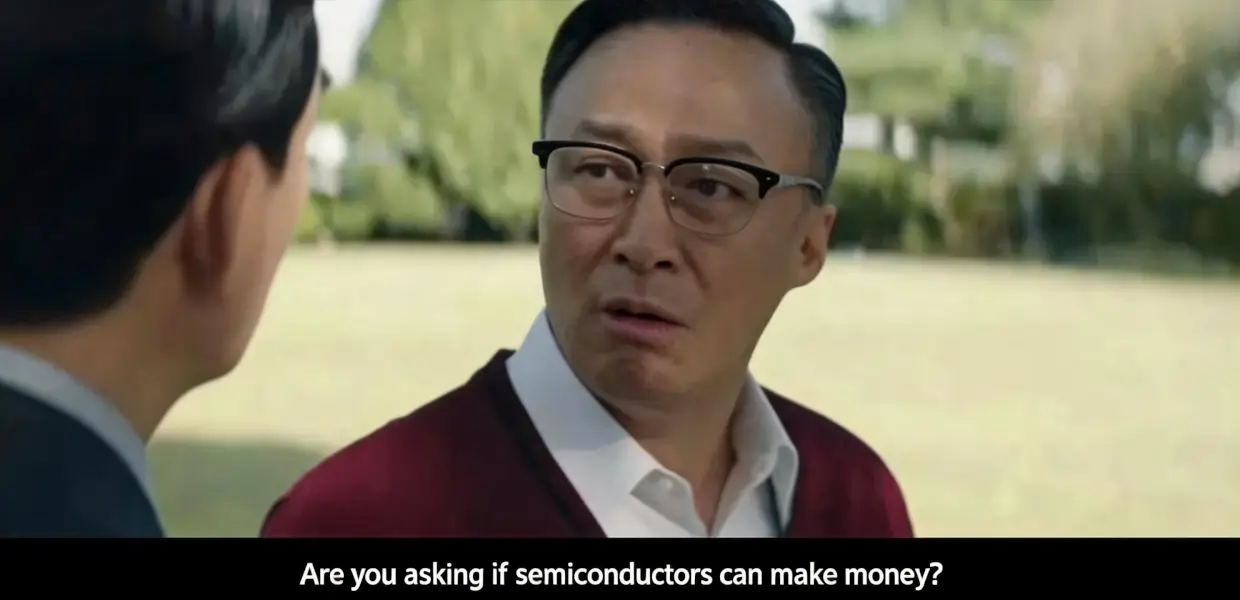
South Korea’s presidential office said on Sunday that Samsung Group and SK Group will announce major investment plans at a meeting presided over by President Lee Jae-myung on Monday, with details to be revealed at a press conference held at the Blue House at 2 PM local time (1 PM Beijing time) on Monday. Samsung Electronics Chairman Lee Jae-yong and SK Group Chairman Chey Tae-won are both expected to attend the event.
South Korean media outlet Economic Daily disclosed further details about the plan today.
According to reports, as part of President Lee Jae-myung’s flagship industrial strategy, Samsung Group and SK Group are expected to jointly announce a total investment plan worth up to 2,000 trillion won (approximately $1.3 trillion). Over the next decade, the two companies will continue to ramp up investments in South Korea’s domestic semiconductor industry. Specifically, Samsung and SK Hynix are expected to build 4 to 5 semiconductor fabs each in Gwangju. Samsung also plans to construct a chip packaging plant in South Chungcheong Province, while SK Hynix will expand its NAND flash fab in North Chungcheong Province.
As of press time, neither the South Korean government nor the two companies have officially released the full plan, and final details may still be subject to adjustments. However, based on recent signals from the South Korean government and media reports, the direction of “continuing to heavily invest in semiconductors over the next decade” is virtually certain.
The significance of this development extends far beyond the expansion plans of Samsung and SK Hynix. Taking a broader view, this represents an industrial strategy directly orchestrated by the South Korean government and a public bet on the AI era.
Over the past few years, the race around large model training and AI data center construction has intensified, and one of the key infrastructures supporting this race is high-performance memory. As a core force in the global memory industry, South Korea has long held an irreplaceable position in the AI supply chain.
Now, pushing Samsung and SK Hynix to launch a trillion-dollar investment plan spanning a decade is essentially sending a clear signal to the market – South Korea believes that AI demand for high-performance memory is not a short-term boom cycle, but an industrial wave set to last for at least a decade or more. It is therefore willing to commit capital expenditure over the next ten years to bet on this conviction.
Why is South Korea making such a bold bet?
What does $1.3 trillion represent?
South Korea’s annual gross domestic product (GDP) for 2025 is approximately $1.87 trillion. In other words, the scale of this investment plan is close to 70% of the country’s entire annual economic output. As for the main investors in this plan, Samsung currently has a market cap of about $1.34 trillion, and SK Hynix’s market cap is around $1.2 trillion. This means these two pillar conglomerates are each committing roughly half of their total value to expansion plans over the next decade.
Why is South Korea willing to go all-in on such a massive bet in the highly cyclical memory industry? The answer lies in the changes the memory industry has undergone over the past year.
For decades, memory has been one of the most cyclical sectors in the semiconductor industry, consistently following a familiar pattern: demand growth drives price increases, manufacturers ramp up production capacity, oversupply follows the release of new capacity, prices plummet, and then the next cycle begins. As a result, most semiconductor companies rarely plan capacity on a decade-long horizon.
All of this changed with AI. As the AI race intensifies, models grow larger, and inference demand rises, the market gradually realizes that the true bottleneck limiting AI computing power is no longer just GPUs, but also high-bandwidth memory (HBM). GPUs determine the upper limit of computing power, while HBM determines whether GPUs can truly perform. This makes memory bandwidth a key constraint on AI computing expansion. The larger the model, the more parameters, and the more frequent the inference, the greater the demand for high-bandwidth, high-capacity memory.
In simple terms, the rapid development of AI has thrust memory, once a relatively low-key supporting player, into the spotlight of the entire industry chain.
This shift quickly reflected in industry and capital markets. Massive orders from global AI chipmakers, cloud computing giants, and hyperscale data center operators have made SK Hynix, Samsung, and Micron the biggest beneficiaries of global AI capital expenditure. Their soaring performance and forward guidance continuously reshaped market valuation expectations for the memory sector.
Faced with frantic market demand, the HBM order books of the three major memory manufacturers are generally filled years into the future. The entire industry is consistently raising capital expenditure to unlock more advanced production capacity as quickly as possible and capture a larger market share.
For this reason, the expansion moves by Samsung and SK Hynix are not surprising in themselves. What’s different this time is that it’s not just the companies stepping forward, but also the South Korean government. Clearly, South Korea aims to solidify not only the market share of Samsung and SK Hynix, but also its own strategic position within the global AI infrastructure.
Can South Korea win?
Of course, this decade-long grand investment plan inevitably raises a question that all memory investors have been pondering: Does the memory industry still have cycles? Or, should memory companies continue to be valued as cyclical stocks?
For decades, the market has grown accustomed to the operating pattern of the memory industry: demand surges, prices rise, capacity expands wildly, oversupply emerges, prices crash, and then the cycle repeats. Consequently, memory companies have long struggled to command growth stock valuation premiums.
However, the emergence of AI challenges this logic for the first time. AI’s demand for high-performance memory far exceeds any previous technological iteration. Moreover, HBM requires significantly more wafer capacity to achieve the same storage capacity compared to traditional DRAM. This means that even as the three major manufacturers continuously expand capacity, it will take much longer for the new supply to truly hit the market. This is why the market still widely expects HBM supply-demand tightness to persist for several more years.
On the other hand, this does not necessarily prove that the cycle has vanished. If the new capacities of the three major manufacturers come online in the coming years while AI demand growth begins to slow, the supply-demand imbalance currently supporting high profitability and high valuations in the industry may eventually revert to equilibrium.
In other words, AI may alter the length of the cycle, but it may not change the cycle itself.
The answer South Korea offers today is a willingness to invest a decade’s worth of capital expenditure to bet that AI demand for memory will continue to grow. Whether this means the memory industry has said goodbye to cycles forever, or is entering an unprecedented super-cycle, only time will tell.
This article is sourced from the internet: This afternoon, South Korea is set to bet its national fortunes for the next decade
Related: 「I don’t need a better model anymore」: The AI landscape under a Reddit hot post
Anthropic has just delivered a report card that is impeccable on paper. Claude Fable 5, released on June 9, is the company’s first Mythos-level model open to the public. It scored 80.3% on the real-world software engineering task benchmark SWE-Bench Pro, leading its previous generation flagship Opus 4.8 by approximately 11 percentage points and surpassing GPT-5.5 by over 20 percentage points. But the user response has been a cold shower. Three days after the release, a popular post on the r/artificial subreddit (weekly traffic of 305,000) was titled: “Claude Fable made me realize I don’t need a better model.” The poster, Axi0m-22, said he used Fable for a while on security research and daily tasks, then almost immediately switched back to Opus for coding and Haiku for handling miscellaneous work.…
Related articles




























 English
  繁體中文
繁體中文  简体中文
简体中文