







Dormant whales forced to surface, the 3.8 million Bitcoin “legal claim” case takes a twist
Written by Golem (@web3_golem)
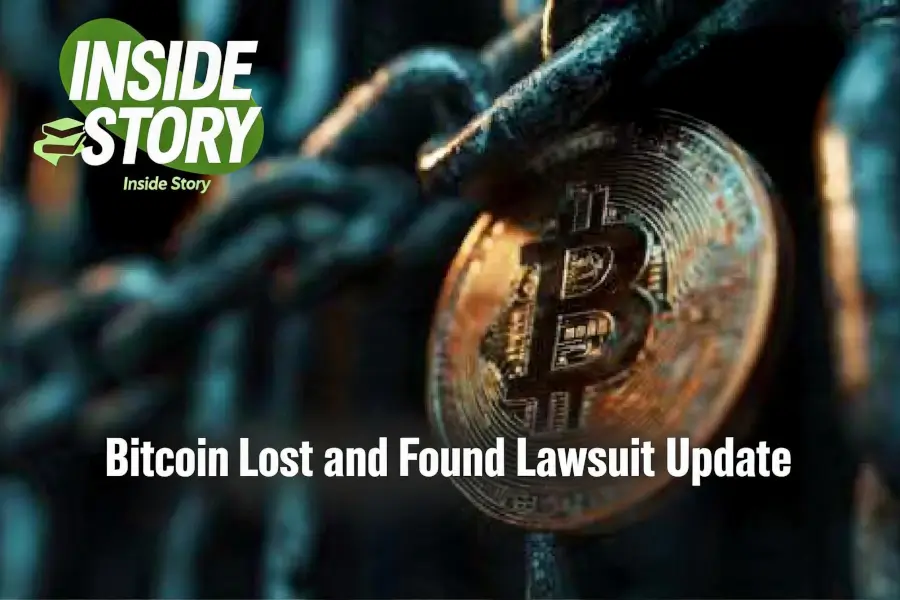
Remember the lawsuit from this June that sparked widespread online discussion about “legally claiming” Bitcoin addresses belonging to Satoshi Nakamoto?
A plaintiff using the pseudonym Noah Doe attempted to legally confirm ownership of approximately 3.799 million Bitcoin (worth about $239.3 billion) associated with 39,069 dormant Bitcoin addresses under New York’s Lost Property Law. This included 21,744 addresses belonging to Satoshi Nakamoto, totaling about 1.09 million Bitcoin (worth approximately $68.6 billion). This absurd lawsuit is worth paying attention to not only because of its unprecedented scale, but also because its outcome could impact how U.S. law protects ownership rights for digital asset holders. (Related reading: Satoshi Nakamoto sued? $83.7 billion worth of BTC about to be “legally claimed”)
Fortunately, the case has been stayed, with the next hearing scheduled for September 8. However, since June, the case has not been stagnant, and developments can be described as “interesting.” More importantly, the success of the CLARITY Act, which is currently being deliberated in the Senate, will also play a key role in determining the direction of this case.
Case Progress: Large amounts of dormant Bitcoin transferred, address owners forced to show up
Under New York law, if the defendant (the address owner) fails to appear within 30 days after the finder submits an affidavit of service, a default judgment could occur, granting Noah Doe ownership of these 39,069 dormant Bitcoin addresses. However, on June 4, Judge Kathy J. King issued a stay order, halting all further proceedings, and scheduled an oral argument for July 14 to discuss whether the Lost Property Law applies to blockchain assets.
Dormant Bitcoin worth over $2.1 billion transferred
Meanwhile, as the case gained traction on social media, the Bitcoin whales who don’t often “surf the web” finally learned that someone was eyeing their addresses and began transferring Bitcoin.
On June 2, the first transfer occurred from one of the defendant Bitcoin addresses. This independent address, dormant since March 2011, transferred 35.55 Bitcoin, worth about $2.2 million. Next, on June 6, defendant address number 37923 transferred 47.26 Bitcoin, worth nearly $3 million. On June 19, defendant address number 1504 transferred 199.216 Bitcoin; this address had been dormant since 2012.
According to Galaxy Research, since the lawsuit was filed, 52 defendant addresses have transferred 34,335 Bitcoin (approximately $2.163 billion) on-chain, with 29 addresses transferring 12,302 Bitcoin after “receiving the summons.”
Seeing the trend, the plaintiff’s lawyer, David D. Lin, filed a motion on June 18 to lift the case stay, eager to push the proceedings forward, fearing that assets in the defendant Bitcoin addresses would be completely drained.
Owner of defendant Bitcoin address #33 appears in court
However, before the court could decide, the owner of a defendant address, who had previously been unwilling to come forward, unexpectedly submitted a motion to appear.
On June 30, the owner of Bitcoin address #33 filed a notice of appearance and a motion to dismiss with the New York Supreme Court, becoming the first actual owner to object in the Noah Doe lawsuit. The documents submitted by Defendant #33 not only refuted the theory of Bitcoin address ownership but also attacked the foundational structure of the lawsuit.
First, they argued that Bitcoin addresses are not natural or legal persons and therefore cannot be subject to the court’s jurisdiction as defendants; the true holder is “a natural person with constitutionally protected property rights.” Second, according to Section 7-B of the Personal Property Law, publicly visible on-chain addresses cannot be “found” in the traditional sense. This statute was designed for tangible items with a physical location held by police. Noah Doe’s understanding of the operational algorithms of Bitcoin’s public ledger does not equate to finding property.
Furthermore, “Defendant #33” pointed out that the case is very unfavorable to defendants because the plaintiff can remain anonymous, while defendants are required to reveal their identity when appearing in court. Publicly holding a large amount of Bitcoin could pose a significant personal safety risk to the holder.
After the hearing, the case remains stayed, focusing on the September 8 hearing
Seeing the situation turn unfavorable, on July 7, plaintiff Noah Doe voluntarily withdrew the lawsuit against 44 addresses that had become active. These addresses held approximately 21,443 Bitcoin when the lawsuit was filed but later transferred over 46,000 Bitcoin, valued at over $2.9 billion. This leaves only 39,025 defendant addresses remaining.
Among these 44 removed addresses, the one holding the most Bitcoin was number 106, which held approximately 2,100 Bitcoin at the start of the case but transferred over 20,000 Bitcoin through multiple transactions between March and July.
Following the hearing on July 14, the court issued multiple “Orders to Show Cause” on July 16, scheduling the next hearing for September 8, while again fully staying the case proceedings and prohibiting the plaintiff from pursuing any default judgment applications.
Key Provisions of the Latest CLARITY Act Draft
Since the case was filed in March, the actual debate has long ceased to be merely about whether Satoshi Nakamoto’s Bitcoin addresses can be legally claimed. It also involves how U.S. law understands digital property—whether ownership is proven through cryptographic private keys, or through holding physical items or having accounts with designated intermediaries.
The U.S. Chamber of Digital Commerce has even extended its concerns beyond the crypto market. If courts deem long-term inactivity as abandonment of ownership, holders of other tokenized assets or blockchain-based real-world assets could also face uncertainty. The question is whether “quiet title” can be protected in the absence of activity.
In the U.S., which prides itself on the principle of “private property is inviolable,” an improper resolution of this case could have a massive negative impact on the country’s future crypto economy.
Essentially, Noah Doe was able to file this lawsuit by exploiting a loophole in U.S. law. Therefore, to fundamentally prevent such incidents, the law must evolve to provide clear legal grounds for court judgments.
The latest version of the CLARITY Act draft, released on July 22, addresses this need.
Section 20216 of the latest CLARITY draft defines self-custodied digital assets as digital assets where the owner retains exclusive control over the private keys required to authorize transactions. It also stipulates that digital assets held legally in self-custody cannot be deemed abandoned, unclaimed, or subject to forfeiture, escheat, adverse possession, finder’s ownership, or any similar property claim solely due to inactivity, dormancy, or the owner’s failure to demonstrate ongoing interest. This provision overrides any state or local law or regulation.
If the latest provisions of the CLARITY Act were applied, Noah Doe’s lawsuit would directly collapse, as the entire premise of the suit rests on the assumption that the dormancy of these Bitcoin addresses equates to abandonment or being unclaimed. Noah Doe would lose the case outright.
However, the provision also states that courts must distinguish between two types of digital assets: one is cryptocurrency directly controlled by individuals via private keys, and the other is cryptocurrency held on exchanges or with custodians. The new CLARITY Act protects the first type of digital asset, while state unclaimed property rules still apply to the second type.
In short, this means that if a user deposits digital assets on an exchange or with a custodian, and that exchange or custodian’s deposit address becomes long-term inactive or goes bankrupt and dormant, a finder could potentially locate and claim these addresses and assets under lost property laws.
From this perspective, under U.S. law, the best way to hold a digital asset long-term is still to transfer it to a private wallet where you control the private keys.
In conclusion, if the new version of the CLARITY Act is ultimately passed, future judgments in such lawsuits will have a legal basis, meaning the U.S. will formally establish the legal ownership rights of holders of dormant address assets. However, the issue is that the CLARITY Act’s progress in the Senate seems difficult due to disagreements between the two parties over ethical clauses. (Related reading: So close to the finish line, what exactly is holding the CLARITY Act back?)
And if the CLARITY Act cannot pass before the Congressional summer recess, the final outcome of this specific lawsuit will remain highly uncertain…
This article is sourced from the internet: Dormant whales forced to surface, the 3.8 million Bitcoin “legal claim” case takes a twist
Related: WallStreetBets: 24/7 Trading Is the Ultimate Form of Financial Markets
Over the past decade, the crypto industry has built a trading system for native crypto assets: spot exchanges, perpetual contracts, stablecoins, lending protocols, and a full-fledged Meme coin ecosystem. This has also cultivated an entire generation of users accustomed to entering the market at any time, global liquidity, and a trading market unbound by the 4 PM closing time of U.S. stocks. In my view, the next super cycle in the crypto industry is migrating traditional real-world assets onto the blockchain. Stocks, U.S. Treasuries, mutual funds, gold, crude oil, and credit products will all be on-chain. Assets like gold and Nvidia need no additional introduction. The real transformation opportunity lies in changing the channels through which the public trades assets, trading hours, and the various ways to operate assets after…
Related articles
































 English
  繁體中文
繁體中文  简体中文
简体中文