







How did the earliest regulators studying Bitcoin gradually step into the crypto world?
Author | Ding Dang (@XiaMiPP)
In the eyes of most, there seems to be an unbridgeable chasm between the क्रिप्टोcurrency industry and the US regulatory system.
On one side are the boundary-pushing tech pioneers who believe code can rewrite financial rules, constantly testing the limits of the system. On the other side are the regulators, guardians of order and stability, wielding caution and rules as their shield to protect the bottom line of the financial system.
Over the past decade, these two forces have clashed fiercely at times and reached brief compromises at others, always moving forward in a delicate state of tension.
But some individuals stand precisely on this boundary line, such as Mark Wetjen.
He spent nearly two decades working within the US financial regulatory system: from a policy advisor on the US Senate Committee on Banking, Housing, and Urban Affairs, to being nominated by President Obama as a Commissioner of the US Commodity Futures Trading Commission (CFTC), and even serving as Acting Chairman in 2014. Back then, Wall Street largely took a wait-and-see or even skeptical stance towards Bitcoin, yet he was already leading and facilitating the first formal hearing on digital assets in US regulatory history within the CFTC. Looking back, that openness and foresight towards emerging technology must have seemed particularly precious and lonely at the time.
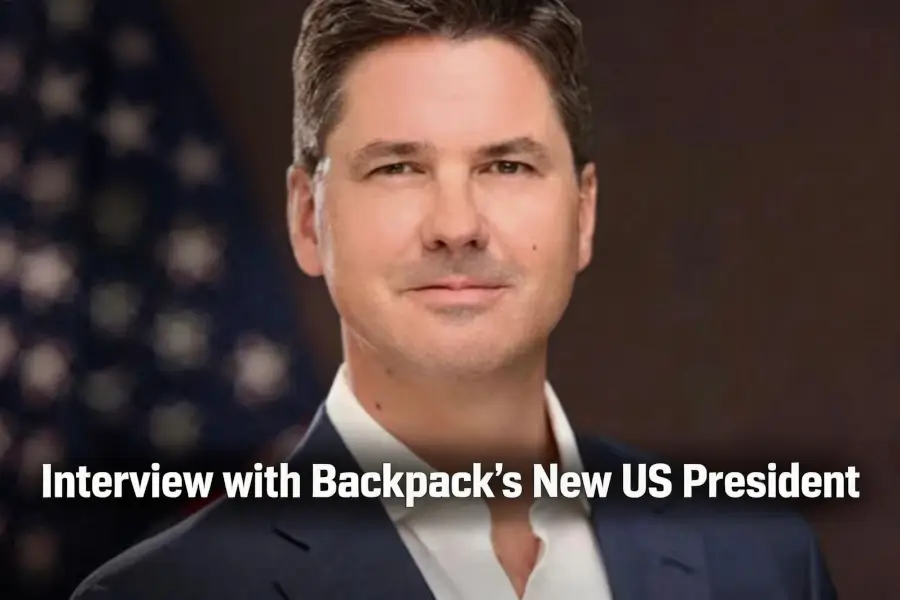
Over a decade later, this former policy maker from the regulatory seat chose to turn and step into the क्रिप्टो world. Today, he has joined the crypto trading platform Backpack as the President of Backpack US, responsible for US market operations, regulatory communication, and business development.
At this point in time, Backpack itself is also at a new critical juncture. The TGE for the platform’s native token is expected to take place on March 23rd. As the token launch approaches, Backpack is also noticeably accelerating its global market compliance layout, with the US market positioned as the most important strategic focus for the next phase.
It is against this backdrop that Odaily had the privilege of conducting an in-depth and candid conversation with Mark Wetjen.
This dialogue is not just the personal story of a regulatory veteran’s transition; it also serves as a mirror, reflecting the subtle yet profound changes in the US regulatory environment and the crypto industry ecosystem over the past decade—from initial wariness and distance to increasing understanding, dialogue, and even a certain degree of mutual convergence.
And Mark Wetjen has witnessed and participated in all of this.
From the Regulatory Seat to the बाज़ार Frontline
In the narrative of the crypto industry’s development, regulators are often seen as an “external force.” They typically arrive late, after the market has already formed, using rules to amend, restrict, or even correct the sparks of innovation that have already occurred.
But Mark Wetjen’s trajectory is somewhat different.
While many were still debating “whether Bitcoin, this nascent digital asset, is an internet bubble,” he was already pondering a more practical question: If this asset can truly exist and continue to grow, how should the regulatory system confront it?
If we closely examine Mark Wetjen’s career path, we find he has traversed almost all the key nodes of the modern financial system.
In Washington, he was a policy maker; at the CFTC, he was a regulator; at DTCC (The Depository Trust & Clearing Corporation), he entered the core financial infrastructure of Wall Street and helped shape its early thinking on blockchain technology; later, he was hired to lead MIAX Futures and assisted in its push into digital asset products. Subsequently, he joined FTX US, overseeing policy and regulatory affairs. From rule drafter, to infrastructure guardian, to exchange leader, this path essentially connects the lifeblood of the entire financial market.
During his tenure at the CFTC, he approved the first Bitcoin derivative instrument listed for trading on a regulated US platform and directed the General Counsel to assess whether Bitcoin was a commodity, thereby determining its suitability as a reference asset for CFTC-regulated products. At that time, he saw a nascent market full of potential but structurally chaotic. Even then, he was one of the earliest officials in Washington to publicly advocate for a regulatory framework for Bitcoin.
Early on, Wetjen formed the view that the crypto companies truly capable of long-term development are precisely those that treat compliance capabilities as a competitive advantage. Because compliance not only means legal safety but also broader market access, more institutional capital, and more stable long-term growth.
In Wetjen’s view, Backpack is exactly that kind of company.
They are a team that truly places compliance at the core of product design, not as an afterthought or patch. This was also a key reason he ultimately chose to join Backpack.
Now, as Backpack formally enters the US market, he has been appointed President of Backpack US, responsible for US market operations, regulatory communication, and business development. Simply put, his mission is singular: to help Backpack truly establish itself in the world’s most complex and important financial market.
Judging by today’s results, this strategy is already taking shape. Backpack has secured regulatory approvals in multiple jurisdictions: a VASP license in Dubai, MiFID II authorization in Europe, with the US being its next most critical market. In Wetjen’s view, this is no accident—it’s a strategic choice made after careful deliberation.
The Ultimate Answer in अदला-बदली Competition: Trust
Over the past few years, the battle among crypto exchanges has resembled an endless arms race: who has deeper liquidity, who iterates products faster, who lists tokens quicker… These were once hailed as the ultimate principles and indeed allowed some platforms to stand out in the short term.
However, when asked about the core competitiveness of exchanges in the next decade, in Wetjen’s view, these are not the final answers.
His answer is simple: Trust.
In the crypto industry, everything comes and goes quickly. Today’s leading matching engine could be replaced by a more efficient architecture tomorrow; an exchange’s prized liquidity pool could be replicated by competitors as market cycles shift. Even regulatory licenses, once seen as barriers, may no longer be the exclusive advantage of a few institutions as the industry gradually moves towards compliance.
But trust is different.
If an exchange can operate stably over the long term within a complex and ever-changing regulatory environment, always prioritizing user asset safety, then this trust will accumulate over time, eventually becoming the most difficult moat to replicate.
In Wetjen’s view, the role crypto trading platforms will play in the future extends far beyond being a simple trade matching system.
It’s more like a bridge. One end connects to the crypto-native world, the other to the traditional financial system, allowing both ordinary users and institutional investors to enter this new financial network in a compliant and secure manner.
This is precisely why he chose to join Backpack. “I believe this team is doing the right thing at the right time,” Wetjen said.
If, five years from now, when people think of the most compliant, trustworthy, and product-innovative trading platform in crypto, the first name that comes to mind is Backpack, then for him, this experiment might already be a success.
In a sense, this is also a natural continuation of his career.
Ten years ago, in Washington conference rooms, he discussed how to regulate Bitcoin.
Ten years later, he is participating in building a crypto financial infrastructure that can be accepted by the regulatory system.
Some are builders of the crypto world, some are gatekeepers of the regulatory system. People like Mark Wetjen are trying to build a bridge between the two.
यह लेख इंटरनेट से लिया गया है: How did the earliest regulators studying Bitcoin gradually step into the crypto world?
Original Source: Wall Street News The IEA announced the largest-ever release of strategic petroleum reserves, but the market quickly realized: what truly determines oil prices is not “how much reserve there is,” but “how much can be released per day.” According to a CCTV News report, the International Energy Agency (IEA) announced on the 11th that 32 member states have agreed to release 400 million barrels of strategic petroleum reserves. Numerically, this is the largest collective release action in IEA history. Following the 2022 Russia-Ukraine conflict, IEA members released a total of about 183 million barrels in two rounds. This time, the scale has directly doubled. According to reports, several countries have already disclosed their respective contributions: United States: 172 million barrels Japan: Approximately 80 million barrels South Korea: 22.5…
相关文章
































 हिन्दी
  English
  繁體中文
繁體中文  简体中文
简体中文  日本語
日本語  Tiếng Việt
  العربية
  한국어
한국어  Bahasa Indonesia
  اردو
اردو  Русский