






From Aave to X: Design Prodigy Benji Taylor, Why Was He Chosen by Musk?
In the early hours of March 26th Beijing time, former Base design lead Benji Taylor announced he is joining Elon Musk’s X and will lead design work.
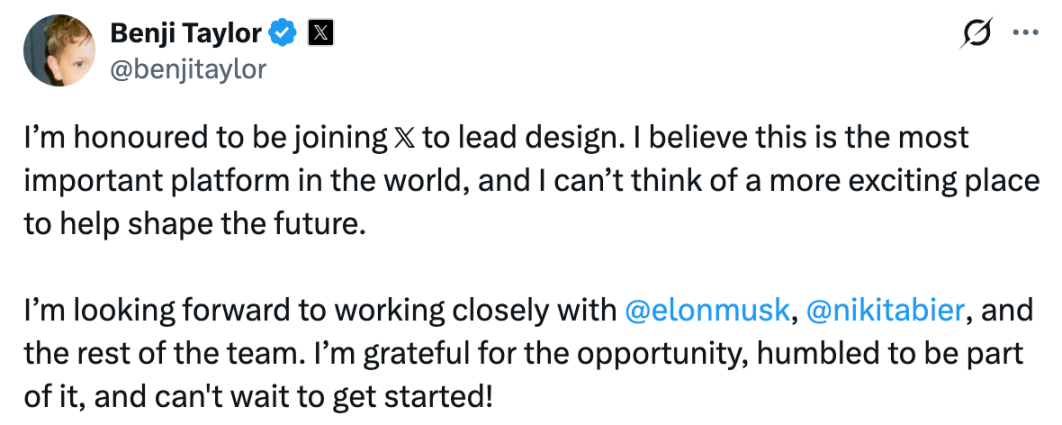
Personnel changes are never big news in the Web3 industry, but the nearly 15 million views on this post tell me it’s not that simple.
After digging deeper, I realized this person is far from just the Base design lead.
Rebellion and Talent
Benji Taylor is only about 26 years old, likely a standard “post-00s” generation.
Unlike most people who follow a conventional path, Benji Taylor was already somewhat famous by the age of 16. In 2016, this 16-year-old “Creative Director” from London, UK, was interviewed by the renowned British fashion and culture magazine *Dazed*.
At an age when many are still scribbling away in high school classrooms, Benji Taylor was already making waves across the Atlantic. Numerous artists, including Ram Riddlz and A$AP Ant, had collaborated with him. Not only that, he also found time to develop apps, design his own poker cards, and found his own design company, Next Exit.
These weren’t things he *started* doing at 16; they were things he had *already done*. According to the interview, Next Exit had been operating for at least a year.
“To be honest, I’m not great at art. I just have a lot of ideas and decided to put them into practice.”
In Benji Taylor’s view, monotonous, cookie-cutter design styles made him sick. As someone who considered himself not great at art, he still felt his work surpassed that of many others.
In this interview from a decade ago, Benji Taylor displayed maturity beyond his years. Besides expressing dissatisfaction with homogenized education, when asked for advice for other young creative workers, he said:
“Be more self-aware, understand that things don’t just happen. Going to school doesn’t guarantee you a job, nor does it guarantee a happy, stable life. You’re young, maybe still living with your parents, not paying rent—use that to your advantage. Every penny you earn is profit, so why wait until real life knocks you down?”
From Honk to Aave
Around 2020, Benji Taylor moved to the US. Soon after, a company named Los Feliz Engineering (LFE), after the first neighborhood he lived in upon arriving, was founded.
The first product launched by this company was a blockbuster.
In December 2020, Honk burst onto the scene. The app was initially promoted on TikTok, where a single video garnered over 140,000 likes.
Honk’s design was ingenious: the app had no send button. Typed content in a chat was displayed to the other person character by character in real-time, letting you see the other person editing and deleting content—like a “live chat.” Furthermore, the app had no chat history; once you left a chat room, all history was permanently deleted.
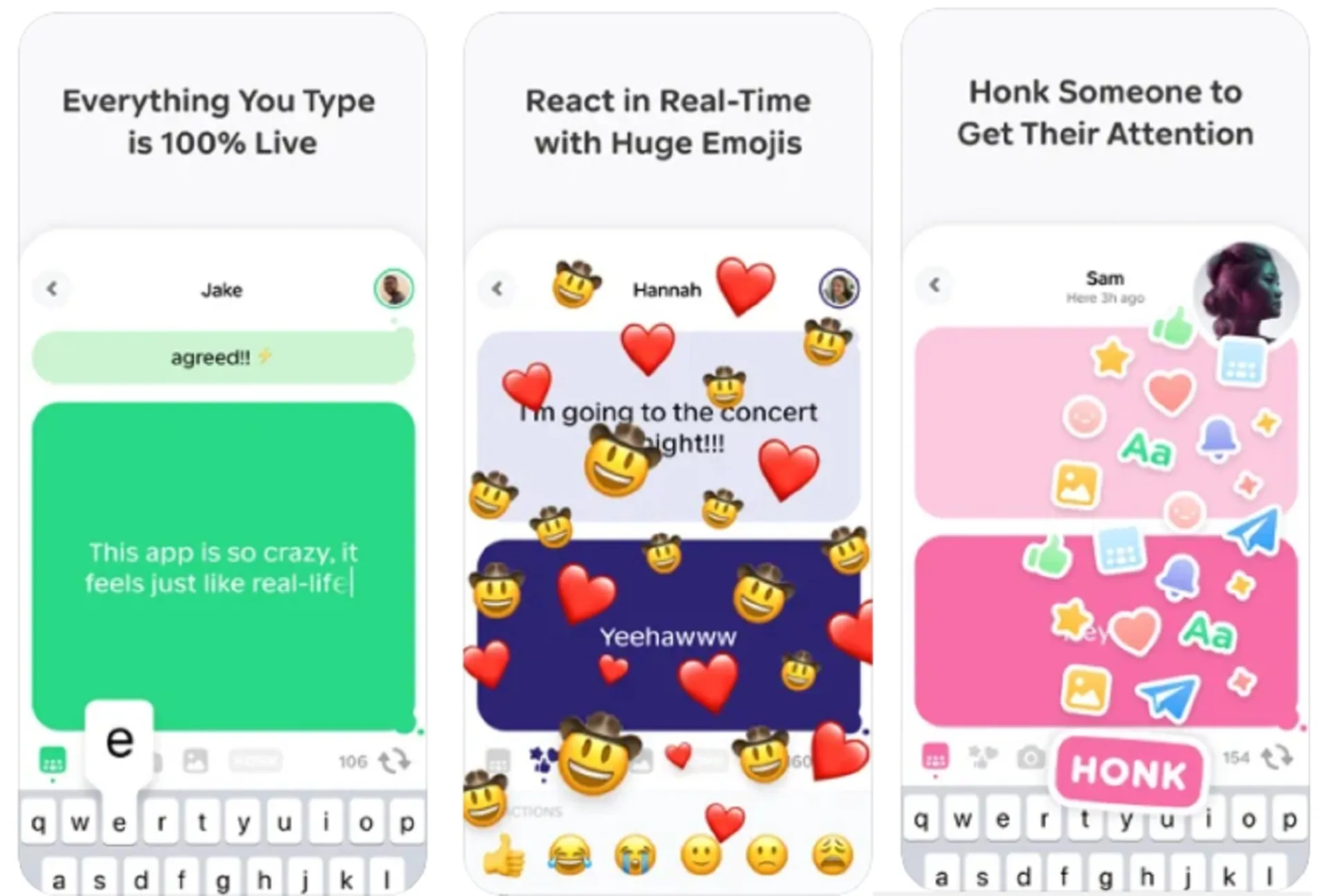
If you wanted to invite someone to a chat room, you could send a “Honk.” The recipient would get a prominent notification that someone was “calling” them. This method of translating the experience of offline, face-to-face chatting online through mechanism design was very novel.
In 2021, Honk expanded from friend-based social networking to stranger social networking. Users could randomly match with strangers via a feature similar to WeChat’s “Shake.” At its peak, Honk’s open rate even surpassed Instagram’s. By the time it shut down, Honk had accumulated 2.6 billion characters typed, 170 million “Honks” sent, and hundreds of millions of images, audio clips, and videos exchanged. It garnered a loyal user base in fields like fashion and tech.
That’s right, this app was shut down years ago. While it was highly praised by its users, and even today many product managers and designers miss this “honkish” style, the product’s PMF (Product-سوق Fit) was genuinely challenged.
The core reason was that the app required both parties to be online simultaneously. Additionally, Honk had no group chat feature and never launched an Android version.
Perhaps this app was god-like within certain niche circles, but a social app without enough people seems destined to fail.
In 2022, the LFE team began developing Family, a self-custody تشفيرcurrency wallet focused on design.
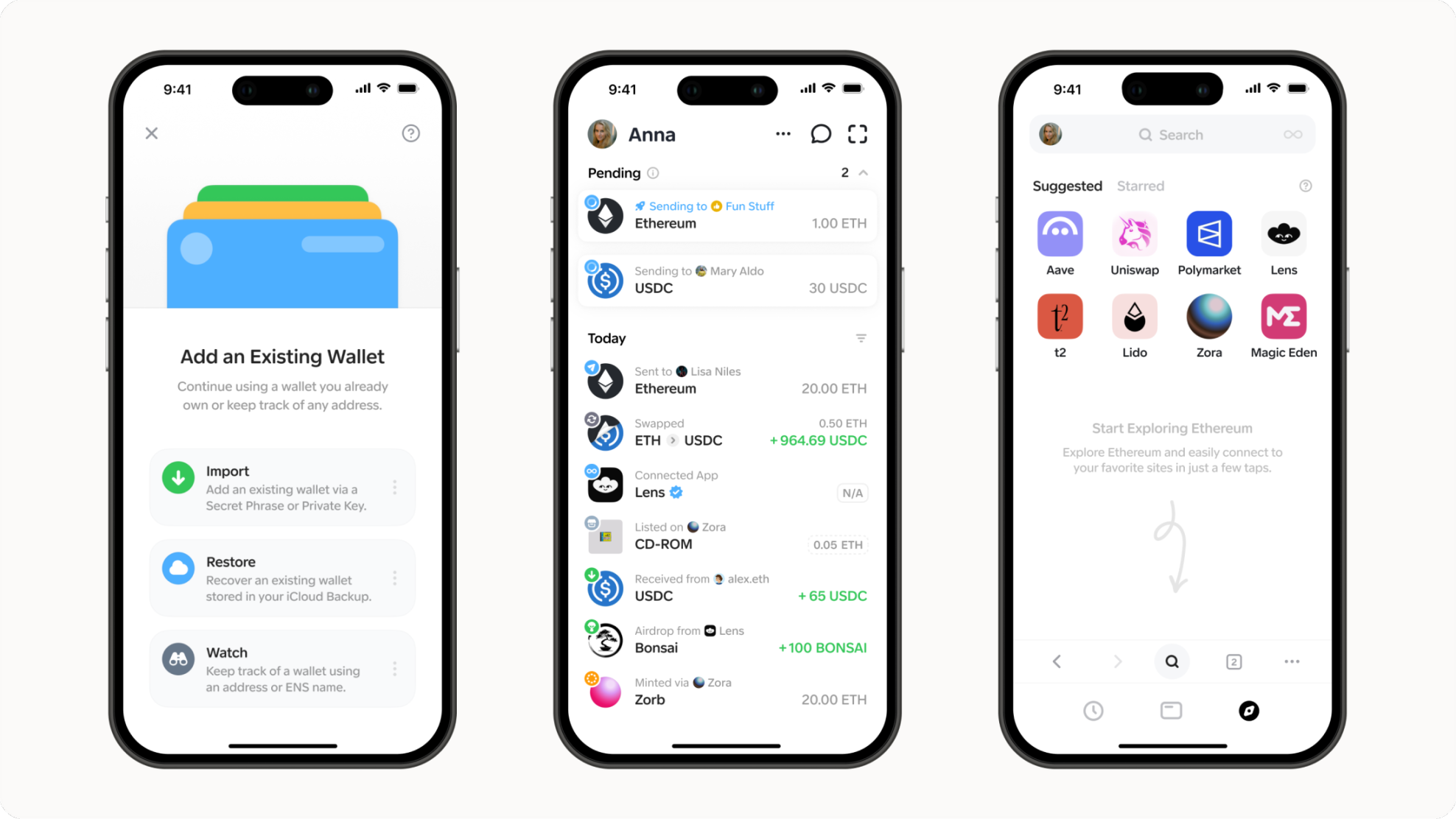
If you’ve seen a wallet app with pages resembling the one in the image above, it might have drawn inspiration from Benji Taylor’s design. This wallet product was also widely acclaimed within the industry, with many users calling it “the best crypto wallet experience.” Of course, you might not have heard of this wallet because they indeed didn’t do well in marketing.
Perhaps frustrated that his good products never gained market recognition, Benji Taylor decided to leverage a larger platform. In 2023, LFE was acquired by Aave Labs. Concurrently, Honk was shut down, while the Family wallet continued operations. Unfortunately, this wallet was also abandoned in February this year. Aave’s explanation was a focus on DeFi business and the belief that attracting users to Web3 requires purpose-built design, not a general-purpose wallet.
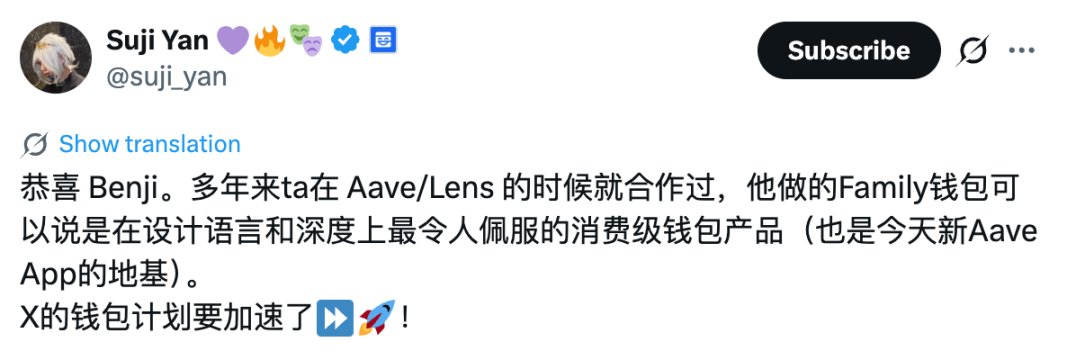
Suji, founder of Mask Network (which acquired Lens), also posted on X today, stating that the Family wallet was the most impressive consumer-grade wallet product in terms of design language and depth, and served as the foundation for the Aave App.
In October 2025, Benji Taylor left Aave and joined Base as Design Lead. If you pay attention, you’ll notice that the more well-known mobile apps in the Web3 industry today تحديnitely include Aave and Base. An industry investor once told me that the mobile app experience for most Web3 products is abysmal. With the global number of mobile phone users far exceeding PC users, having only a passable PC experience is one of the obstacles to Web3’s user expansion.
This is partly due to incomplete infrastructure and the complexities introduced by decentralization that cannot be simplified. But precisely because of this, only designers like Benji Taylor can create mobile applications for Web3 that might be considered just “passing” by Web2 standards.
The Man Chosen by Musk
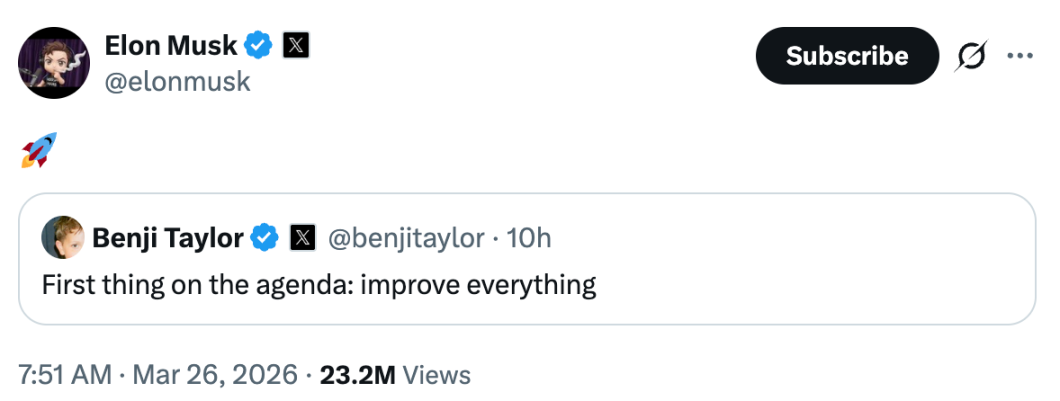
The fact that the notoriously picky Elon Musk personally tweeted to welcome his joining speaks volumes.
There is much speculation on X about his role. Some believe that with Nikita Bier, a product lead who served as an advisor to Solana Labs, plus the former Base design lead, their cryptocurrency industry backgrounds suggest Musk intends to add more crypto-related features to X.
Others speculate that his experience with social apps and crypto wallets could aid X’s encrypted messaging app, X Chat, and payment products.
Benji Taylor himself provided an answer:
In the past, this talented young man created many stunning designs, but from a purely commercial perspective, they seemed too niche. After several years of ups and downs, it’s believed that within this company—which integrates social app X, AI giant xAI, and Mars-aiming SpaceX—Benji Taylor can leverage his talent to the fullest.
AI’s design capabilities are not weak, but the highest level of aesthetic sense doesn’t come from billions or trillions of parameters; it stems from the innate gifts of geniuses.
هذا المقال مصدره من الانترنت: From Aave to X: Design Prodigy Benji Taylor, Why Was He Chosen by Musk?
Related: After Oil, Silicon is the New Chip
Original Author: Andy Kessler, WSJ Original Compilation: Peggy, BlockBeats Editor’s Note: In traditional geopolitics, oil has long been considered the core resource of war and power. However, as the importance of artificial intelligence and semiconductor technology continues to rise, new strategic variables are emerging. This article presents a clear judgment: in the competition of the 21st century, ‘silicon’ is replacing oil as the key resource affecting national power and the nature of warfare. The article begins with recent international conflicts and the energy landscape, outlining the energy and military supply chains between Venezuela, Iran, and Russia, and analyzing how oil prices, drone warfare, and the global sanctions system intertwine in real-world conflicts. As the narrative progresses, the author shifts perspective from traditional energy to technological competition, discussing the strategic significance…
相关文章
































 العربية
  English
  繁體中文
繁體中文  简体中文
简体中文  日本語
日本語  Tiếng Việt
  한국어
한국어  Bahasa Indonesia
  हिन्दी
  اردو
اردو  Русский