





Zero funding rate? The new HyperEVM contract design everyone overseas is talking about
A long-time advocate of perpetual contracts, Jez took a substantial early position in Hyperliquid, with his account address ranking high on the airdrop leaderboards for Lighter and Variational. This time, he is entering the fray himself, building a Perp DEX with zero fees, no slippage, and no funding rate.
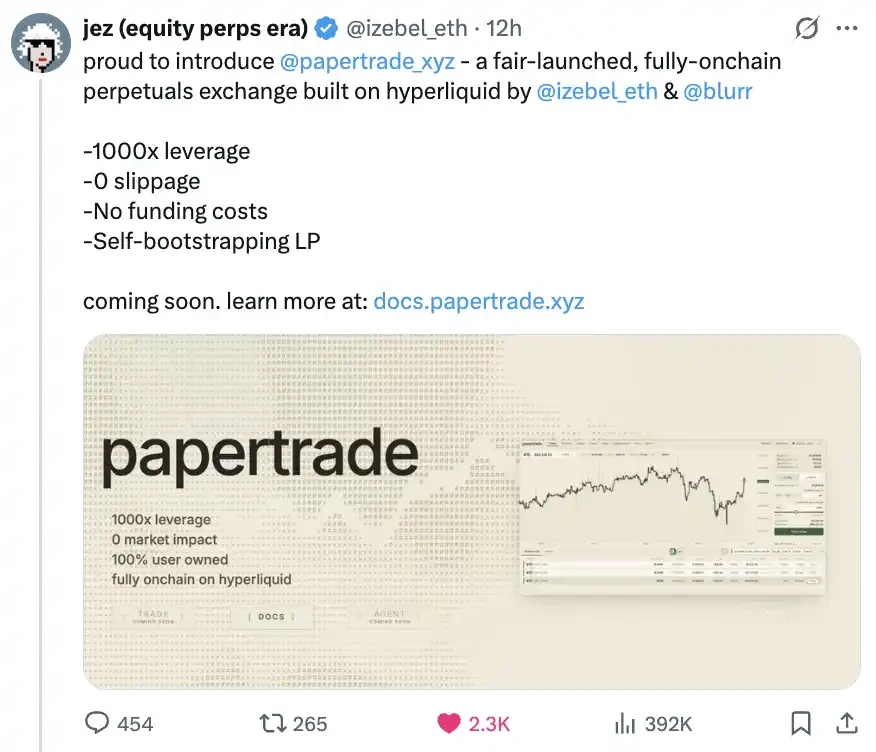
Old-School Bucket Shop Exiled On-Chain
PaperTrade’s mechanism has a notorious historical predecessor. In early 1900s American small towns, bucket shops operated under the guise of brokerage firms. They would chalk up real-time NYSE quotes on a board behind the counter, but customer orders never left the owner’s drawer. Essentially, it was a bet between the customer and the shop owner. This business was outlawed in New York State in 1909 and had largely disappeared by the 1920s.
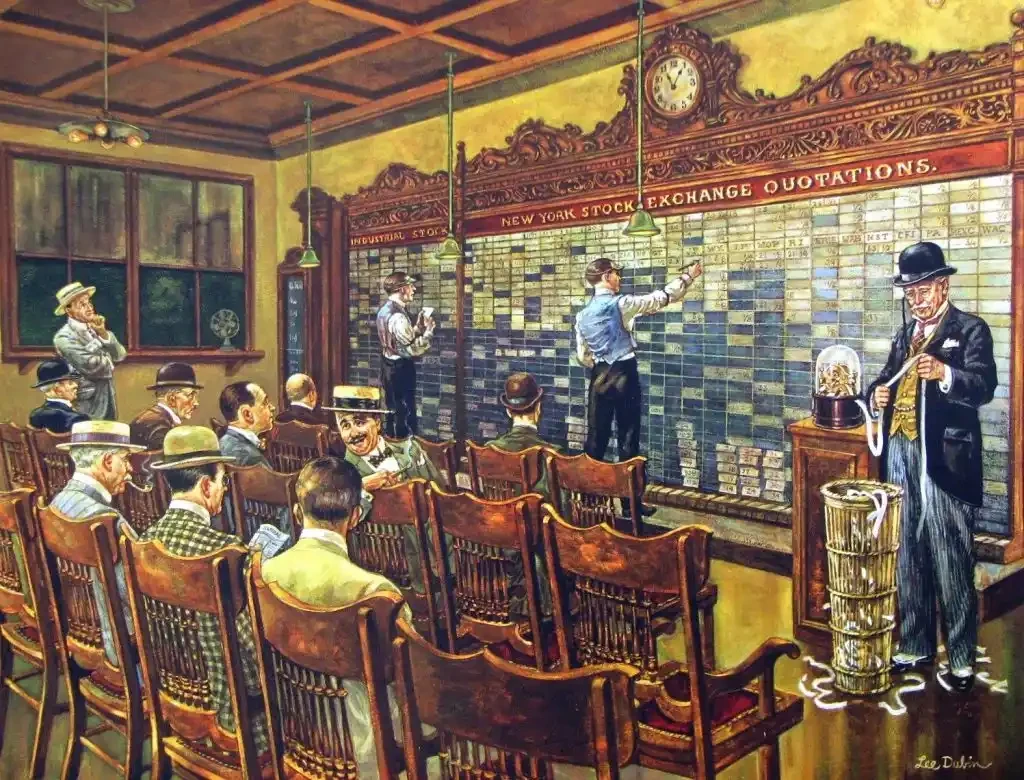
When a user opens or closes a position on PaperTrade, the protocol directly reads the order book price from Hyperliquid and settles the difference directly with a public LP pool. Throughout this entire process, no order enters Hyperliquid’s matching engine, and no actual perpetual contract changes hands. The transaction is always between the user and the LP pool, with no third-party counterparty.
Perpetual Contract + P2P + DeFi Ponzi
PaperTrade simultaneously borrows models from DeFi yield farming and P2P lending.
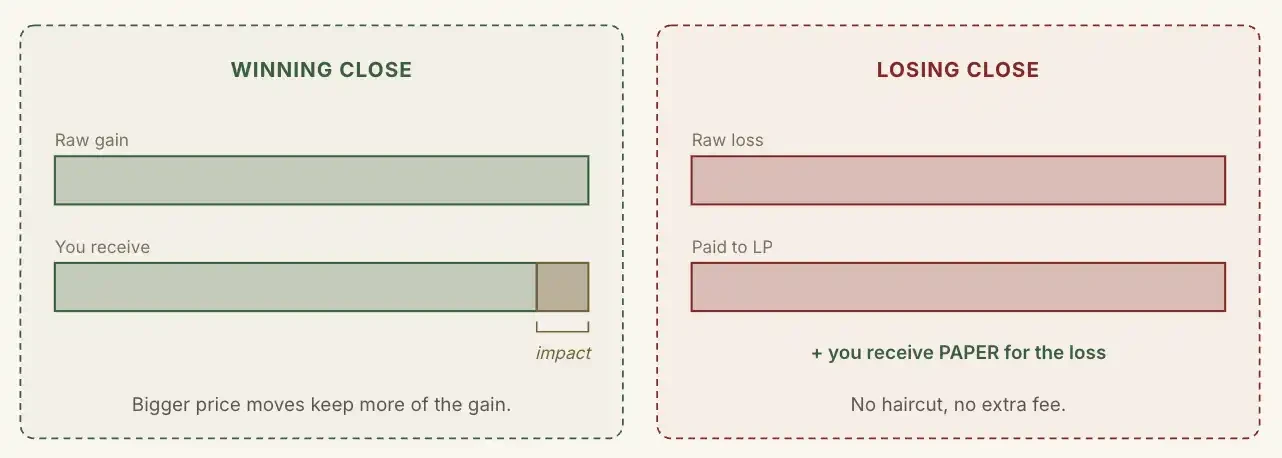
User losses on PaperTrade are deposited intact into the protocol’s LP pool, while user profits are subject to a protocol fee. The smaller the price fluctuation, the greater the fee collected. In other words, the more users earn, the less the protocol takes.
Unlike HLP, PaperTrade’s LP pool has no team pre-deposit, no VC funding, and does not accept any form of external deposit. Its sole source of funds is the margin from user losses.
The problem arises: if the LP pool only has $100, but a user profits $5,000, how can the protocol pay out?
PaperTrade brings the concept of a debt queue from traditional P2P lending to the chain.
This $5,000 profit enters an ordered on-chain queue, awaiting subsequent losing trades to fill the gap. The queue pays out sequentially from the front. The user’s principal is always returned immediately; only the profit portion is queued.
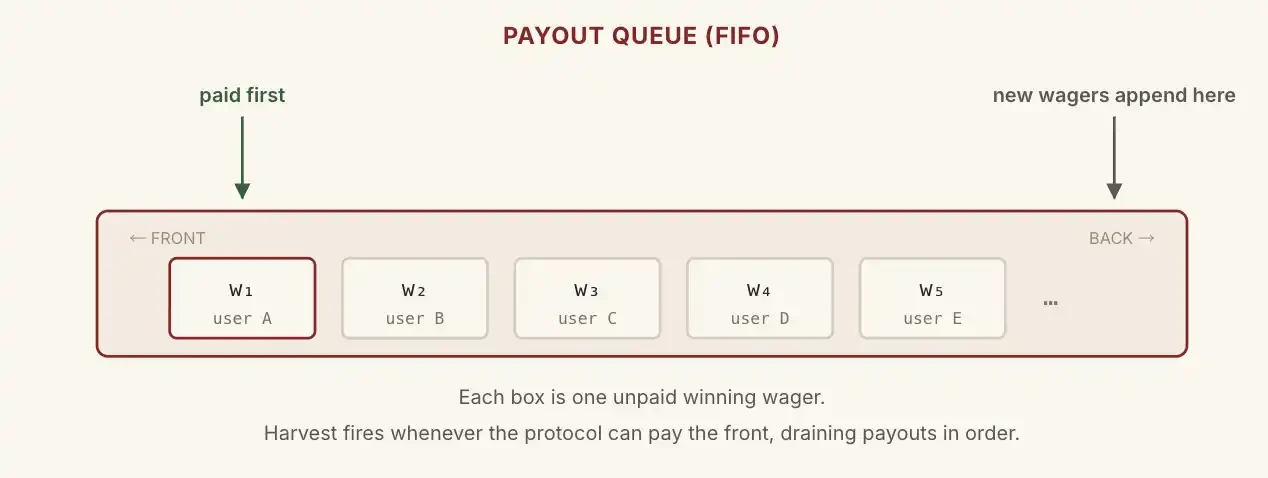
Theoretically, the LP can become “insolvent” periodically, but every winner will eventually be paid, unless the losses from losers are insufficient to cover the profits owed to winners.
If it ended here, this project would be destined for failure. If the LP pool runs out of money, winners might have to wait in定义nitely in line to receive their profits, naturally losing their incentive to trade. Traders would leave, and without even losers, the platform’s debt to winners would become bad debt.
The essence of PaperTrade is its token, PAPER.
For every dollar a user loses, the protocol mints a specific amount of PAPER according to a curve.
When the LP balance is below $2 million, the minting ratio is fixed at 100 PAPER per $1 lost. Once the LP exceeds $2 million, the rate begins to decay; the higher the LP balance, the fewer PAPER are minted per dollar lost.
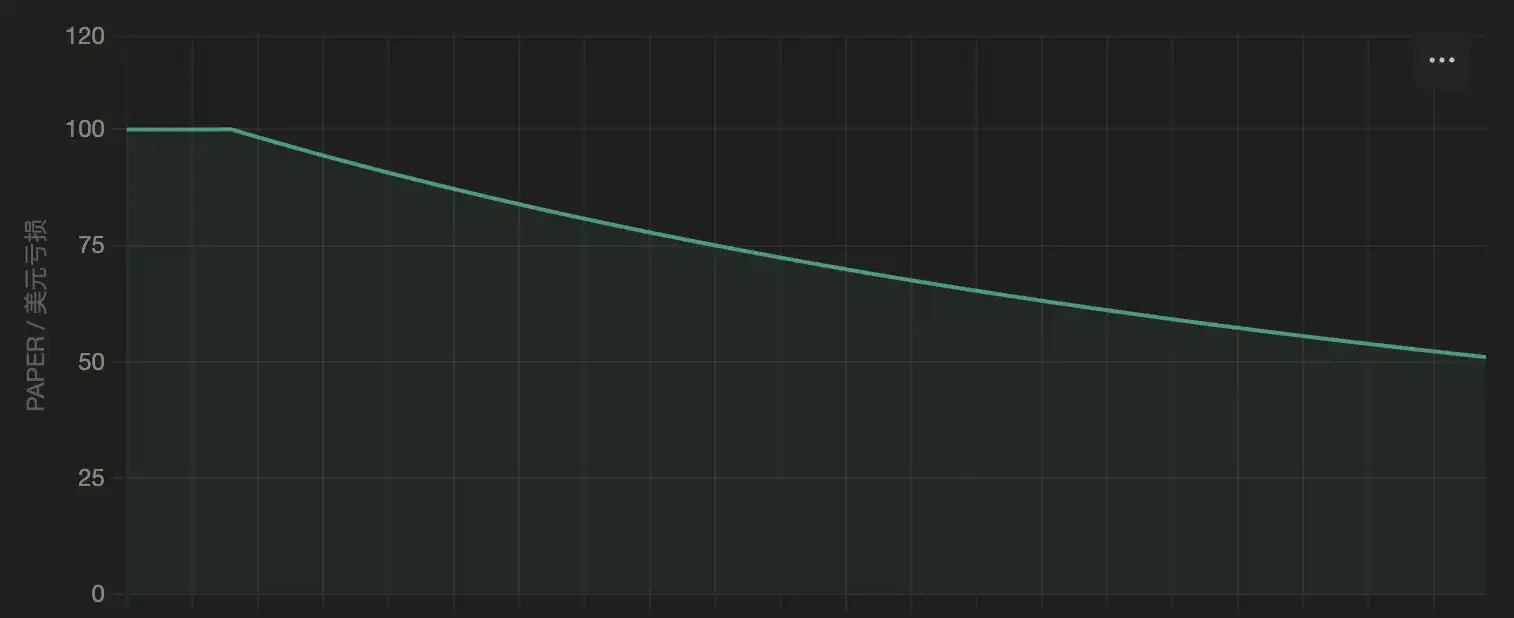
X-axis: PAPER received per unit loss; Y-axis: LP balance (unit: 1M)
Staking PAPER entitles holders to two types of dividends: first, the protocol’s fee revenue; second, once the LP balance exceeds $5 million, all excess funds are allocated entirely to stakers.
In other words, the LP pool size is engineered with a $5 million cap. Above this threshold, all user losses are redirected to PAPER holders. This creates a closed loop: “Losers gain platform equity, winners take losers’ money, and the protocol taxes winners to subsidize losers.”
Therefore, a plausible participation strategy can be summarized as: bet and lose money when the LP pool’s TVL is low to mint PAPER, and stake PAPER when the LP pool’s TVL is high to collect dividends.
Stress Test for HyperEVM
In the author’s opinion, the biggest uncertainty for PaperTrade lies within the HyperEVM it is deployed on.
PaperTrade essentially uses Hyperliquid’s price feed as a free, native oracle, with all other logic residing within HyperEVM smart contracts.
This means any high-performance chain with similar capabilities, willing to integrate an external price oracle, could replicate PaperTrade’s entire mechanism exactly. A replicator could even offer things HyperEVM currently lacks: lower gas fees, higher TPS, more generous early subsidies, and more aggressive token incentives.
During the Q1 2024 meme season on HyperEVM, the network experienced a period of slow transaction speeds and high gas fees. The launch of PaperTrade serves as another significant test for HyperEVM.
本文来源于互联网: Zero funding rate? The new HyperEVM contract design everyone overseas is talking about
The U.S. Senate Banking Committee originally planned to deliberate and vote on the crypto market structure bill, the Clarity Act, by the end of April, but intense lobbying initiated by banking trade groups is pushing this timeline into May. Committee Chairman Tim Scott told Fox Business on April 14th that deliberations might not be completed in April, citing three unresolved issues: stablecoin yield provisions, DeFi-related clauses, and securing support from all Republican senators on the committee. Procedurally, if the Banking Committee planned to vote during the week of April 27th, it needed to issue a notice of consideration no later than April 25th. However, the committee’s attention on April 22nd will first be occupied by the confirmation hearing for Kevin Warsh, the Federal Reserve Chair nominee put forward by Trump.…






























 简体中文
简体中文  English
  繁體中文
繁體中文  日本語
日本語  Tiếng Việt
  العربية
  한국어
한국어  Bahasa Indonesia
  हिन्दी
  اردو
اردو  Русский