








175-Year-Old Western Union: Not Just Playing with Stablecoins, Also Bought a Digital Wallet
In 2018, Western Union conducted a small experiment. They integrated Ripple’s cross-border payment product xRapid to settle currency exchanges between the US dollar and the Mexican peso using the XRP token. A total of 10 transactions were tested. After the test, the then CEO publicly stated: It was too expensive and did not save any costs. The experiment was subsequently paused.
On April 3, 2026, Western Union announced the 获得 of the Singaporean digital wallet Dash. Originally under Singapore Telecommunications (Singtel), Dash has 1.4 million users and supports payments, remittances, savings, insurance, and investments, making it one of the most widely adopted full-featured wallets in Singapore. This marks Western Union’s first digital wallet asset acquisition in the Asia-Pacific region.
Eight years, from “blockchain is too expensive” to issuing its own stablecoin on Solana and now beginning to deploy 加密 wallets, Western Union has quietly undergone a reconstruction.
Western Union’s 175 Years
Domestic users in China may rarely use Western Union, or even be unsure what the name represents. But in over 200 countries and regions worldwide, especially within immigrant communities in Southeast Asia, Latin America, and South Asia, Western Union is almost synonymous with “sending money.”
It was founded in 1851, 20 years before China’s first telegraph line. It started as a telegraph business, constructing the first transcontinental telegraph line in the United States. In 1871, it began offering money transfers, using “telegraphic transfers” to allow people, for the first time, to send money to another city without carrying cash or being physically present.
Over 170 years later, the core logic remains unchanged: Western Union maintains over 500,000 physical agent locations globally, mostly small supermarkets, convenience stores, and post offices. People walk in, fill out a form, hand cash to the counter, and the recipient can withdraw the money at another agent location. This network covers areas largely untouched by the banking system—immigrant workers without bank accounts, people unable to obtain credit cards, and families in remote areas relying on remittances from relatives.
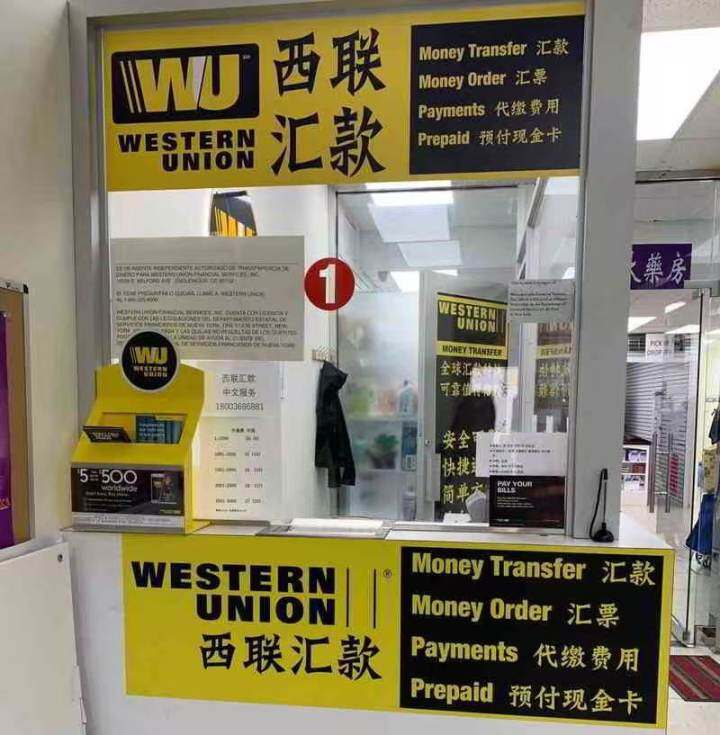
But this network is also Western Union’s heaviest burden. The cost of maintaining 500,000 agent points accounts for approximately 60% of its service costs. Its core customer base—cash-dependent immigrant remittances—is being eroded by successive generations of digital-native products. Wise’s cross-border transfer fees are 60% to 80% lower than Western Union’s; Remitly’s revenue reached $1.635 billion in 2025, a 29% year-on-year increase, boasting 9 million active users. Although Western Union’s digital revenue is also growing, it still only accounts for 35% of total C2C revenue, with the vast majority of profits still coming from users who walk into physical locations and take out cash.
Western Union is being caught up, and it knows it.
Moving the Remittance Path On-Chain with Stablecoins
In October 2025, Western Union announced it would issue the USDPT stablecoin on Solana, with the issuer being the US-licensed crypto bank Anchorage Digital. As of April 2026, USDPT has entered the actual deployment phase. Simultaneously, Western Union is building a “Digital Asset Network” to connect multiple on-ramp and off-ramp platforms, aiming to allow users holding any mainstream crypto asset to convert it into cash through Western Union’s network.
A more specific implementation scenario is its partnership with Rain to issue a stablecoin-linked Visa card. This card, tied to a US dollar stablecoin, is designed for high-inflation countries, specifically targeting nations like Argentina and Zimbabwe where local currencies depreciate by tens or even hundreds of percentage points annually. Western Union CFO Matthew Cagwin mentioned at an industry conference, “Argentina’s inflation exceeded 200% last year. After locals receive US dollar stablecoins, they can directly spend at merchants or walk into a Western Union location to withdraw cash.” The final step still relies on that network of 500,000 cash points.
The Wallet is the Real Battlefield
For over 170 years, Western Union has played the role of a “pipeline” in remittances: money flows in from one end and out from the other, used and then gone. Users are not within Western Union’s app or its accounts; they are just passing through. What Wise and Remitly are capturing is precisely that time when users stay—people are becoming accustomed to keeping money in digital wallets, where transfers are just one action, not the entirety.
The acquisition of Dash is Western Union’s first real attempt to retain users.

Launched by Singtel in 2014, Dash is deeply embedded in Singapore’s local life scenarios: paying utility bills, buying insurance, making small investments, and sending money to family overseas—all within a single app. With 1.4 million users, its penetration is quite high for a city-state. More importantly, a large portion of these users are Southeast Asian immigrants working in Singapore, precisely Western Union’s core customer base.
Western Union’s previous way of reaching these people was to have them walk into a convenience store counter. Now, it wants to reside directly in their phones.
Dash brings not just users, but also a front-end for directly testing new products. Once the USDPT stablecoin launches, one of the most natural distribution channels will be Dash’s wallet interface; the stablecoin card for high-inflation markets also needs a trusted app to onboard users. Singapore, as a financial hub in Southeast Asia with a relatively mature regulatory environment, is the most suitable place for Western Union to validate this on-chain product logic before rolling it out across the entire Asia-Pacific region.
本文来源于互联网: 175-Year-Old Western Union: Not Just Playing with Stablecoins, Also Bought a Digital Wallet
Related: Huang Renxun’s Endorsement? SN3 Surges 5x in a Month, What Exactly Did It Do?
On March 20, 2026, an unusual conversation unfolded on the All-In venture capital podcast. Venture capital heavyweight Chamath Palihapitiya turned to NVIDIA CEO Jensen Huang, mentioning that a project on Bittensor had “achieved a rather insane technical feat”: training a large language model on the internet using distributed computing power, a process that was completely decentralized with no centralized data centers involved. Huang did not shy away. He likened it to “a modern version of Folding@home”, the distributed project from the 2000s that allowed ordinary users to contribute idle computing power to collectively tackle the protein folding problem. Just four days earlier, on March 16, Anthropic co-founder Jack Clark, in a report on AI research progress, also dedicated significant space to highlight and reference this breakthrough: Bittensor ecosystem subnet Templar…































 简体中文
简体中文  English
  繁體中文
繁體中文  日本語
日本語  Tiếng Việt
  العربية
  한국어
한국어  Bahasa Indonesia
  हिन्दी
  اردو
اردو  Русский