







The Most Important Thing in Web3 Primary Market Investment
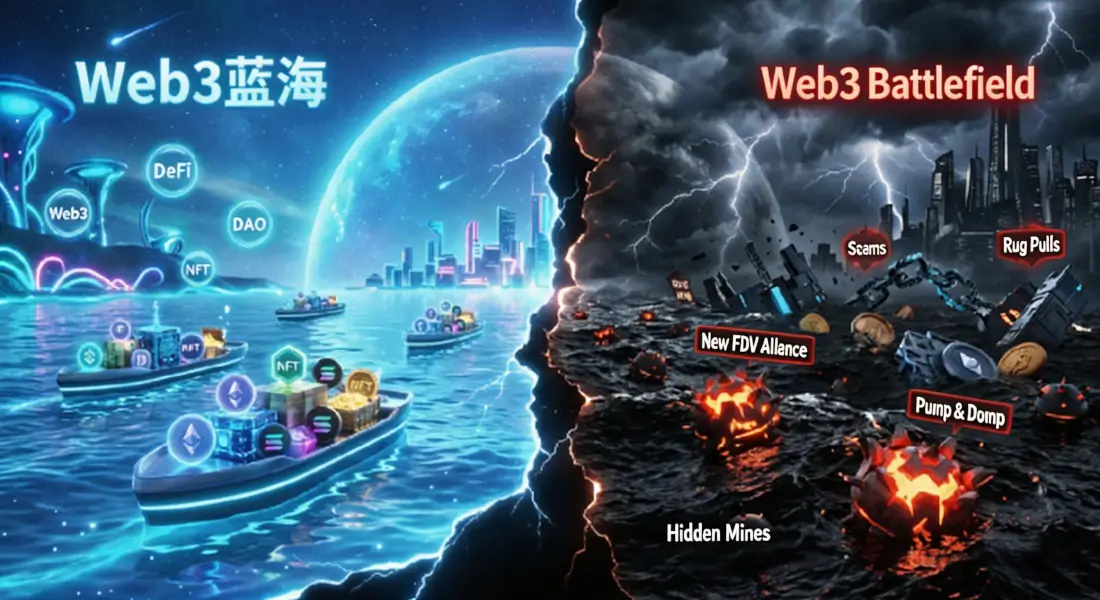
1. Project Essence: The Changing Value and Judgment of Founders
In the Web3 space, the team is the only non-standardized variable and the soul of an early-stage project. Judging founders requires looking beyond their impressive resumes to assess their degree of “криптовалюта-native” understanding, the authenticity of their technical delivery, and their moral bottom line in the face of extreme interests. Since many projects in the primary market are in their infancy, the capabilities, vision, and professional ethics of the founding team are crucial. The ability to judge people has become one of the most important talents and skills for investors in this field.
- Github Commit Frequency: Don’t just listen to the technical vision in the Pitch Deck. In the AI era, many BPs are even generated with one click by AI, filled with AI fantasies. For technology-driven projects (e.g., Infra, ZK, L2), the underlying code on GitHub must be reviewed by a technical partner or other technical institutions. However, since many early-stage projects haven’t started building the product yet, this step also heavily relies on the founder’s past capabilities and reputation. For example, regarding Algorand’s technical vision at the time, knowing that the underlying project was led by a Turing Award winner from MIT naturally reduced the difficulty of the technical due diligence required.
- But by 2026, as the number of high-quality projects led by seasoned veterans that newcomers could blindly invest in gradually decreases, there are more and more young founders for new projects. The requirements for judging people and technical review have entered a new level.
- Activity Trap: Be wary of projects that rush to commit code before fundraising and then go silent for long periods afterward. Data from 2025 shows that projects without audits or with long-inactive code repositories have an 80% higher risk of Rug Pull.
- Contributor Diversity: Check if the code is submitted by a single person or has diverse contributors. Large projects maintained by a single individual often imply a high “Bus Factor” risk. Although the number of OPC companies has increased in the AI era, oversight by senior technical personnel and security risk screening for large projects are still very necessary.
- Risk of Parachuted Web2 Executives: Be cautious of “parachuted executive” teams with perfect resumes from Web2 giants but no on-chain traces in Web3. This type of parachuting easily brings all the bad habits of Web2 corporate management into the Web3 ecosystem, leading to poor adaptation and weak project operation in later stages. Unless other team members have rich Web3 experience to balance it out, the risk coefficient is simply too high at this critical juncture of 2025-2026. Web3’s decentralized governance and community culture are fundamentally different from Web2, and such executives often lack practical experience in handling community crises (e.g., governance attacks, fork threats, economic models).
- Serial Entrepreneurs: Deep Attribution of Past Failures: Serial entrepreneurs command a premium in Web3, but it’s necessary to distinguish between “honorable failure,” “malicious harvesting,” and “pure incompetence.” Soft Rug Detection: Investigate whether their previous project experienced a soft rug (Soft Rug), where the team stopped development after fundraising citing “poor market conditions” but did not return funds. History of Treasury Misuse: Check the multi-signature wallet records of previous projects to confirm if there was any misappropriation of public funds for personal investment or high-risk financial management without community voting.
2. Judgment of Resources Behind the Project
Around 2026, the primary market of the Web3 industry has also entered a new phase, with some confusing points. Major exchanges have frequently listed meme and sentiment-driven tokens over the past year, causing many projects with solid technical foundations but less focus on marketing to receive less favor. This situation may gradually improve in the future (Note: As of the end of March 2026, Binance has taken the lead in optimizing and improving the quality of listed projects, reducing pure meme types. However, the lingering negative effects from the past two years will take time to detoxify. The market is no longer enthusiastic about valuations of new projects, and the listing effect is not comparable to that around 2020. If Binance is like this, the aftermath for other major exchanges will be even more pronounced). For new projects, it’s still essential to judge the resources behind them. The core of resource judgment lies in distinguishing between “value-added capital” and “scythe-type capital,” the level of advisors, and whether there are acquaintances operating behind the scenes. When identifying the real substance of partners, one must not only look at who invested but also at “how they invested” and “what they do post-investment.”
- Signal Noise from Top VCs: While investments from a16z, Paradigm, Polychain, Coinbase are strong signals, it’s important to note the difference between leading (Lead) and following (Follow) investments. Moreover, due to the aforementioned Cliff dilemma, the actual returns of various top VCs have also plummeted significantly. Within the industry, many VCs have faced the predicament of shutting down or being forced to raise larger rounds. Furthermore, most of the investments made by many VCs over these four years are likely underwater. Therefore, the follow-up from top VCs is more likely to be a directional assist; the true value judgment still relies on the investor themselves.
- Judgment of Follow-on Investments: If a top VC only follows with a very small allocation (e.g., $30k – $100k) and does not join the board (PS: but attention is also needed here regarding the investment round and valuation. If entering at an extremely low valuation, such as $3M, then even a few tens of thousands of dollars can represent a very high percentage), this is often an allocation given by the project to “gild” its image, or it’s purely a favor-based deal. Generally, investment firms cannot obtain such cheap valuations. If they only participated in a small portion in subsequent high-valuation rounds as well, then such “Logo investments” do not represent that the VC will provide actual resource support (e.g., recruitment, legal, token model design). However, for some particularly sought-after projects, even a small allocation of low-valuation tokens might bring strong endorsement. This needs to be judged on a case-by-case basis.
- The Substance of Public Chain Foundation Grants: Compared to VC investments, receiving a Grant from major public chain foundations like the Ethereum Foundation, Solana Foundation, or NEAR, BSC Foundation usually represents relatively more hardcore technical recognition. The due diligence process for such Grants often focuses more on code implementation than VCs. But this is only relative, because as industry heat increases application volume, and with the influx and frequent transfers of new personnel from Web2, the judgment level of foundation personnel themselves is uneven. The same brand may have vastly different standards before and after a change in the main leader. For example, both Binance Labs (now renamed: YZI Labs) and Algorand have faced investment quality dilemmas due to large-scale personnel transfers. However, Binance, with its strong cash flow from exchange operations continuously replenishing, possesses an extremely high tolerance for trial and error that ordinary VCs do not have.
- Direct Access via Обмен Relationships: Assess whether there are early investors with direct ties to Binance, Coinbase, Upbit, etc., or institutions strongly connected to exchanges. These resources often have priority trust and review priority. They can significantly increase the probability of a project getting listed on Tier 1 exchanges, which is key to solving exit liquidity.
- Identifying Scythe-Type Capital and Advisors: Thoroughly research VC brands and individuals whose reputations have already fluctuated in the past. While insider listings do not officially exist in the Web3 industry, in reality, there are still individual cases where listings occur due to personal relationships. In such cases, it is essential to fully understand whether participating projects involve institutions or market makers with poor reputations or a history of continuously harvesting investors, and avoid them early. (PS: However, due to the emergence of Cliff, such cases at the VC level have actually decreased. Instead, they are often replaced by more irresponsible project-side ecosystem proportion tokens and airdrop “rat warehouse” tokens, which are even less restrained and more hidden, leading to situations where both investors and VCs are harvested by projects, causing sustained negative impacts on new listings in the industry.)
3. Judgment of Heat Within the Respective Sector
Investment timing (Timing) and sector selection are key to determining the upper limit of investment return (ROI). Research in this dimension cannot rely solely on market sentiment; it requires the comprehensive use of Gartner curve positioning, on-chain data falsification, and macro-geopolitical arbitrage strategies to identify real value depressions amidst the noise.
- The essence of investment is the monetization of cognition, and the level of cognition depends on the judgment of cycles. Recovery Phase Sectors (Steady Growth Type): Sectors like DeFi lending, RWA (Real World Assets) have passed the concept FOMO bubble burst phase and entered the “Enlightenment Slope.” The characteristics of these areas are generating real revenue (Real Yield), having clear business models, and possessing professional, sticky users. At this point, primary market investment strategies, including some secondary market strategies, should focus on finding undervalued leaders, or middleware with a large user base that hasn’t conducted sufficient Web3 promotion or is dedicated to solving specific efficiency problems, mainly pursuing relatively certain Beta returns.
- Peak of Inflated Expectations Sectors (High-Risk Gambling Type): AI x Crypto (decentralized computing power/agents), DePIN (Decentralized Physical Infrastructure) were at the typical peak of the “Peak of Inflated Expectations” in 2024-2025. Current valuations generally contain huge narrative premiums, with severe capital crowding. Investing in such sectors requires extremely strong fast-in, fast-out capabilities, pursuing high-explosive Alpha returns. However, due to the current cliff cycles, it’s even more important to participate in projects with long-term leader potential that can withstand the test of time and bull/bear cycles. At the same time, one must always be vigilant about the risk of narrative bubble bursts.
- Differentiating Technical Moats from Narrative Moats: When judging heat, it’s necessary to distinguish whether a project builds barriers with hardcore technology (e.g., new proof mechanisms for ZK-Rollup) or maintains heat with marketing rhetoric (e.g., “Intent-Centric Architecture”). The former still has room to survive after the heat subsides, while the latter is often fleeting.
- Deep Penetration of On-Chain Data and Narrative Falsification Social media noise is often a contrarian indicator; only on-chain data doesn’t lie, although there can also be short-term fake data used to manipulate sentiment.
- Structural Differences Between Real and Fake Heat: When using Dune Analytics or Nansen to track fund flows, one cannot just look at the absolute value of TVL but must also examine the composition and retention of TVL.
- Structural Heat is reflected as: TVL and active wallet numbers continue to grow or remain stable even when token incentives stop or the broader market declines (e.g., the Layer 2 sector in 2024-2025, relying on real demand from the Ethereum ecosystem).
- Identifying Characteristics of False Prosperity: If data fluctuates violently with token prices, or is mainly supported by a few whale addresses, it is mostly false prosperity built by marketing activities (e.g., “vampire attack” style mining). It is crucial to focus on Cohort Analysis: What is the retention rate of the first batch of users who came for the airdrop after 3 months? If it is below 5%, it indicates the product lacks real use value (Product-Рынок Fit).
- Monitoring the Flow of Smart Money: Track wallet addresses labeled as “Smart Money” or belonging to well-known institutions. If they are quietly accumulating positions in a certain sector, this is usually a leading indicator that the sector is about to explode, more timely than any research report.
- Timing Based on Regulatory Arbitrage and Macro Liquidity CyclesWeb3 is a global market, where geopolitics and macroeconomics profoundly affect sector ceilings. Regulatory Sensitivity and Geopolitical Arbitrage: Different sectors have vastly different sensitivities to regulation. Privacy Sectors (Privacy Pools, Mixers) faced high-pressure crackdowns from global anti-money laundering (AML) in 2025, with extremely high compliance risks, requiring extreme caution in investment. However, by the end of 2025, some compliance and regulatory policies actually stimulated additional heat and market movements in some privacy sectors;
- while the RWA Sector benefits from the compliance framework of traditional financial institutions entering, enjoying a “compliance premium.” Additionally, attention must be paid to policy dividends in different regions (e.g., policy changes in Hong Kong China and Mainland China, the US, EU, Dubai, Singapore). Investing in projects aligned with local policy directions can provide a policy umbrella.
- Precise Positioning in Macro Liquidity Cycles: Primary market investment has a long cycle and must anticipate the macro environment 2-3 years later. Avoid making heavy bets during the “Distribution Phase” (peak of a bull market, eve of a rate hike cycle), when primary market valuations are severely overextended, and the probability of listing and immediately breaking issue price is extremely high. The best entry points are often at the end of the “Accumulation Phase” (early stages of a rate cut cycle or early expectations of QE), when market noise is minimal, valuations return to rationality, and projects have sufficient time to refine their products in a low-cost environment, quietly awaiting the next trend. (PS: VCs who invested heavily in 2021 should understand this point best.)
4. Judgment of Whether There is Experience in Successful Investment or Large Project Operation
The mortality rate of Web3 projects is extremely high. The founding team’s “survival skills”—namely operational capabilities, crisis management experience, and understanding of Web3-specific dynamics—are key to determining a project’s lifespan. The current market situation in 2026 has undergone tremendous changes. Between 2013 and 2019, many were initially exploring the blockchain industry, and inexperienced career changers were everywhere. But by 2026, the entire market business has gradually matured, and the speed of change in hot topic rhythms and dissemination is also very rapid. If founders do not have relevant experience in Web3 entrepreneurship, investment, or hands-on operational participation, the difficulty coefficient and probability of project failure will skyrocket.
- Success Rate Premium of Serial Entrepreneurs The “Second Time Around Effect” shows that founders on their second venture have a significantly higher success rate than first-time founders (approximately 18% vs. below 10%). Teams that have experienced a complete bull-bear cycle (4-year cycle) have stronger control over cyclical risks and fund management. If the founder has had successful project listing and operation experience, and the previous project did not rug or collapse and harvest investors, then their understanding of compliance structures, listing processes, and market cap management, along with their reputation within the industry, will be huge intangible assets, allowing them to avoid 90% of compliance and financial pitfalls.
- Operational Metrics and Go-To-Рынок (GTM) Execution Examine whether the team possesses “cold start” capabilities, such as acquiring real users through carefully designed growth strategies (e.g., Galxe quests), convenient relationship networks, KOL relationships, etc., rather than merely attracting “airdrop farmers.” At the same time, teams with operational experience will conduct diversified Treasury Management, holding stablecoins (USDC/USDT) sufficient for 12-24 months of operations to ensure they have enough Runway to survive in extreme market conditions and bear markets.
- Community Governance and Crisis Public Relations If people on the team have experience, examine how the team handled token price crashes in past projects. Did they choose transparent compensation, proactive communication (Post-mortem), or shut down comments and play dead? Transparency is the cornerstone of community trust and a talisman for project survival in bear markets.
5. Judgment of Valuation Reasonableness
- Risk Discount and Audit for Anonymous Teams: While anonymity is part of the криптовалюта ethos, in the current institutionalized primary market, fully anonymous teams are typically seen as a red flag, increasing the risk of a rug pull.
- Discount Logic: Valuations for
Эта статья взята из интернета: The Most Important Thing in Web3 Primary Market Investment
Author | Ethan (@ethanzhang_веб3) On March 4, Donald Trump posted on Truth Social, specifically criticizing the banking industry for threatening and undermining the GENIUS Act. He urged Congress to expedite the crypto market structure legislation and warned that if the framework is delayed, the United States’ advantage in the crypto sector would be ceded to other nations. The language was sharp, the tone urgent, portraying him as a defender championing the industry’s cause. However, the meaning of this statement becomes far more nuanced when you know that World Liberty Financial (WLFI), owned by the Trump family, is the issuer of the stablecoin USD1. One of the most direct beneficiaries of the GENIUS Act is precisely the family business of the person sitting in the White House who posted this message.…
Related articles
































 Русский
  English
  繁體中文
繁體中文  简体中文
简体中文  日本語
日本語  Tiếng Việt
  العربية
  한국어
한국어  Bahasa Indonesia
  हिन्दी
  اردو
اردو