







Tiger Research: Is the Era of Integrating All Assets on a Single Platform Approaching?
重要なポイント
In prediction markets, collateral utilization will become a core competitive advantage: In prediction markets, collateral is locked until the outcome is determined. Polymarket’s launch of perpetual futures trading is likely an attempt to convert these idle assets into yield.
Traditional finance is also converging in the same direction: New-generation users are accustomed to interacting with multiple asset classes simultaneously from a young age. As generations shift, the demand for integrated platforms will only grow, and large financial institutions will gradually incorporate 暗号 spot trading and prediction markets as the regulatory environment opens up.
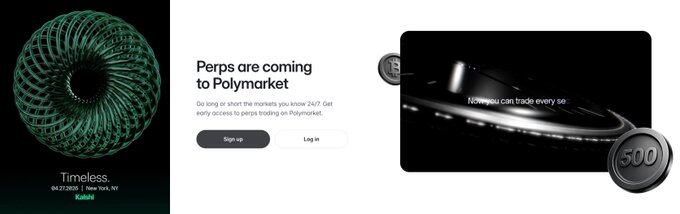
On April 21, 2026, the two leading prediction market platforms, @Polymarket and @Kalshi, both announced the launch of perpetual futures trading on the same day. The trading instruments are expected to include cryptocurrencies like Bitcoin, commodities like gold, and stocks like Nvidia. Both platforms stated they will officially launch upon receiving regulatory approval.
Why Now
This can be understood through the “Robinhood model.” The trend of integrating previously independent asset classes onto a single platform has been underway for some time; the announcements from Polymarket and Kalshi are merely a continuation of this trend.
Robinhood started as a stock trading app, added cryptocurrency trading in 2018, and introduced prediction markets in 2025, pioneering a model that consolidates fragmented trading markets under one platform.
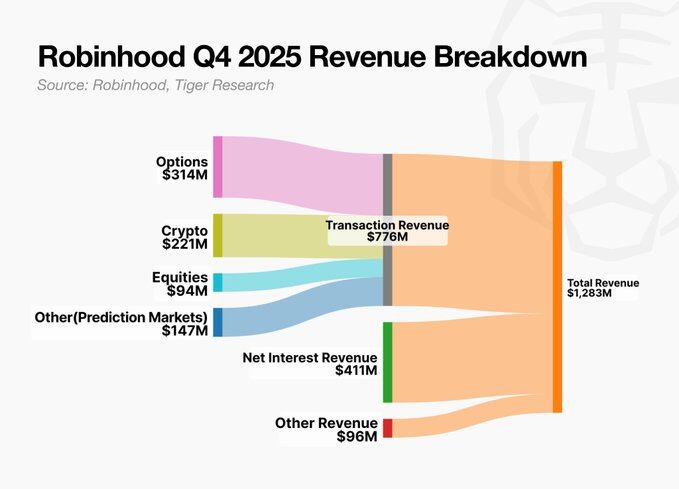
This model has been validated by data. After expanding into crypto, crypto trading revenue became Robinhood’s largest single revenue source in the fourth quarter of 2024. While crypto revenue declined 38% year-over-year in the fourth quarter of 2025, total revenue remained stable, with options, stocks, and prediction markets filling the gap. A resilient structure has been established through diversification.
Polymarket and Kalshi, on the other hand, are arriving at the same destination from the opposite direction. They originated from prediction markets and are now adding futures trading. The starting points differ, but the endpoints converge. With the Robinhood model validated, traditional finance is likely examining the same path.
A Simple Analogy
Smartphones integrated the functions of a camera, MP3 player, and navigation device into one. The era of carrying separate devices for each function is over. The same transformation is happening in finance.
Brokerage accounts, crypto exchanges, and prediction markets are merging into single platforms. Robinhood started as a stock app and successively added cryptocurrencies and prediction markets; Polymarket started from prediction markets and is now adding crypto perpetual contracts. Different origins, but the same direction.
The Generalization of the Robinhood Model
This trend will accelerate further with generational change. New-generation users have grown up simultaneously exposed to stocks, cryptocurrencies, and prediction markets. Just as smartphone users wouldn’t accept carrying separate devices for a camera, MP3 player, and map, this generation finds the idea of using separate apps for each asset class foreign from the outset. The demand for an integrated platform that handles all assets within a familiar interface will naturally increase with each new generation.
This is the generalization of the Robinhood model.
Polymarket and Kalshi have a particular advantage in this model. Because collateral in prediction markets is locked until outcomes are determined, how to utilize these idle assets will become a key competitive differentiator.
On December 3, 2025, a developer proposed the concept of PolyAave: depositing Polymarket’s outcome tokens into Aave liquidity pools to earn interest. This is an early attempt to transform prediction market collateral into DeFi yield. Polymarket’s launch of perpetual futures is likely an extension of this logic. The strategy of not letting locked capital sit idle is sound.
Polymarket and Kalshi have taken the lead, but traditional finance faces the same pressure. As the regulatory environment gradually opens up, large financial institutions will directly support crypto spot trading and progressively incorporate new asset classes, including prediction markets.
この記事はインターネットから得たものです。 Tiger Research: Is the Era of Integrating All Assets on a Single Platform Approaching?
Related: World’s Largest Prediction 市場 Polymarket Starts Charging Fees! Behind It Lies a Calm Game of Regulation, Survival, and Timing
1. It Suddenly Started Charging Fees, But You Might Not Have Noticed “Probability of Trump winning the 2024 election: 51.3%” “Probability of a Fed rate cut in March: 68.7%” “Odds for BLG to win the LPL Spring Finals: 1.39” This isn’t a gambling site or media commentary; it’s a unique entity in the Web3 world—a Prediction Market. Simply put, it’s a mechanism for “voting” with real money: if you believe an event will happen, you buy the “YES” contract; if you believe it won’t, you buy the “NO” contract. Prices fluctuate in real-time, and the final number formed is the “collective judgment” voted on by thousands of people with their money. Polymarket is currently the world’s hottest, most actively traded, and most cited on-chain prediction platform. It provides a clean…
相关文章
































 日本語
日本語  English
  繁體中文
繁體中文  简体中文
简体中文  Tiếng Việt
  العربية
  한국어
한국어  Bahasa Indonesia
  हिन्दी
  اردو
اردو  Русский