




वेब3 को “दैनिक जीवन” में ले जाना: ज़ैक ने OKX वेब3 के ’अगले चरण“ के बारे में बताया”
At the event, Zakk, Head of OKX Wallet, systematically shared the core methodology of OKX’s Web3 products and key directions for the coming years: rooted in security and self-custody, bridged by product experience, and driven by ecosystem and infrastructure, ultimately pushing क्रिप्टो assets from being “professional tools” into “daily life.”
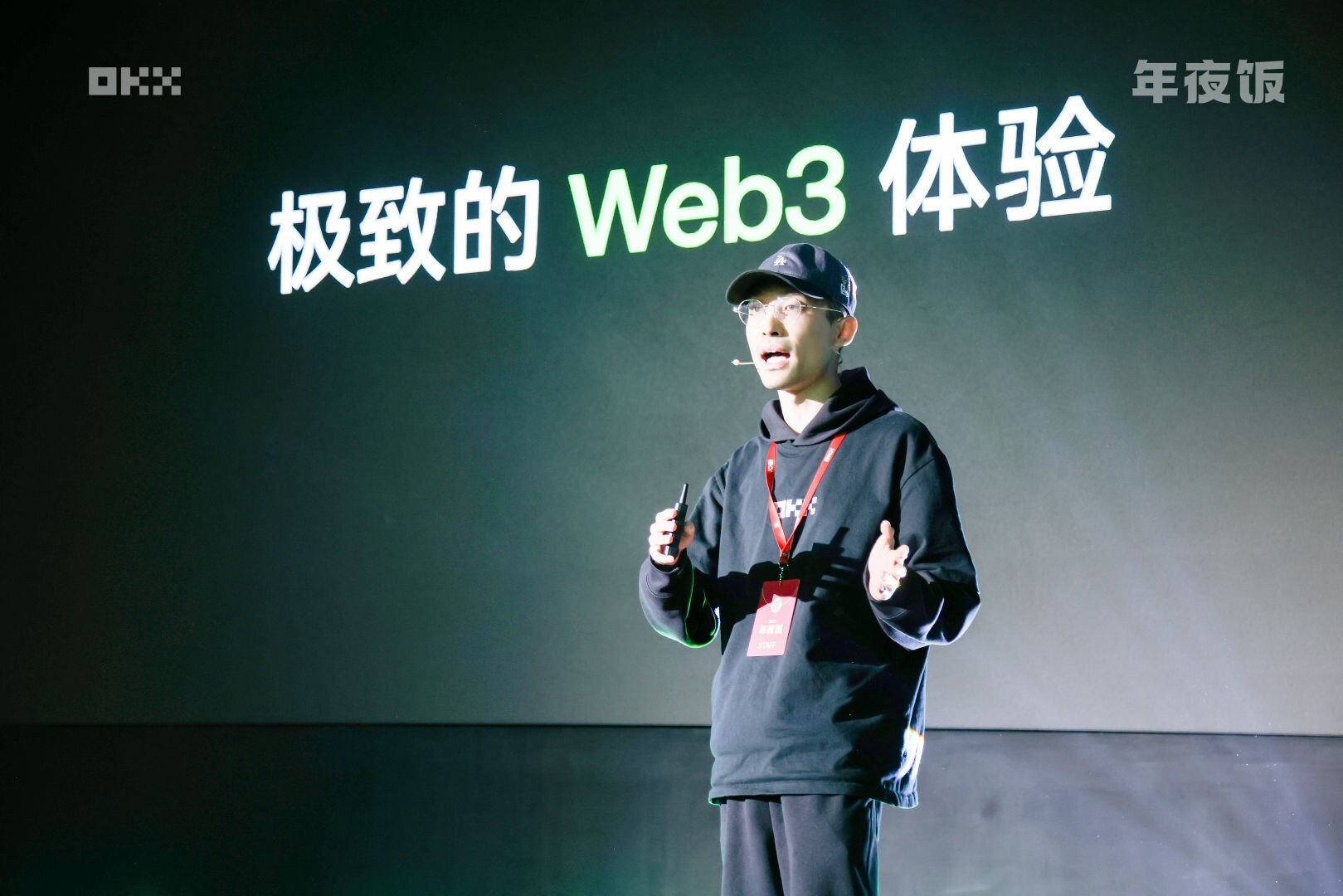
Pursuing the “Ultimate” Web3 Experience
In Zakk’s explanation, the “ultimate Web3 experience” is not a slogan but a set of verifiable, sustainably iterable product standards—firstly, security and self-custody; secondly, “leaving complexity to the system and simplicity to the user.” He emphasized the underlying principle of self-custody: Not your key, Not your asset, which serves as the long-term guiding principle for OKX Wallet’s design and trade-offs.
More “down-to-earth” was his use of personal experience to explain why security capabilities must be built into the product: for example, the common on-chain “similar address poisoning” attack, where a highly similar address is quickly generated and initiates a small transfer after a user completes a large transaction, tricking users into “copying the wrong address” when copying from transaction history. In response, OKX Wallet has explicitly identified “similar address scams” as a key risk in its official security content, providing protective measures such as similar address warnings on the transfer page and address labeling. The core goal is to reduce irreversible losses caused by “misreading a single character.”
On the proposition that “self-custody must be both more secure and easier to use,” Zakk further broke down OKX Wallet’s capabilities into two areas:
First, the “Security and Self-Custody” system, including open-source code, third-party audits, and continuous security governance. He mentioned that OKX’s self-custody system adheres to open-source principles and multi-party audits, which is a core tenet. This aligns with the roadmap disclosed on OKX’s official “Security Audit Report Collection” page: OKX Wallet’s front-end, mobile applications, SDK components, etc., have undergone third-party audits, with related reports and audit scopes publicly summarized.
Second, “Parsing and Aggregation,” which involves transforming fragmented on-chain information into an integrated experience that users can directly understand and operate. Zakk presented a set of core capability metrics at the event: support for approximately 140 public chains and aggregation of around 500 DEX protocols. He emphasized that this is not mere stacking but aims to improve transaction speed and quote quality through intelligent routing and global deployment.
Three Product Lines Pointing to One Goal: “Easy to Use” and “Accessible to All”
The information density of this “New Year’s Eve Dinner” was concentrated in three key products: Smart Account, CeDeFi, and OKX Pay. These three lines are advancing in parallel towards the same goal: making Web3 products “smooth for professionals” while also being “easy for beginners to use.”
First is OKX Wallet’s Smart Account. Zakk provided a clear generational breakdown of wallet evolution in the industry: the early stage was based on trust from “direct client-side interaction with the chain, open-source and auditable”; then came the stage of “automatic parsing and a more user-friendly experience”; and the third-generation wallet that OKX is exploring aims to integrate “point technologies” like AA, MPC, and seedless recovery into a cohesive, implementable product capability. The core is introducing stronger automated trading and strategy capabilities while maintaining self-custody.
The Smart Account emphasizes using TEE to provide an “encrypted vault” level of isolation and protection for private keys and bringing advanced trading capabilities (such as limit orders, take-profit/stop-loss, etc.), which were previously more common on centralized platforms, into the self-custody experience. Zakk particularly emphasized the direction of “intent verification”: allowing users’ command intents to be verified on the client side to prevent tampering when passing through service layers, with plans to promote open-source development and industry standardization.
The second line is CeDeFi. Zakk’s assessment is very “trend-oriented”: he believes 2026 could be the “year of the novice user.” As regulatory frameworks are established in more regions and stablecoin scale continues to expand, the market will need a more widely accepted product form—it could be Pay, a wallet, or a new gateway connecting CEX and DEX. The first key product OKX is building is a CeDeFi wallet form targeting exchange users to “embrace on-chain”: based on a TEE architecture, achieving “more decentralized and seedless,” and enabling CEX and DEX to work synergistically within the same framework. It will also expand to support more on-chain asset types (including Meme, RWA, etc.) in the future.
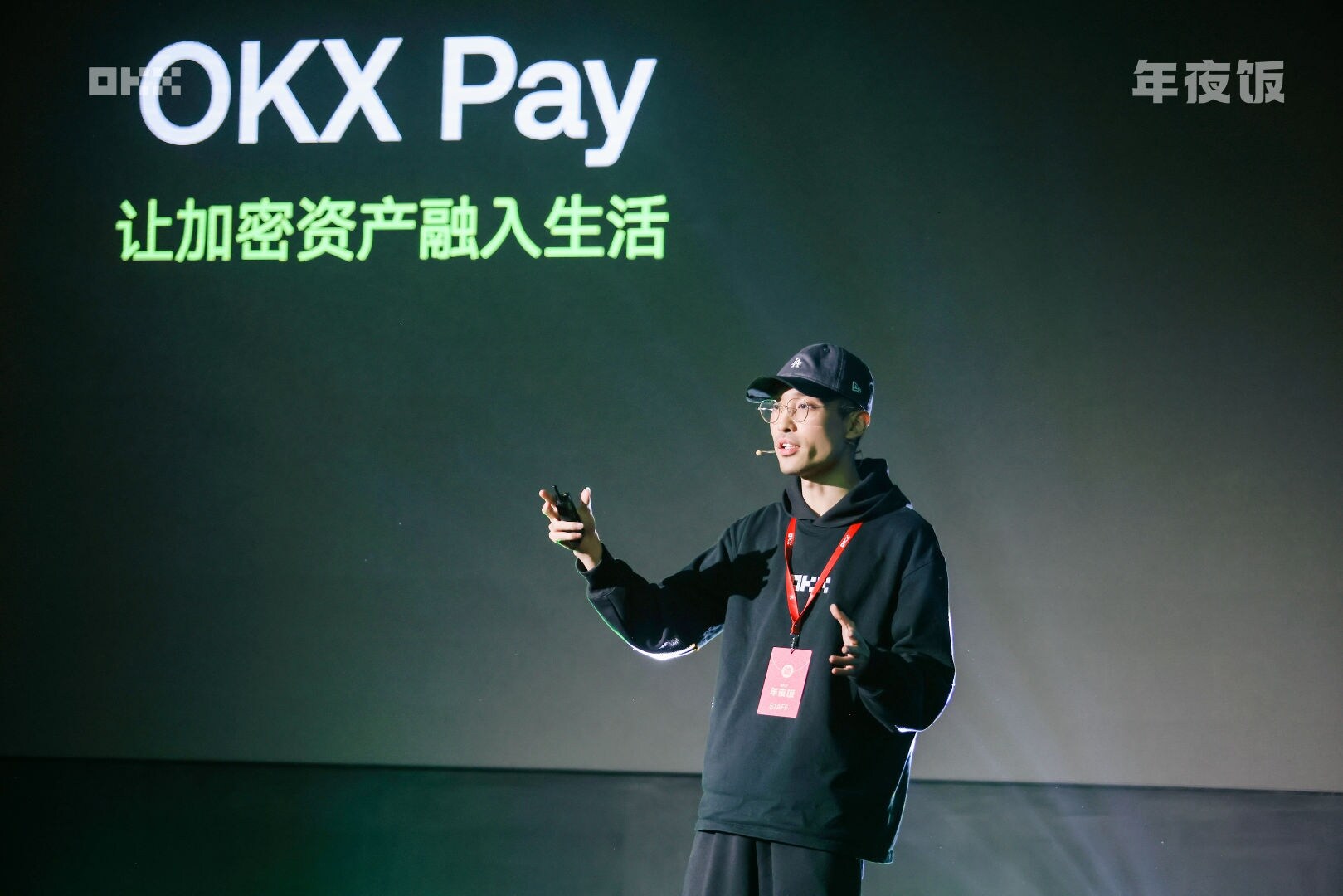
The third line is OKX Pay. Zakk positioned it at the event as a key product for “embracing hundreds of millions of users” and presented a very everyday product vision: further integrating payment with DeFi, making it possible for crypto products to blend into daily life—only then does the industry have a chance to break through its long-standing ceiling.
X Layer and the OKX Web3 Ecosystem: The Continuously Advancing Foundation
If wallets and payments solve “entry and scenarios,” then X Layer solves “speed, cost, and scalability.” Zakk positioned X Layer very directly at the event: it must first fulfill its own “historical responsibility” by solidifying the technical foundation before it can be responsible to the community in the long term. He summarized the current stage as the “continuously advancing foundation.”
Regarding the three-step process for this “foundation,” Zakk provided a more engineering-oriented path at the event: Step one is solid technology and long-term, sustainable performance. Step two is “hardening” infrastructure like Swap and DeFi, making users willing to put real funds into on-chain interactions. Step three is forming a combination around payment infrastructure (cards, Pay, etc.), enabling wallets, DApps, payments, and chain resources to work in parallel and synergy.
According to the official description of post-upgrade performance, X Layer can achieve 5,000 TPS, a block time of approximately 400ms, and near-zero transaction costs after the PP upgrade.
What truly energized the audience was “how to get the ecosystem running.” During the Q&A session, in response to community questions about the Meme ecosystem and the implementation of support funds, Zakk offered a longer-term answer: rather than relying on constant “hype” to create short-term heat, it’s more important to establish a sufficiently large project pool and incubation mechanism, allowing the ecosystem to naturally proliferate like the “AI Season” of the past. Demo Days will also be concentrated in the future, and fund support will be implemented more transparently after projects and products are evaluated by the community. Simultaneously, he explicitly welcomed more sector-specific applications to grow on X Layer: from Perp DEX and prediction markets to RWA, stablecoins, payments, AI, etc.—the space is far broader than just “trading infrastructure.”
Moving Towards a New Cycle Where Hundreds of Millions of Users “Use It”
Zakk used “stablecoins reaching trillion-scale” as an important anchor point for the era at the event. His judgment is not based on a single factor but stems from the rising infrastructure role of stablecoins in the global financial system. As stablecoins gradually become a universal medium for cross-border payments, on-chain trading, and value settlement, more universal, lower-barrier product forms that also balance security and recoverability are becoming key to meeting real demand.
For global crypto ecosystem builders and participants, what truly matters is the ability to continuously advance technology, products, and the ecosystem together: security must withstand real on-chain risks, the experience must accommodate more new users, and the ecosystem must provide builders with space, a stage, and clear incentive mechanisms to participate. OKX will continue in an open and pragmatic manner, inviting users, developers, and ecosystem partners to collectively push Web3 from “usable” to “easy to use, frequently used, and accessible to all.”
यह लेख इंटरनेट से लिया गया है: वेब3 को “दैनिक जीवन” में ले जाना: ज़ैक ने OKX वेब3 के ’अगले चरण“ के बारे में बताया”
Original article translated by: Deep Tide TechFlow Ansem declared the market had peaked, and CT called this cycle “crime.” High FDV (Fully Diluted Valuation) projects with no real-world applications have squeezed every last penny out of the crypto space. The bundled sale of Memecoin has tarnished the crypto industry’s reputation in the public eye. Worse still, almost no funds are being reinvested in the ecosystem. On the other hand, almost all airdrops have turned into scams designed to pump and dump. The sole purpose of Token Generation Events (TGEs) appears to be to provide exit liquidity for early participants and teams. Firm holders and long-term investors are suffering heavy losses, and most altcoins have never recovered. The bubble is bursting, token prices are plummeting, and people are furious. Does this…
相关文章





























 हिन्दी
  English
  繁體中文
繁體中文  简体中文
简体中文  日本語
日本語  Tiếng Việt
  العربية
  한국어
한국어  Bahasa Indonesia
  اردو
اردو  Русский