








TSMC and AI-related Korean Stocks Are Creating Wealth for a Generation of Ordinary East Asians
Compiled by Golem, Odaily Planet Daily (@网页3_golem)
Na Se-bin has completely lost her sense of spending.
Since January this year, drawn by the global AI frenzy, she has invested nearly all her life savings (about $47,000) into the stock market. This boom is driving tech giants in South Korea, Taiwan, and Japan to record profits.
The 24-year-old Korean programmer says that during intense market volatility, she can make or lose the equivalent of a month’s salary in just one second. Despite the enormous risk, she finds it irresistible, especially after seeing the stocks she holds double in value. Over the past 18 months, the South Korean stock market has been one of the best-performing globally, and Na and her colleagues joke that they should sell their underwear to buy more stocks.
“Even friends who never touched stocks before are now entering the market,” Na said. “Everyone is trading something.”
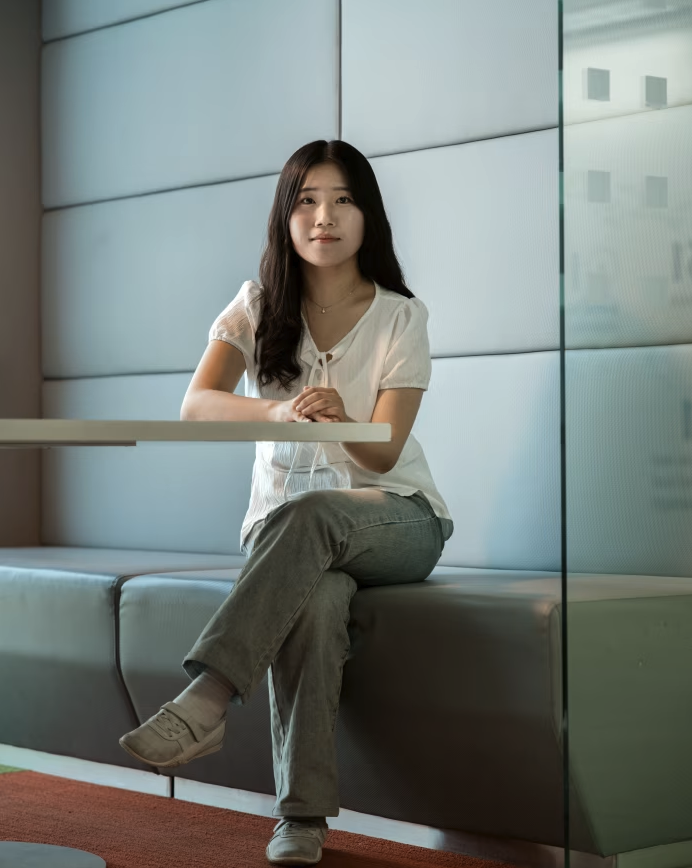
Na Se-bin, a 24-year-old software developer in Seoul, started investing in January and quickly became addicted. (Photo: Tim Franco for The Wall Street Journal)
Trillions of dollars are pouring into the global buildout of artificial intelligence, which relies on semiconductors and chip manufacturing technology from a handful of Asian exporters. The surge in global chip demand seems unending, driving exports, corporate profits, and wealth growth for countless investors.
Even after a recent pullback, Taiwan’s stock market has still doubled in market value over the past year, while South Korea’s market has tripled. Japan’s Nikkei index has surged over 80% in the same period, three times the gain of the S&P 500.
The accelerating demand for AI-related products is fueling investor enthusiasm and driving up wages. In Taipei, taxi drivers trade stocks while driving. In the job market, high salaries in the tech sector are highly coveted. One of the most effective “pickup lines” in Taiwan now is telling someone you work at TSMC, the world’s largest chipmaker and one of the region’s most generous employers. Employees at Samsung Electronics’ memory chip division are expected to receive bonuses averaging around $400,000 this year. The company projects that by 2026, its profits will surpass every global company except Nvidia.
Whether or not OpenAI’s ChatGPT, Anthropic, and SpaceX can deliver on their promises of commercializing AI services, this segment of the tech industry seems destined to benefit. These Asian tech giants provide indispensable hardware for the AI industry, acting as the “pick-and-shovel sellers” of the AI gold rush.
The four major Silicon Valley hyperscalers—Microsoft, Meta Platforms, Amazon, and Google (Alphabet)—plan to invest up to $670 billion in AI-related capital expenditures this year. This spending far exceeds the inflation-adjusted costs of the U.S. railroad expansion in the 1850s and the decades-long construction of the U.S. Interstate Highway System that began a century later.
According to a report from Allianz Trade, global exports of AI-related products neared $4 trillion last year, with Asia accounting for two-thirds. These products include semiconductors, data storage servers, and cooling systems.
According to market research firm Gartner, direct spending on AI—covering services, infrastructure, and software—is projected to reach $2.6 trillion this year, a 47% increase from 2025. Next year, that figure is expected to hit around $3.5 trillion.
Jensen Huang, CEO of top U.S. chip design company Nvidia, recently concluded an 18-day high-profile visit, during which he attended events, gave speeches, and held business meetings in Taiwan and South Korea.
In Taipei, convenience stores sell lottery tickets with a top prize of 500 shares of Nvidia stock. Huang announced plans to invest $150 billion annually in Taiwan, calling the island the center of the AI revolution. In South Korea, Huang signed cooperation agreements with local companies in robotics, memory chips, and AI.
During Huang’s visit to Seoul, the KOSPI index plunged over 8% on June 8, triggering a trading halt after a sell-off in U.S. chip stocks, including Nvidia. Huang, wearing his signature leather jacket even in Seoul’s sweltering heat, was unfazed by the drop.
“Everyone should be very happy with the current stock price,” he said, “because you can buy stocks cheaper now.”
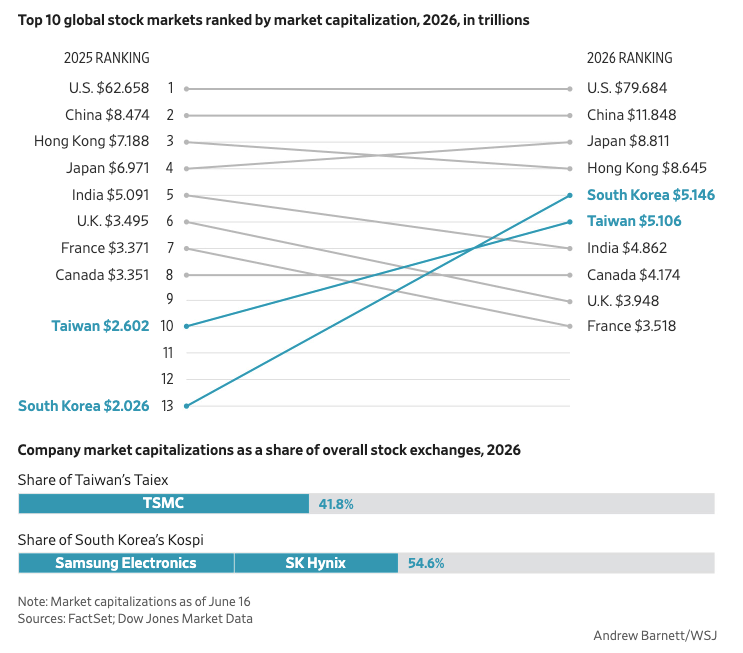
Ranking of the world’s top ten stock markets by market capitalization in 2026, and the share of TSMC and SK Hynix in their respective markets’ total market cap
Na started trading stocks only this year and estimates that over 80% of her social circle is actively investing, including her colleagues. She says one colleague made enough money from stock investments to spend tens of thousands of dollars on a wedding ring.
Now, Na is “sparing no expense” on concert tickets, designer clothes, and treating her parents to meals. She originally planned to buy her mother a gold ring for her parents’ 30th wedding anniversary, but her mother refused.
“She told me to just give her cash,” Na said, “so she could buy stocks.”
TSMC Ascends to a Pedestal
Yeh Lun-hao, a 37-year-old insurance agent, invests more than half of his monthly salary of about $2,100 in local AI and chip-related companies. His investment returns have quadrupled, and he recently bought a four-bedroom apartment worth about $440,000 in Taichung, Taiwan.
For years, his friends shied away from stock market investments. Now, they flock to him for investment advice.
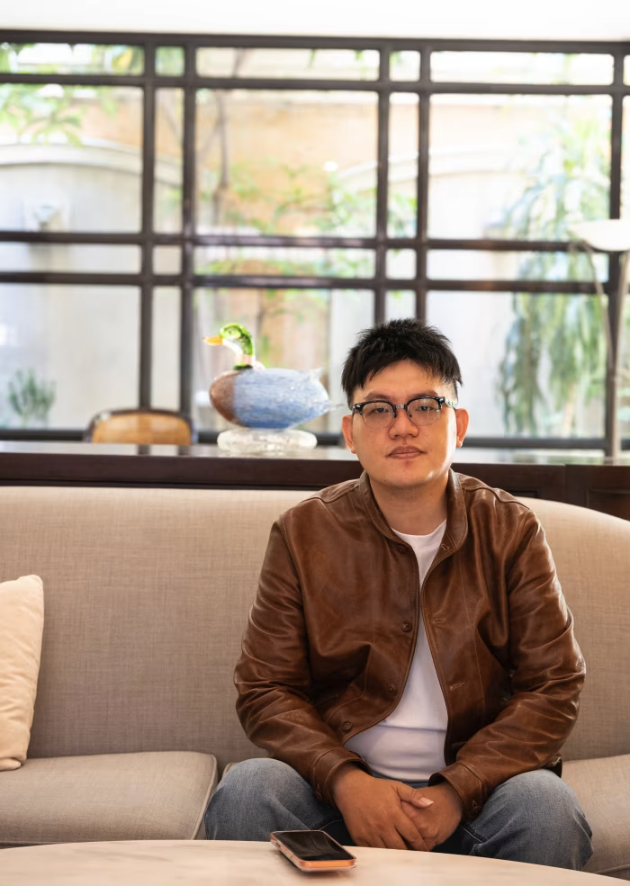
Yeh Lun-hao, a 37-year-old insurance agent, sits in the lobby of his apartment building in Taichung, Taiwan. (Photo: Lin Yifei for The Wall Street Journal)
“Without semiconductors, none of this would have happened,” Yeh said. “Investing has allowed me to escape the daily grind and enjoy the beauty of the world.”
TSMC is the main driver of Taiwan’s stock market surge. According to tech market research firm Counterpoint Research, TSMC captured over 90% of revenue in the most advanced chip manufacturing last year. It is the world’s seventh most valuable company, with a market cap exceeding $2.2 trillion, surpassing Tesla and Meta.
The company’s stock price has more than doubled in the past year, pushing Taiwan’s benchmark index past comparable markets like France, the UK, and India.
The chipmaker accounts for over 41% of Taiwan’s benchmark index. In comparison, the combined weight of the “Magnificent Seven” tech giants—Apple, Microsoft, Alphabet, Amazon, Nvidia, Meta, and Tesla—accounts for about one-third of the S&P 500 index.
A low salary for a TSMC engineer could be three times higher than a comparable position elsewhere. Choc Chiang, co-founder of Taipei-based recruitment platform WeFer, says some managers poached by TSMC from smaller companies have seen salary increases of up to 30%.
Wang Tsan-lung, owner of an upscale liquor store in Zhubei, Taiwan, has supplied TSMC multiple times. He once sold a bottle of Napa Valley whiskey to TSMC founder Morris Chang. Now, his store is too small to meet TSMC’s needs. “We look up to them,” he said, “full of awe and respect.”

Wang Tsan-lung, owner of a liquor store in Zhubei, Taiwan, has sold large quantities of alcohol to TSMC. (Lin Yifei/The Wall Street Journal)
Wang Wei-wen earned an engineering degree in Taiwan, and one of his coursework assignments was visiting a TSMC factory, where the starting salary was around $62,000 a year. He says such a salary was unheard of. “Every household talks about TSMC.”
He is now a graduate student at the University of Michigan and has received calls from TSMC recruiters. Although Wang has concerns about the company’s demanding work hours, he sees other benefits beyond the generous pay. The social status of being a TSMC engineer is highly attractive to Taiwanese parents who are very picky about their daughters’ suitors.
“Your opening line can be, ‘I work at TSMC,’” Wang said.
Products bearing the TSMC logo also command high prices on the secondhand market. A rice cooker featuring the company logo and circuit board design sells for about $312 on e-commerce platforms, more than four times the price paid by TSMC employees. Buyers scramble for TSMC-branded luggage, tumblers, and shoes. Even the red envelopes given to TSMC employees during the Lunar New Year can be sold online for nearly $15 each.
A Carnival for the Common People
The South Korean market is dominated by two chip giants, Samsung and SK Hynix, which lead the production of two main types of memory chips essential for AI computing and data storage.
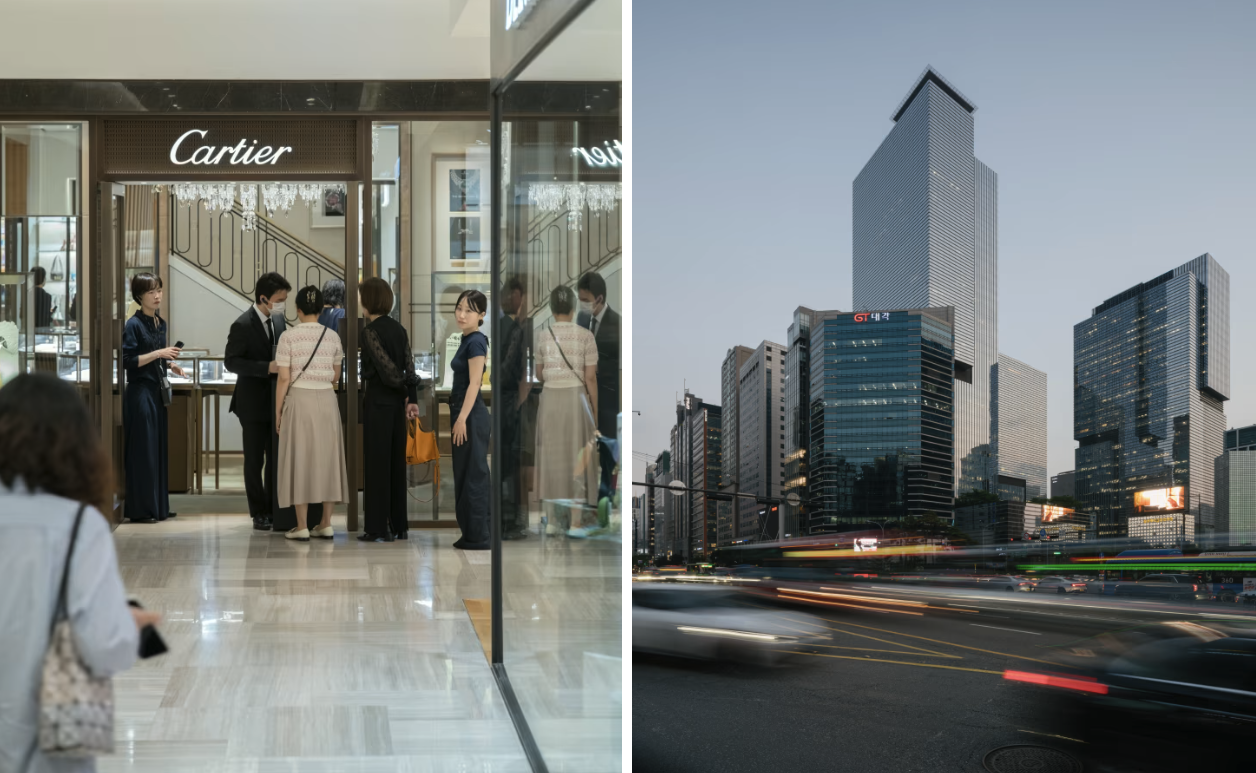
Customers queue outside a Cartier boutique inside the Shinsegae Department Store in Seoul; Samsung Electronics campus. (Tim Franco for The Wall Street Journal)
Both companies recently broke the trillion-dollar market cap mark, accounting for over half of the total market value of the KOSPI. The KOSPI was the world’s best-performing index last year and continues to lead global rankings this year.
Choi Sung-ho, a 35-year-old elementary school teacher, is one of the beneficiaries of the South Korean stock market. Over the past year, the value of his stock portfolio, including ETFs tracking semiconductor stocks, has grown nearly fivefold, exceeding $300,000. He says he has upgraded his mobile device and plans to spend six figures on his next car, possibly a Mercedes S-Class or a Tesla Model X.
“Even the kids at my school talk about how happy their parents are with their stock gains,” Choi said.
In the first three months of this year, Korean brokerage Toss Securities opened over 180,000 trading accounts for children aged 18 and under. These accounts require parental approval to open and allow children to trade independently. Recently, the company launched a promotion offering $14 in trial funds for new accounts opened by high school students.
On YouTube, the channel “ETF-explaining Bro” is one of the emerging “financial influencer” outlets offering market advice. Channel owner Park Soo-in says the channel has attracted over 127,000 followers since launching last July. “Many people seem to think this rally will continue,” she said.
The stock market surge is further boosting an already strong luxury goods market. The Cartier boutique inside a major Seoul department store is so crowded that some pieces from its “D’Amour” collection are now only available for online purchase.
Lim Chae-hoon, sales director at a BMW dealership in Seoul, says his customers frequently mention their stock market gains. “There are 定义nitely more people with money to spend now,” he said.
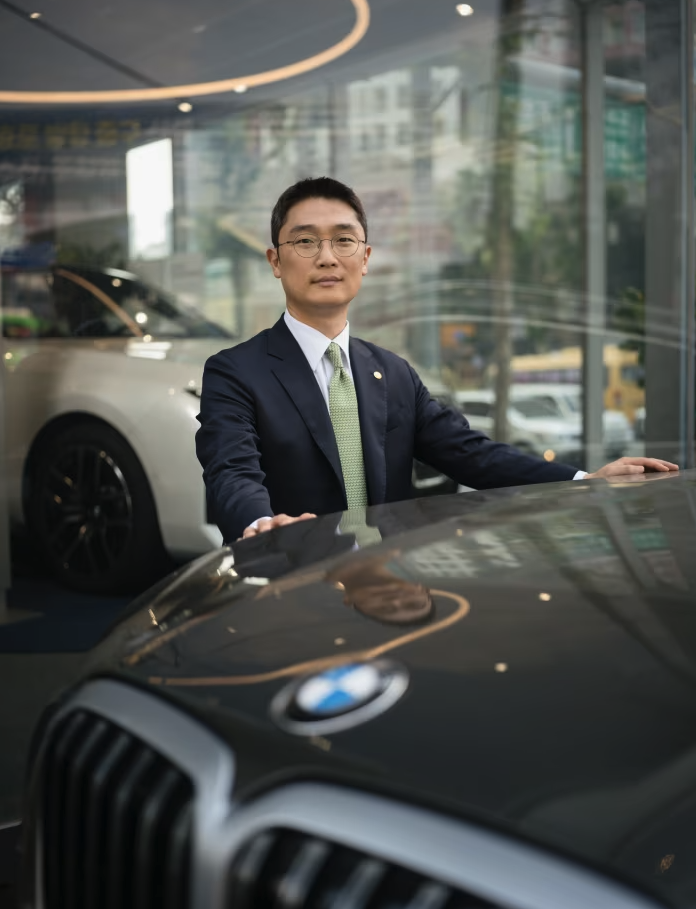
Lim Chae-hoon, sales director at a BMW dealership in Seoul, says customers now feel more financially comfortable. (Tim Franco for The Wall Street Journal)
In Japan, Toyota Motor, the most valuable company for 22 consecutive years, was replaced this month by SoftBank Group, which has invested heavily in OpenAI and data centers.
SoftBank’s reign was short-lived. Last Friday, an obscure memory chip maker, Kioxia, jumped to the top. A year ago, Kioxia’s stock was around $14; now it’s about $600. Kioxia’s success has sparked a hunt among investors for the next potential stock market blockbuster.
Even Japanese luxury bathroom manufacturer TOTO has profited from the AI boom. Its high-tech ceramics are used to hold silicon wafers steady while circuits are etched. The company’s stock has more than doubled.
Another company, Ajinomoto, made a film for insulating AI chips using a byproduct of its world-famous umami seasoning. The company’s stock has risen 50%.
Ryoki Nao, a 21-year-old top student in semiconductor engineering at a university in Kumamoto, Japan, sees his classmates investing but chooses not to. While he follows market developments, he plans to graduate and secure a job before investing.
“I want to wait until I can earn a substantial income before investing,” he said, but the stock market frenzy may not wait for him.
本文来源于互联网: TSMC and AI-related Korean Stocks Are Creating Wealth for a Generation of Ordinary East Asians
Related: Apple finally admits Siri has grown old
In the early hours of June 9, 2026, Beijing time, Apple’s WWDC 2026 arrived as scheduled. At the keynote, it renamed Siri to Siri AI, announced a deep partnership with Google to use Gemini’s model capabilities to train its own next-generation foundation models, and extended Private Cloud Compute to Google Cloud and Nvidia GPUs for the first time. It released five Apple Foundation Models, with the on-device model having a minimum of 3 billion parameters and the largest cloud model specifically optimized for Nvidia GPUs. Almost every everyday app was rewritten. Siri also got its own standalone app capable of saving conversations, syncing across devices, and possessing memory. This was Apple’s most information-dense keynote in years. Taming a Future Apple’s AI story can be traced back to the autumn of…
































 简体中文
简体中文  English
  繁體中文
繁體中文