








TechFlow Insight: Just one week after the launch of the Robinhood Chain mainnet, the official stock tokens haven’t yet broken out, but a Meme cat named CASHCAT has already taken off, surging over 1700% in 24 hours and reaching a market cap above $120M. Its entire narrative boils down to one sentence: Robinhood’s internal codename when it was founded was CashCat. CEO Tenev himself has recounted this history and even played along with a tweet on the day of the surge. Meanwhile, copycat tokens and fake accounts impersonating “Roaring Kitty” and shilling the coin have already appeared.
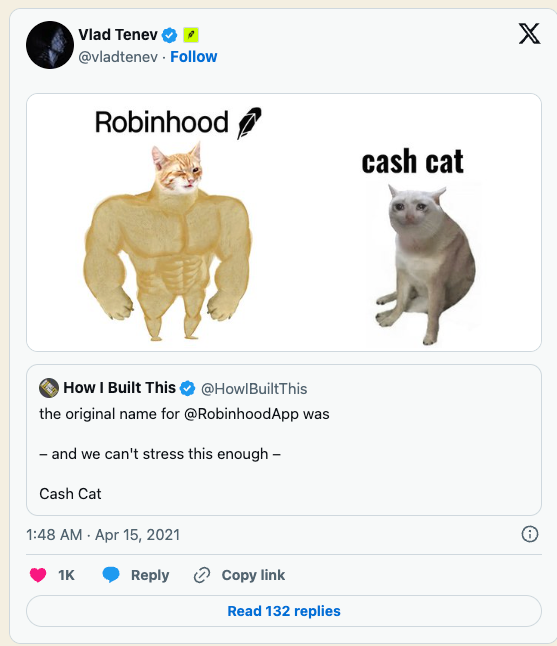
Attracting traffic and retail attention still relies on Meme.
Robinhood spent a year paving the way for its own blockchain, pitching tokenized stocks as its core narrative. Yet, the first truly breakout asset on the chain is a cartoon cat holding money.
According to GMGN, on July 8th, the market cap of CASHCAT, a Meme token on Robinhood Chain, broke through $120 million, surging over 1700% in 24 hours. Readings from different data platforms continued to climb in the subsequent hours. Per CoinGecko data, CASHCAT primarily trades on Uniswap V3 on Robinhood Chain, with the CASHCAT/WETH trading pair recording a 24-hour volume of approximately $28 million. For a new chain that has only been live for a week with a handful of ecosystem applications, this cat represents the current traffic itself.
Day Seven of Mainnet: The First Breakout Asset is a Meme
Let’s set the stage.
On July 1st, Robinhood officially launched the Robinhood Chain public mainnet at an event in London. It’s an Ethereum Layer 2 based on Arbitrum technology, unveiled jointly by CEO Vlad Tenev and 加密貨幣 head Johann Kerbrat. The official positioning for this chain is quite “serious”: its core product, Stock 代幣s, tracks the price performance of over 200 US stocks and ETFs, is available in over 120 jurisdictions (excluding US users). DeFi protocols like Uniswap and 1inch were deployed on day one, and Robinhood promised to cover all Gas fees for the first 90 days.
According to the official script, the star of this chain should be tokenized stocks and RWAs (Real World Assets). However, the script didn’t go as planned. In its first week, the most active trading pair on the chain wasn’t any stock token, but CASHCAT. Retail investors have effectively set the tone for this “retail broker’s chain.”
A direct warning for holders: CASHCAT’s current trading depth is concentrated in a single trading pair on a single DEX. With the new chain’s thin liquidity, price readings vary significantly across platforms, and the risks of slippage and price wicks are much higher than for Meme coins on established chains.
Archaeology of a ‘Former Name’: Tenev Himself Told the CashCat Story
CASHCAT’s success relies on a piece of authentic company history.
Tenev recalled in an earlier interview the process of naming the company. “The initial codename was actually CashCat, but everyone felt it wasn’t powerful enough. My wife would introduce me to her friends by saying, ‘They are Robinhood of finance, fighting for the little guy.’ And that’s how the name Robinhood stuck.” This anecdote was cited in multiple post-GameStop company retrospectives and is a verifiable piece of “archaeological material.” This is the key difference between CASHCAT and other made-up dog or cat coins.
The token’s structure is minimalistic. According to the project website, the total supply is 1 billion tokens, with zero taxes on buys or sells. The liquidity pool tokens have been burned entirely. It self-describes as having “zero utility, 100% cat.” The website also clearly states the project has no affiliation with Robinhood, calling itself “fan fiction with a ticker.”
The narrative is real, but the product is unrelated. Readers need to distinguish these two facts. Robinhood’s history provides the meme’s source material, but the company hasn’t endorsed it. The token’s value is built entirely on attention, with no support system if that attention fades.
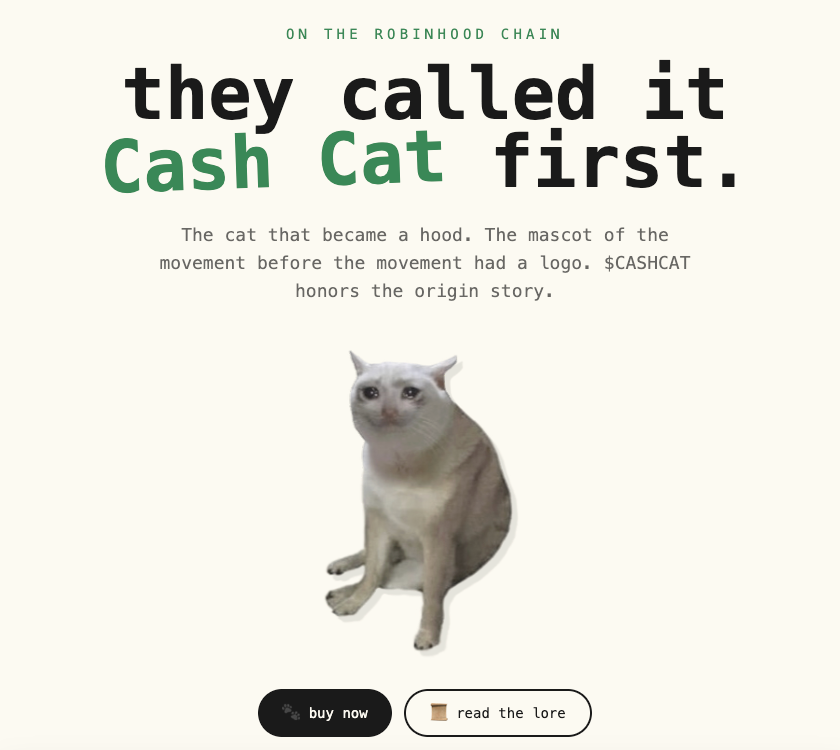
Tenev’s Playful Tweet Read as a Half-Endorsement
What truly pushed the price to its peak was Tenev himself.
On July 8th, Tenev posted on X: “We’re building Robinhood Chain to be the best RWA chain… but it runs Memes pretty well too.” The tweet garnered over 500,000 views within hours. He didn’t mention CASHCAT by name, but the timing of the post, coinciding with the day of the massive surge, was interpreted by the community as a tacit approval or even a boost for the on-chain Meme frenzy.
There’s a layer of historical irony here. During the 2021 GameStop short squeeze, Robinhood restricted retail investors from buying GME, landing it in congressional hearings and casting it as the “villain” in the retail narrative. Five years later, the company’s blockchain achieved its cold start precisely through the Meme culture that retail investors excel at, and the target of the hype is a name the company itself discarded. CASHCAT’s website even plays on this irony: “Cash Cat doesn’t do options, nor does it do PFOF.”
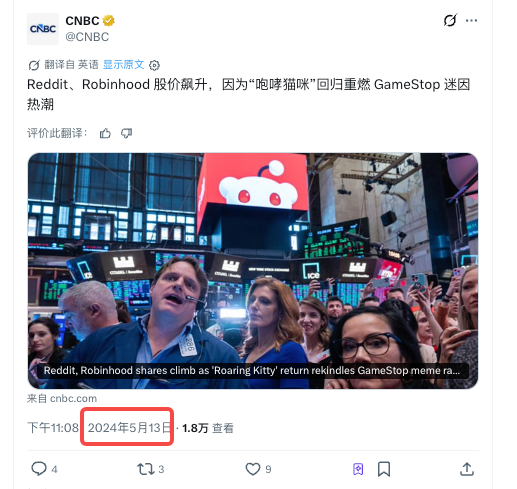
For traders, it’s necessary to temper the actual impact of this tweet. There’s a whole compliance department between Tenev’s joking tweet and an official Robinhood endorsement. The company has made no promises regarding custody, listing, or liquidity for Meme tokens. The effective lifespan of such emotional catalysts is usually measured in hours.
Copycat Tokens and Fake ‘Roaring Kitty’ Accounts Are Ready
With the hype rising, the tools for preying on retail investors are also in place.
First, there are cross-chain copycat tokens. According to monitoring data aggregated by CoinGecko, an identically named CASHCAT deployment has appeared on the Solana chain. The original contract is deployed on Robinhood Chain with an address starting with 0x020b and ending with 18b4. Tokens with the same name on other chains are unrelated to the original.
Second, there are fake influencer accounts shilling the token. For example, an X account with the ID “RK” and a username highly similar to Keith Gill, the ‘Roaring Kitty’ protagonist of the GameStop saga, posted claiming “CASHCAT is the first important Meme on Robinhood chain” and included a Solana contract address in the tweet.
A new chain, a new Meme, fake accounts, and cross-chain impersonations – this combination has been successfully used to extract value in every previous Meme cycle. If you still decide to participate, do at least three things: verify the contract address, use only official or mainstream cross-chain bridges, and limit your position to a lottery-sized bet.
CASHCAT’s entire current value is one good story plus a wave of attention. Neither has a mechanism for retention.
本文源自網路: CASHCAT: The First Hit on Robinhood Chain, Born from Its ‘Former Name’
Editor’s Note: In last week’s “Crypto-Stock Barometer” article, we mentioned that “South Korean stocks are facing a short-term correction.” The KOSPI market over the past week appears to still be in a phase of “violent deleveraging and aggressive bubble squeezing.” Despite SK Hynix’s upcoming ADR listing on the US stock market on July 10th, its price has undergone a deep correction. Today, the South Korean KOSPI index fell sharply again by 8%, triggering a circuit breaker. Foreign capital is accelerating its exodus, but retail investors are still choosing to “support the country by buying the dip.” In terms of price, SK Hynix’s stock price has fallen from its high of 2.917 million won on June 25th to 2.096 million won, a decline of over 28%. Hope is now pinned on…
































 繁體中文
繁體中文  English
  简体中文
简体中文