








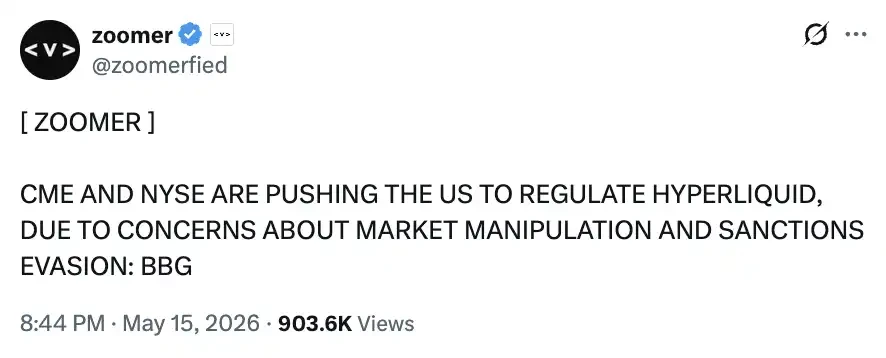
Two weeks later, at a Bernstein investor conference, ICE Founder, Chairman, and CEO Jeffrey Sprecher had a completely different perspective when discussing Hyperliquid. He described the platform as “bigger than Nasdaq,” noting it has only 11 employees and is truly impressive at first glance. Sprecher mentioned meeting with the Hyperliquid team several times, with both sides learning from each other, and concluded: “Salute to these guys. I wish I were young enough to go do it myself.”
ICE’s dilemma isn’t about a wavering stance. It has long recognized that tokenization will win, but it simply hasn’t yet secured the qualification to compete on the same playing field as the winners.
這 代幣ization Track
In Sprecher’s view, value will ultimately be tokenized over the internet, enabling uninterrupted 24/7 liquidity. The reasoning is straightforward: banks have operating hours, but global supply chains and energy markets operate around the clock. ICE operates 13 exchanges and 6 clearinghouses worldwide; once banks in a certain time zone close, capital in that region is forced to halt. As the world moves towards 24/7 operations, capital will flow to channels that never close.
Tokenization also offers profit advantages. Currently, ICE must maintain excess collateral at each of its six partner clearinghouses to prepare for potential local liquidations. Imagine a multinational corporation having an account in six different countries, each holding a reserve fund that no one can touch. Tokenization could consolidate these six funds into one, allowing near-instantaneous transfers of capital wherever trading begins or margin is needed. For a company with a global clearinghouse network, this represents a tangible upgrade in capital efficiency.
Having made this judgment, action must follow. ICE initially wanted to tokenize NYSE-listed stocks directly, but investors were not receptive. So it took a detour, establishing a subsidiary called Blue Ocean, and applied to the SEC for permission to trade stocks 24 hours a day, 365 days a year. Sprecher emphasized that the approval of this application is independent of whether the Clarity Act passes, and he is currently quite optimistic about receiving the green light.
Vertical Integration Bet
Once approval is obtained, where will the incremental growth come from?
ICE anticipates that when 24/7 tokenized US stocks first launch, most domestic US institutions will likely not be enthusiastic. Weekend and overnight trading is not customary, and compliance approvals may not be granted.
The real incremental demand lies in Asia.

OKX, the world’s second-largest 加密貨幣 exchange after Binance, boasts 120 million users. Its geographic reach and customer base perfectly complement ICE’s shortcomings. OKX previously stumbled during the Biden administration, paying hefty fines, accepting on-site regulators, and committing to rigorous KYC and AML procedures. This demonstrated to ICE OKX’s determination to operate legally within the US.
Consequently, the two parties struck an equal exchange. ICE helped OKX obtain broker-dealer licenses and brought it under FINRA and SEC oversight, opening the door to the US market. In return, OKX leverages its Asian network and hundreds of millions of customers to distribute ICE’s products. In March 2026, ICE invested approximately $200 million in OKX at a $25 billion valuation, securing a board seat.
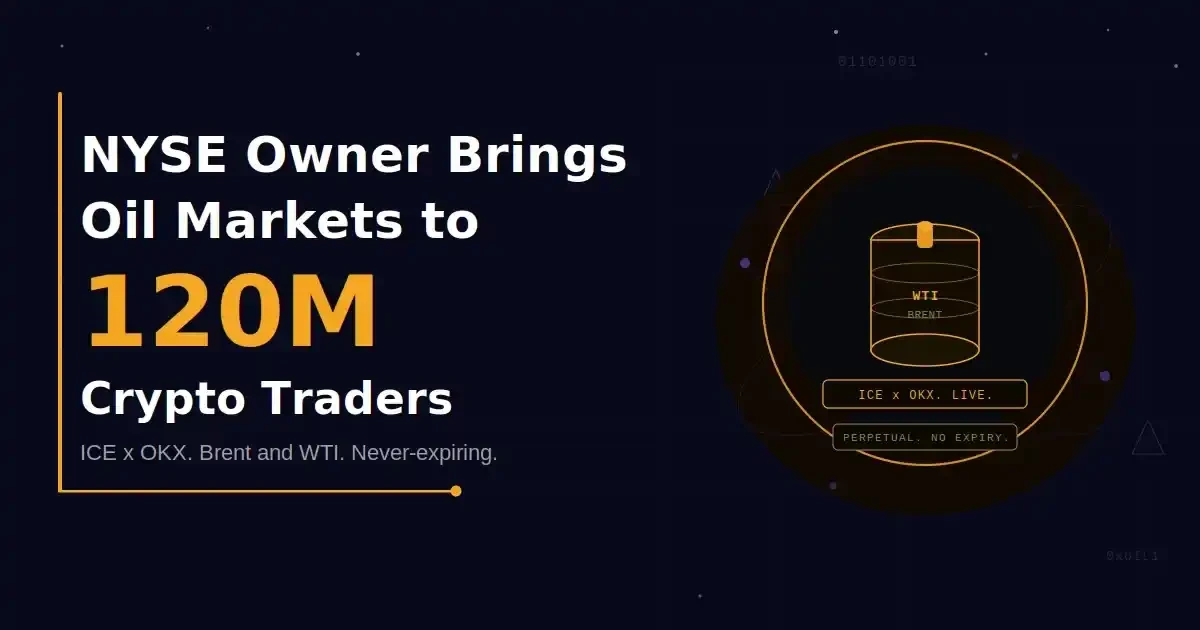
Two weeks ago, their first collaborative product launched: OKX introduced crude oil perpetual futures based on Brent crude and WTI crude benchmarks.
Settlement Layer Positioning
They have distribution and data, but critically lack a chain capable of running it all.
However, Sprecher is well aware that current L1s and L2s on the market cannot yet meet ICE’s performance requirements. The daily trading volume of the NYSE, by his account, exceeds Google’s daily search queries. More problematic is latency. Decentralization requires a group of validators to reach consensus and confirm ownership transfers, which takes time. In contrast, algorithmic trading on ICE’s platform operates in microseconds; no one wants to roll back speed a decade just to put trades on-chain.
ICE’s solution is to split the workflow in two. Matchmaking stays off-chain, while collateral transfers move onto the chain.
ICE has already taken action on both fronts.
Internally, it connected the NYSE to a blockchain for settlement, running within its own data centers and not open to the public.
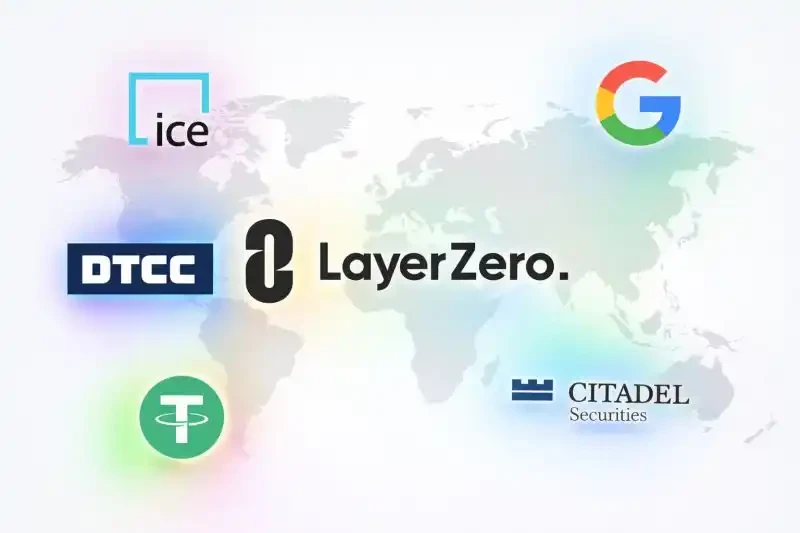
Externally, in February 2026, ICE invested in the upcoming Zero public chain developed by cross-chain protocol LayerZero. Zero’s investment roster reads like a who’s who of the traditional financial infrastructure, including DTCC (responsible for US securities clearing), market-making giant Citadel, Google Cloud, ARK, and Tether.
Regulatory “Double Standard”
Regarding the “challenger” Hyperliquid, Sprecher has been closely watching two things they can do that ICE currently cannot.
With ongoing conflicts in the Middle East, major news often breaks on weekends when traditional oil markets are closed. Hyperliquid fills this gap, leading price discovery for crude oil over the weekend.
Another example is Hyperliquid’s SpaceX pre-market contract. Sprecher is curious whether the price “discovered” early in an on-chain private market will truly reflect the actual price on the day of listing. He stated he is willing to wait a few more weeks before making a judgment.
When the host brought up the “FUD” ICE spread about Hyperliquid two weeks ago, Sprecher seized the opportunity to clarify: “In reality, we are not panicking. Instead, we are communicating with these individuals to understand their perspective. They are learning about what we do. We are helping them understand our world, and they are helping us understand theirs. So, in a sense, it’s a mutually appreciative relationship.”
The subtext of this statement is what ICE truly wants to communicate to regulators.
“Hyperliquid is doing these things without being penalized. Why is it not okay when we do them? ICE needs a level playing field. If regulators find what Hyperliquid does legal, then ICE wants to do even more. If you consider it illegal, then why hasn’t Hyperliquid received the same type of warning letters you frequently send us?”
本文源自網路: The NYSE, after tattling, wants to be the next Hyperliquid
Related: Treasury raiders target Gnosis DAO, initiate massive redemption proposal
Original Compilation: Chopper, Foresight News A group of activist investors (or treasury “raiders”) are pushing forward a proposal for a treasury redemption plan targeting GNO token holders. GIP-150 proposes a one-time, voluntary, pro-rata treasury redemption scheme. If the proposal passes, supporting holders will proportionally share a portion of the over $220 million in reserve funds from the Gnosis DAO treasury. This proposal comes less than six months after Gnosis DAO voted to remove former treasury manager KPK. Proposal initiator Wismerhill stated that the market price of GNO tokens has been at a persistent and widening discount relative to the net asset value of the Gnosis DAO treasury. He added that despite the DAO recently allocating $22.5 million to Gnosis Ltd, the token’s discount to net asset value has further widened,…
































 繁體中文
繁體中文  English
  简体中文
简体中文  日本語
日本語  Tiếng Việt
  العربية
  한국어
한국어  Bahasa Indonesia
  हिन्दी
  اردو
اردو  Русский