







The devil is in the details: IEA’s record-breaking strategic reserve release fails to quench the immediate thirst
Original Source: Wall Street News
The IEA announced the largest-ever release of strategic petroleum reserves, but the market quickly realized: what truly determines oil prices is not “how much reserve there is,” but “how much can be released per day.”
Theo một CCTV News report, the International Energy Agency (IEA) announced on the 11th that 32 member states have agreed to release 400 million barrels of strategic petroleum reserves.
Numerically, this is the largest collective release action in IEA history. Following the 2022 Russia-Ukraine conflict, IEA members released a total of about 183 million barrels in two rounds. This time, the scale has directly doubled. According to reports, several countries have already disclosed their respective contributions:
- United States: 172 million barrels
- Japan: Approximately 80 million barrels
- South Korea: 22.5 million barrels
- Germany: Approximately 19.5 million barrels
- France: Up to 14.5 million barrels
- United Kingdom: 13.5 million barrels
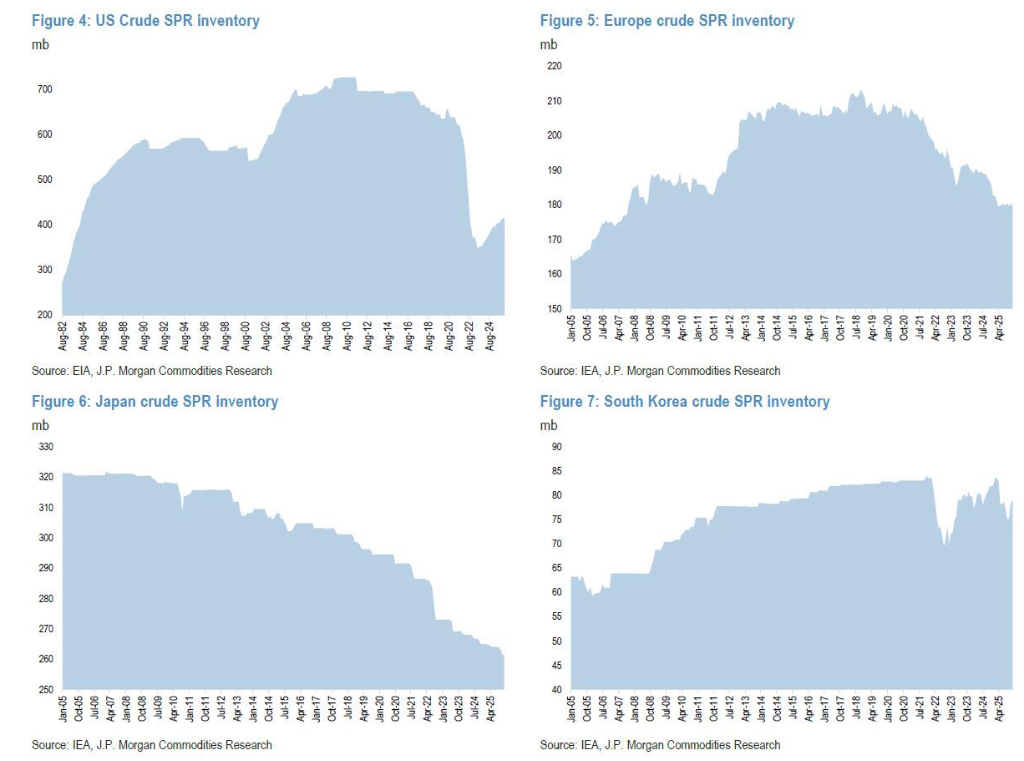
(Chart: Reserve levels of IEA member countries)
However, for the energy market, the truly critical information has not yet been disclosed—including the release pace, duration, and the ratio of crude oil to refined products. These details are often more important than the total volume itself.
Simultaneously, the U.S. reserve release faces significant delays. After the U.S. President issues the release order, the Department of Energy needs approximately 13 days to solicit bids, award contracts, and begin delivery. Subsequently, the crude oil still needs to be transported via pipelines or tankers to refineries and end-consumer locations. Even with immediate action, the reserves will not truly enter the market until the end of March at the earliest.
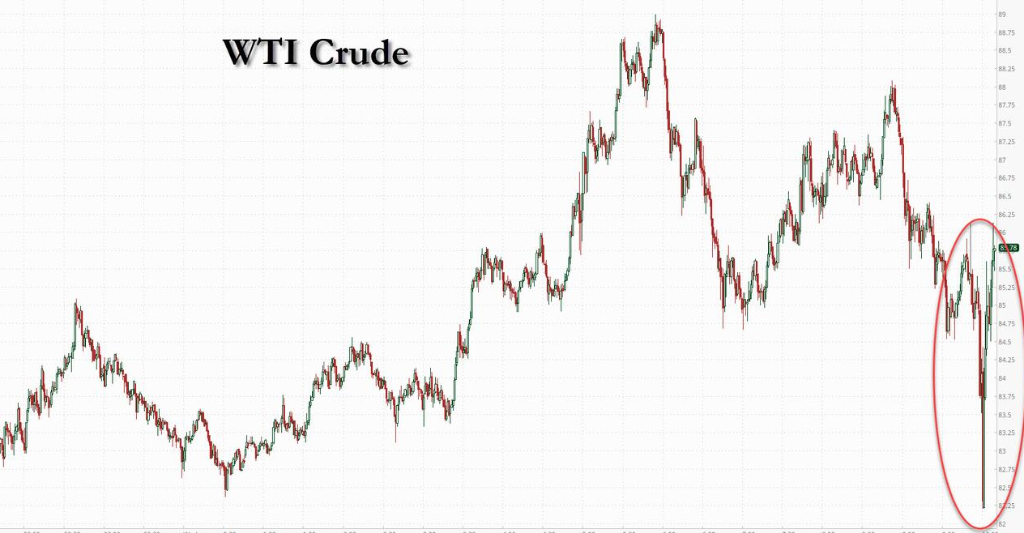
Judging by market reaction, traders are clearly also waiting for this information. After the news was announced, oil prices briefly fell back to around $83 but quickly rebounded, with WTI crude oil returning to above $90.
The Real Problem: Not Inventory, but Supply “Flow”
To understand why the market is indifferent to the 400-million-barrel reserve release, one must clarify the fundamental difference between “Stock” and “Flow.” The anchor for pricing in commodity markets is the daily spot supply and demand that is actually delivered, not static inventory numbers.
The backdrop of the current oil price surge is the near-stagnation of traffic through the Strait of Hormuz.
This strait handles about 20% of global oil shipments. As the war escalates, a large amount of crude oil from the Persian Gulf cannot be shipped out normally.
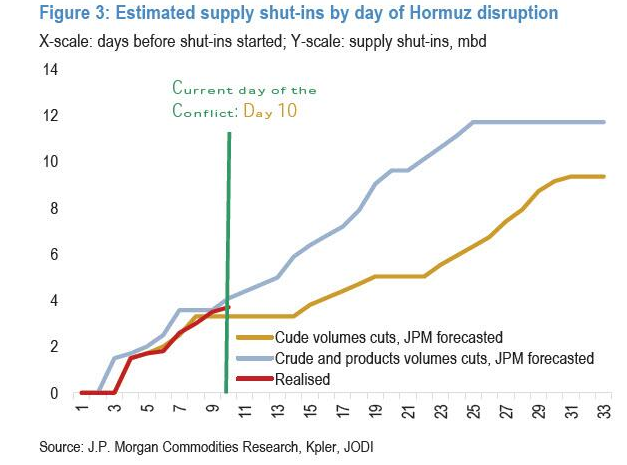
Data from Citigroup and JPMorgan show that the blockade of the strait is causing a daily loss of 11 to 16 million barrels of crude oil supply to the global market. In other words, the global oil market has suddenly lost a supply source nearly the size of Saudi Arabia’s output.
Therefore, the core issue is not whether the world “has oil.”
IEA member countries hold over 1.2 billion barrels in public strategic reserves, with an additional approximately 600 million barrels of corporate inventory under government supervision. In absolute terms, inventory is not scarce.
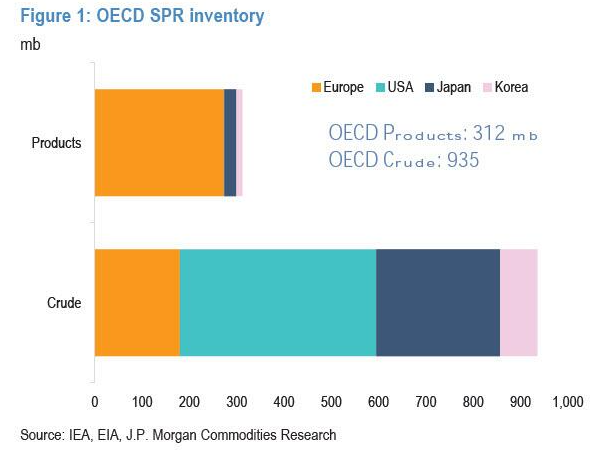
(As of now, the total strategic petroleum reserves of OECD countries amount to 1.247 billion barrels, including 935 million barrels of crude oil and 312 million barrels of refined products)
The real problem is that oil cannot flow from production sites to the market.
A commodity analyst summarized it in one sentence:
“This is a flow problem, not a stock problem.”
Reserve releases can increase inventory supply but cannot replace the daily global oil trade completed via maritime shipping.
Nói một cách thẳng thắn, the 400 million barrels of stock released by IEA members, if not converted into daily market flow at a sufficiently fast pace, cannot fill the massive daily gap of 16 million barrels.
Release Speed is the Key Variable Determining Oil Prices
Against this backdrop, the market’s most pressing question becomes: How quickly can these reserves actually enter the market?
Homayoun Falakshahi, a senior analyst at Kpler, stated bluntly: “The devil is in the details; the key issue is the release speed.”
Currently, the IEA has not announced a unified release schedule, stating only that each member country will arrange its own timetable based on its circumstances.
Major commodity traders privately estimate that the actual market entry rate of these reserves is only between 1.2 million and 4 million barrels per day.
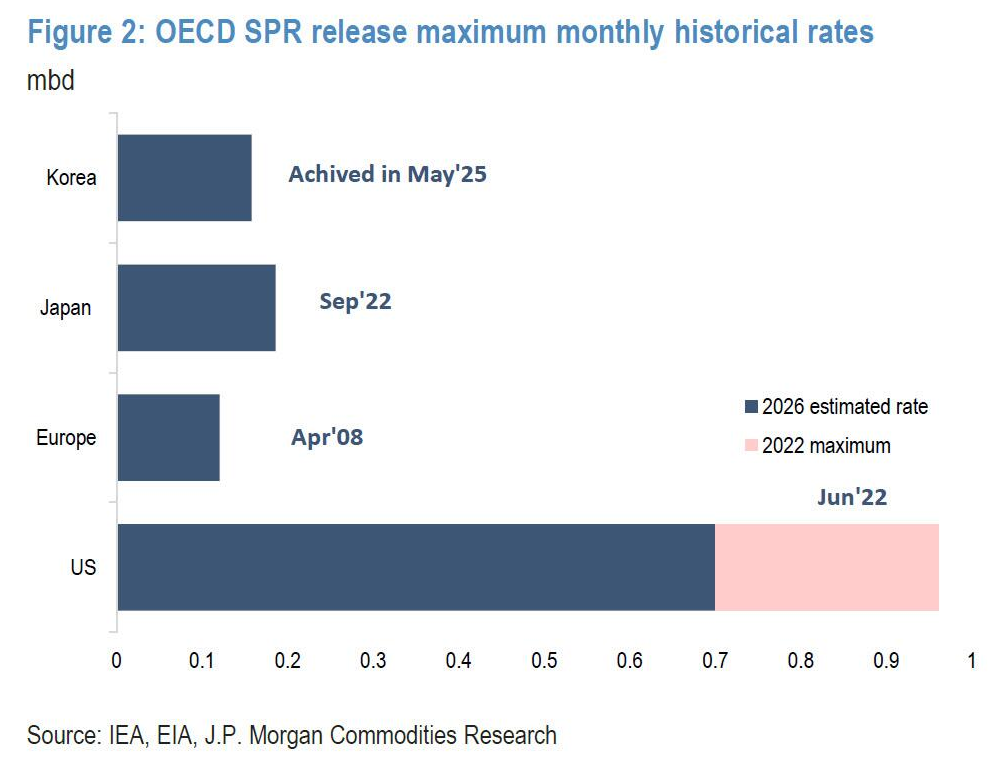
Natasha Kaneva, Head of Commodities Chợ Strategy at JPMorgan, offers a more pessimistic calculation: The coordinated G7 actual release rate can reach a maximum of only 1.2 million barrels per day.
Calculated at this speed, even if all 400 million barrels are released, it would take nearly a year.
U.S. Strategic Petroleum Reserve: Largest in Scale, but with Clear Limitations
In this operation, the United States is expected to shoulder the largest share.
U.S. Secretary of Energy Chris Wright stated that the U.S. will release 172 million barrels from its Strategic Petroleum Reserve, with the entire release process expected to last about 120 days.
He said in an interview: “This is to buy time for the world during the supply disruption caused by Iran.”
However, the U.S. Strategic Petroleum Reserve (SPR) itself faces practical constraints.
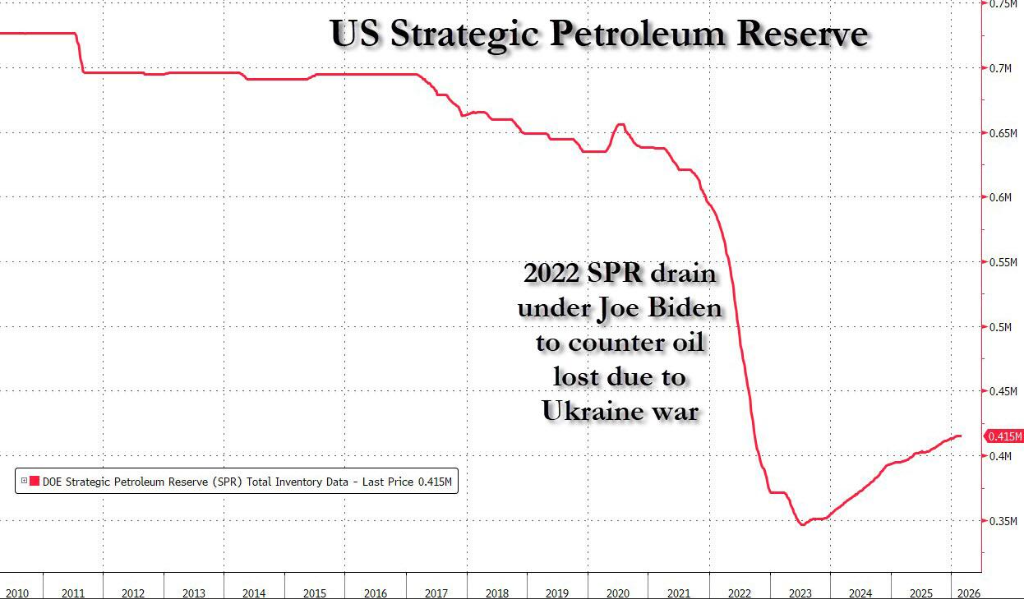
The current U.S. SPR stands at about 415 million barrels, only about 60% of its maximum storage capacity. Following the 2022 Russia-Ukraine conflict, the U.S. released 180 million barrels from its reserves, significantly depleting its inventory.
Theoretically, the maximum release capacity of the U.S. SPR is about 4.4 million barrels per day. However, a 2016 assessment by the U.S. Department of Energy estimated that the actual sustainable release capacity is only 1.4 to 2.1 million barrels per day.
The actual release speed in 2022 did not even exceed 1.1 million barrels per day.
The Fatal Time Lag
Distant water cannot quench a nearby fire. Besides being slow, the reserve release also faces a massive time lag.
Moving from policy implementation to physical circulation requires a cumbersome commercial process. After the U.S. President issues the release order, the Department of Energy needs about 13 days to solicit bids, award contracts, and begin delivery. Subsequently, the crude oil still needs to be transported via pipelines or tankers to refineries and end-consumer locations.
This means that even if the process starts immediately, SPR crude oil will not truly enter the market and form effective supply until the end of March. During this period, the daily supply gap of 16 million barrels will continue to accumulate. JPMorgan estimates that by the end of March, the cumulative crude oil bất chấpcit caused by the geopolitical conflict will exceed 100 million barrels. The meager daily replenishment of 1.2 million barrels is like a drop in the bucket.
More critically, the blockade effect of the Strait of Hormuz is now backfiring upstream. With crude oil unable to be shipped out, storage tanks in oil-producing countries along the Persian Gulf are rapidly filling up. Once “tank topping” reaches its limit, producers will be forced to shut down wells.
The latest data disclosed by Bloomberg shows that major oil producers like Saudi Arabia, the UAE, Iraq, and Kuwait have already begun significantly cutting production, with a combined shutdown magnitude of up to 6.7 million barrels per day, accounting for about 6% of global output. Moreover, for every additional day the strait remains blocked, this number will continue to climb. This directly transforms a logistics and transportation problem into a capacity destruction problem.
For the Market, More Like a “Stabilizing Signal”
From an investor’s perspective, this IEA action is more like a policy stabilizing signal.
On one hand, it signals to the market that major consumer countries will jointly intervene in energy prices, attempting to suppress the risk premium.
On the other hand, it buys time for the market—waiting for the resumption of shipping through the Strait of Hormuz.
But if the strait blockade persists, reserve releases will struggle to truly fill the supply-demand gap.
As one energy trader put it:
“Strategic reserves can cushion the shock, but they cannot replace normal global oil trade.”
Therefore, for the market, the true significance of this record-breaking release plan still depends on one question:
When will the Strait of Hormuz resume navigation.
Bài viết này được lấy từ internet: The devil is in the details: IEA’s record-breaking strategic reserve release fails to quench the immediate thirst
Author | Asher (@Asher_ 0210) Crypto Market Sentiment Plunges to Extreme Fear, Yet Prediction Markets Keep Setting New Activity Records If you only look at the price action, there’s nothing particularly exciting about the crypto market right now. Following last week’s major crypto market crash, Bitcoin’s rebound has been limited, altcoins remain generally sluggish, and capital’s risk appetite has clearly contracted. The change in market sentiment confirms this: according to Alternative.me data, the Crypto Fear & Greed Index remained in the 25 (Fear) range last month, and yesterday it briefly dropped to 7 (Extreme Fear). Even with a slight recovery today, the market is still in the “Extreme Fear” stage. Crypto Fear & Greed Index Yet, against this backdrop, one vertical sector is showing a completely different trend—prediction markets are…
相关文章
































 Tiếng Việt
  English
  繁體中文
繁體中文  简体中文
简体中文  日本語
日本語  العربية
  한국어
한국어  Bahasa Indonesia
  हिन्दी
  اردو
اردو  Русский