







Aevo co-founder’s self-narration goes viral online: I wasted 8 years of my life in the crypto industry.
Biên soạn bởi Odaily Planet Daily ( @OdailyTrung Quốc ); Translated by Azuma ( @azuma_eth )
Editor’s Note: This weekend, an article by Ken Chan (@kenchangh), co-founder and chief technology officer of Aevo, went viral on the internet. The article was titled “ I Wasted 8 Years of My Life in Crypto “.
Ken Chan’s attitude in the article is extremely negative. He believes the industry has lost its idealism and has instead become the largest and most participated super casino in human history, and he feels disgusted that he once contributed to this casino. Although we do not agree with Ken Chan’s views, and many industry practitioners have spoken out to refute him after the article went viral, objectively speaking, his statements do reveal deep-seated problems such as a loss of faith and a collapse of values in the industry today.
The following is Ken Chan’s original text, translated by Odaily.
initial motivation
Even as a teenager, I was highly politically motivated. Of all the books that made me increasingly radical, the works of Ayn Rand (such as *The Fountainhead* and *Atlas Shrugged*) had the greatest influence on me. In 2016, I was still an aspiring libertarian and had even donated to Gary Johnson. Besides my staunch Randian beliefs, I also enjoy computer programming, so cryptocurrency seemed like a natural fit for me. The cypherpunk spirit drew me in. The idea of Bitcoin as a private wealth bank fascinated me—the ability to hold a billion dollars in my head across borders has always been an incredibly powerful concept for me.
Tuy nhiên, as time went on, I felt I had lost sight of my initial purpose in the crypto industry. After dedicating myself full-time to the field, the alluring initial rhetoric about the transformative power of cryptocurrency faded. I became disillusioned with the target users and the true intended audience. I had completely misunderstood who the real users of cryptocurrency were and mistook the hype for reality. Cryptocurrency claimed to decentralize the financial system, which I readily accepted at the time, but in reality, it was merely a supersystem of speculation and gambling, simply a mirror of the real economy.
Reality hit me like a truck. I wasn’t building a new financial system; I was building a casino—a casino that didn’t call itself a casino, but the largest, 24/7 online casino our generation had ever created, with countless participants. Part of me hoped I could at least be proud of investing my entire twenties in building this casino, but another part of me felt I had completely wasted my twenties. I wasted my life on it —but at least I made a lot of money from it.
Observe what they do, not what they say.
Cryptocurrency is a confusing thing. On one hand, you hear proponents say they want to completely replace the existing financial system with an on-chain system. I can totally imagine a world where your bank account only holds USDC or Bitcoin, and you can send billions of dollars to anyone in the world in seconds. This vision remains strong, and I still agree with it.
However, the incentive mechanism completely distorted the course of events. In reality, all market participants were eager to pour money in, funding the next so-called “Layer 1” (Aptos, Sui, Sei, ICP, etc.). The sole winner of the 2020 Layer 1 battle was Solana, which fueled a powerful speculative drive to compete for fourth place (Bitcoin, Ethereum, Solana, and so on), supporting a market capitalization of hundreds of billions of dollars.
But has this truly propelled us toward an ideal new financial system? Despite VCs writing 5,000-word articles trying to convince you, the answer is no. It hasn’t created a new system at all; in fact, it’s burned through everyone’s money (retail investors and VCs alike), making everyone in the new system poorer.
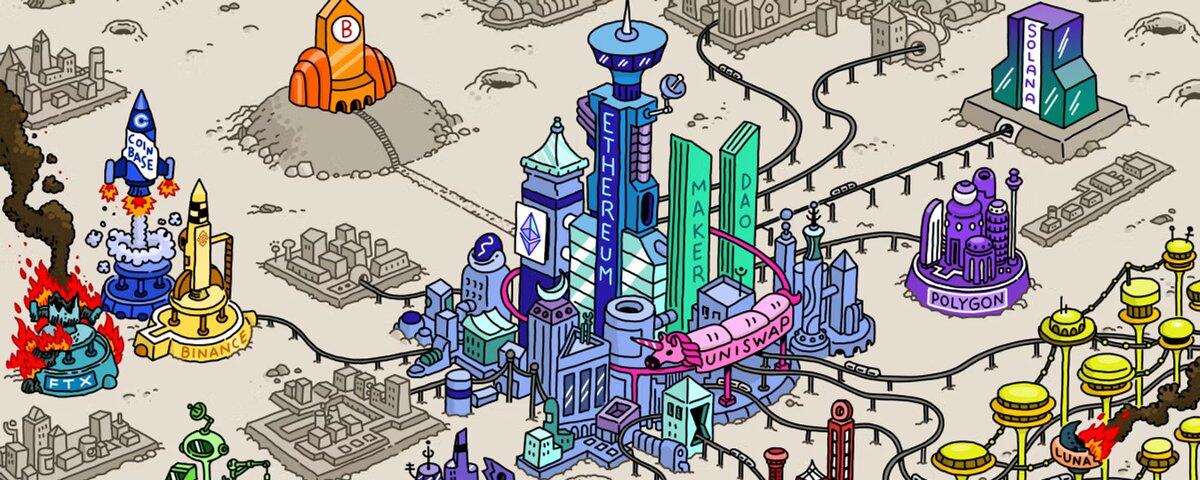
I’m not targeting Layer 1. I could cite countless similar examples: spot DEXs, perpetual contract DEXs, prediction markets, meme platforms, and so on. The fierce competition in these sectors doesn’t fundamentally create a better financial system. Contrary to what VCs say, we don’t need to build casinos on Mars.
The gambling-like nature of economic models
If I said I had no financial motivation for joining the crypto industry, I would be lying. As a reader, you might think it’s hypocritical of me to decide to leave the industry after making enough money. Yes, maybe I am hypocritical, but maybe I’m just disgusted by my contribution to this quagmire of financialization and gambling.
Normalizing zero-sum games of “quick profits for everyone” is not a way to create wealth in the long run. It may seem that way, but it isn’t. Eight years in the crypto world have completely destroyed my ability to identify sustainable business models. Here, you don’t need a successful business or product to make money. There’s a long list of high-market-cap tokens with zero users—this completely defies the logic of the real world. If you want to bring value to your customers, and not just gambling + entertainment (which casinos do), these zero-sum business models simply don’t work.
Phần kết luận
I used to think “financial nihilism” was a cute and harmless concept. I thought it didn’t matter if I kept introducing zero-sum games to the next generation. I have no doubt that Bitcoin will one day reach $1 million, but that has nothing to do with the financial games the industry is creating.
This industry mindset is extremely toxic, and I believe it will lead to a long-term collapse of social mobility for the younger generation. You can already see it happening, and we must have the courage to resist these meaningless games.
CMS Holdings famously said, “Are you here to make money, or to prove yourself right?”
This time, I chose to prove myself right.
Bài viết này được lấy từ internet: Aevo co-founder’s self-narration goes viral online: I wasted 8 years of my life in the crypto industry.
相关文章

































 Tiếng Việt
  English
  繁體中文
繁體中文  简体中文
简体中文  日本語
日本語  العربية
  한국어
한국어  Bahasa Indonesia
  हिन्दी
  اردو
اردو  Русский