







Iran opened fire on an oil tanker that paid a fake Bitcoin transit fee to scammers.
Introduction: Less than two weeks after Iran announced it would collect Bitcoin tolls in the Strait of Hormuz, scammers impersonating Iranian officials have sent fake messages to stranded oil tankers demanding BTC and USDT.
At least one tanker that paid a fake toll was fired upon by Iran’s Islamic Revolutionary Guard Corps (IRGC) while attempting to transit. Blockchain analytics firms TRM Labs and Chainalysis both stated that no on-chain evidence of large-scale криптовалютаcurrency toll collection has been found so far.
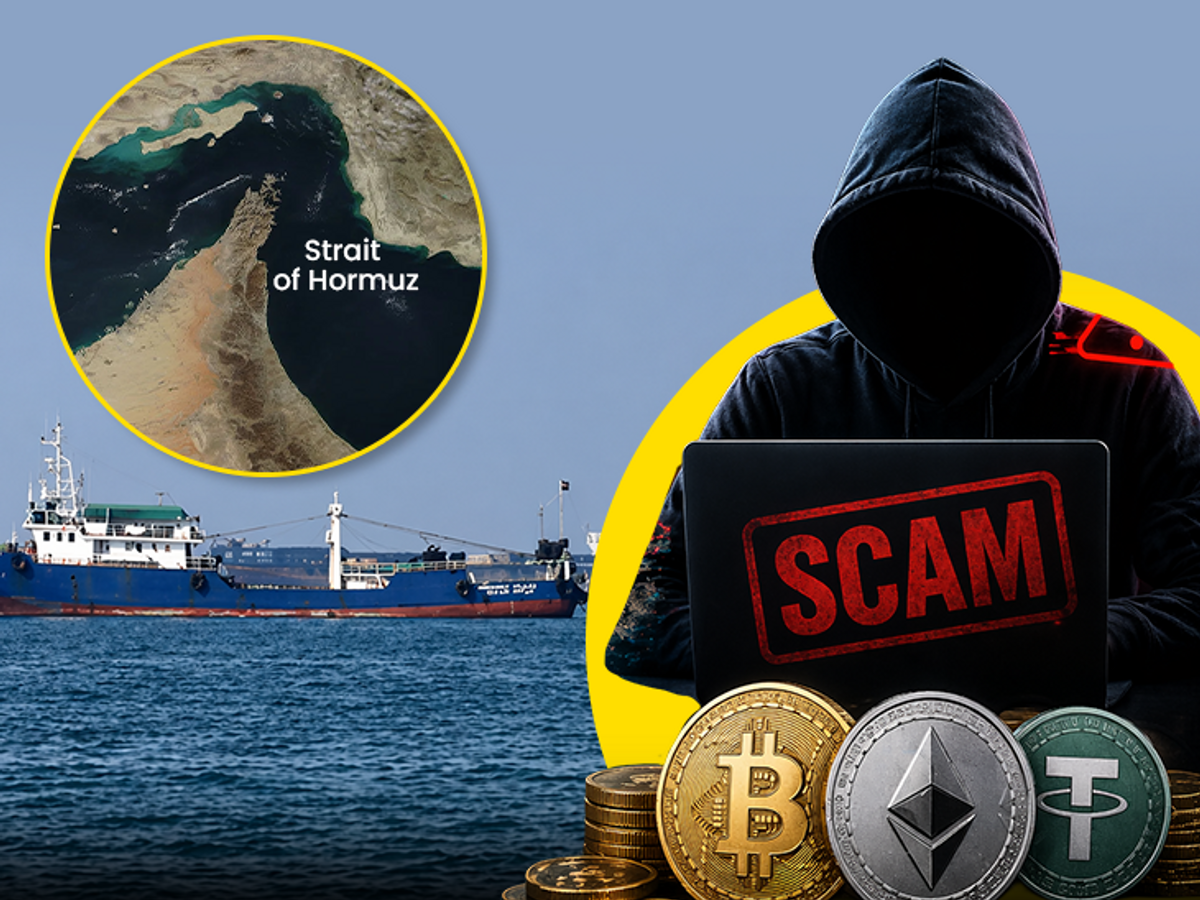
Iran announced it would collect Bitcoin tolls, and within two weeks, scammers weaponized this narrative.
According to a Reuters report on April 21, Greek maritime risk management company MARISKS issued a warning: unidentified individuals impersonating Iranian authorities sent fake messages to vessels stranded on the western side of the Strait of Hormuz, demanding payment in BTC or USDT as a “toll” for safe passage. MARISKS believes that at least one vessel fired upon by IRGC gunboats when Iran briefly opened the strait on April 18 was a victim of this scam.
The absurdity of the event lies in the entire causal chain: a sovereign state announces it will collect Bitcoin tolls, scammers adopt the same rhetoric to defraud, shipowners believe it and pay, only to be shot at by the actual Iranian military.
From “National Settlement Инструмент” to a Scammer’s Attack Vector
The story begins in early April.
On March 30-31, the Iranian parliament passed the “Strait of Hormuz Management Plan,” formally codifying the toll system that the IRGC had been enforcing since mid-March. According to the Financial Times, Hamid Hosseini, spokesperson for the Iranian Oil, Gas, and Petrochemical Products Exporters Union, confirmed that fully laden oil tankers must pay a toll of $1 per barrel, with payment options including Bitcoin, USDT, or the Chinese yuan. A fully loaded supertanker carrying 2 million barrels of crude oil could face a single transit fee of up to $2 million.
Following the announcement, Bitcoin’s price jumped 5%, briefly breaking through $72,700. The crypto community quickly interpreted this as a milestone validation of Bitcoin as a “neutral settlement layer for international trade.” Institutions like Bitwise even linked it to predictions of Bitcoin reaching $1 million.
But skeptics were not few.
In an April 15 report, Sam Lyman of the Bitcoin Policy Institute pointed out that collecting Bitcoin tolls at scale using existing technology is “nearly impossible to achieve.” Ari Redbord, Global Head of Policy at TRM Labs, told Fortune magazine that on-chain data does not show toll payments occurring on a large scale. Chainalysis, in its analysis report, noted that on-chain activity of Iran-linked entities primarily relies on USDT on the Tron network, rather than Bitcoin.
Scammers, however, are unconcerned with these technical debates. They only need a credible narrative, and the Iranian government had already written the script for them.
The Ship That Paid a Fake Toll Got Real Gunfire
According to Reuters and DL News, the scam messages closely mimicked official language. Scammers demanded shipowners submit vessel documents, claiming they would be assessed by “Iranian security authorities.” After assessment, payment in BTC or USDT was required, following which the vessel would be granted “safe passage through the strait at a scheduled time.”
Approximately 400 vessels and about 20,000 crew members remain stranded in the Persian Gulf. With the US blocking Iranian ports and Iran repeatedly opening and closing the strait, the anxiety of shipowners under this dual blockade is understandable. Scammers precisely exploited this anxiety.
On April 18, Iran briefly opened the strait, and some vessels attempted to transit. According to the UK Maritime Trade Operations (UKMTO), two IRGC gunboats opened fire on an oil tanker trying to exit the strait, forcing it to turn back. MARISKS believes this tanker had previously paid a cryptocurrency “toll” to the scammers, believing it had obtained clearance to pass.
They paid, but the money didn’t reach Iran. The ship was still attacked.
Paying a Scammer Could Also Violate Sanctions Law
More ironically, even if a shipowner realizes they’ve been scammed, the legal risks do not disappear.
Xue Yin Peh, Director of Investigation Strategy at Chainalysis, told Decrypt that regardless of whether the recipient is genuinely an Iranian authority, if the payer intended to pay a sanctioned regime, they could potentially be found in violation of OFAC, EU, and UK sanctions regulations. In other words, even if you thought you were paying Iran, but the money ended up in a scammer’s pocket, regulators can still pursue you based on your “subjective intent.”
Isabella Chase, Head of Policy for EMEA at TRM Labs, also warned that any wallet addresses associated with such demands should be considered “high risk,” and that cryptocurrency payments offer no “safe harbor” regarding sanctions compliance.
This creates a nearly unsolvable dilemma for shipowners: paying Iran is a sanctions violation, paying scammers might also be a sanctions violation, and not paying means remaining adrift in the Persian Gulf.
Bitcoin’s Irreversibility: From Feature to Flaw
The aspect most worthy of reflection for the crypto industry is how Bitcoin’s core characteristics perform in this scenario.
Benzinga highlighted the key issue in its report: once a cryptocurrency payment is sent, it cannot be reversed. Traditional bank transfers at least offer the possibility of freezing and recovery, but once Bitcoin or USDT is transferred out, the funds are lost. This characteristic is called “trustless settlement” in normal business contexts, but in the overlapping scenario of war and fraud, it becomes “unrecoverable losses.”
This might be the most absurd crypto story of 2026… Iran’s plan to collect Bitcoin tolls may never have truly materialized, but scammers have already profited from the story, and one oil tanker got shot because of it.
Эта статья взята из интернета: Iran opened fire on an oil tanker that paid a fake Bitcoin transit fee to scammers.
Related: Claude’s 18 Digital Pets Are Live: Tamagotchi in Your Terminal
Its name is Buddy. Since everyone already knows, Claude simply released it on April Fool’s Day. The picture is a colleague’s good Buddy A Tamagotchi in the Terminal Next to the input box in the Claude Code terminal, lives an ASCII pixel creature. It has its own species, rarity, five-dimensional attributes, and personality. It can “observe” your coding process and pop up with speech bubbles saying a few things while you debug. You can pet it, and it will float out hearts. You can call its name, and it will chat with you. Anthropic’s internal definition of it is not a “decoration,” but “a separate watcher.” There is a clear comment in the source code: “Buddy is a separate entity and is not you (Claude).” The main model and the…
Related articles
































 Русский
  English
  繁體中文
繁體中文  简体中文
简体中文  日本語
日本語  Tiếng Việt
  العربية
  한국어
한국어  Bahasa Indonesia
  हिन्दी
  اردو
اردو