







Hook Summer is here? sato, Lo0p, and FLOOD ignite a new narrative around Uniswap v4
Penulis: Wenser (@wenser tahun 2010 )
As the broader market shows slight signs of recovery, the hype around Ethereum ecosystem meme coins is reigniting. Following ASTEROID, ecosystem tokens like sato, sat1, Lo0p, and FLOOD, which leverage the Uniswap v4 Hook protocol, have gradually become the market’s focus. Their market caps range from several million to tens of millions of dollars, injecting a rare concentration of liquidity into a narrative-starved kripto market. In this article, Odaily will briefly recap the information on these tokens and explore whether this wave of enthusiasm can drive the price of UNI upward.
Is Hook Summer Here? 4 Ecosystem Tokens for Intelligent Liquidity Management
Menurut Uniswap official documentation, Hooks are essentially “pluggable smart contracts” tailor-made for liquidity pools in Uniswap v4. Unlike the traditional fixed constant product curve (x*y=k) of Uniswap V2/V3, Hooks allow developers to automatically inject custom logic before and after key lifecycle events of the pool (such as initialization, adding/removing liquidity, Swap, Donate, etc.), effectively turning the entire AMM (Automated Pasar Maker) into programmable “Lego blocks.” Apart from the previously mentioned uPEG, recent representative projects in this area are as follows:
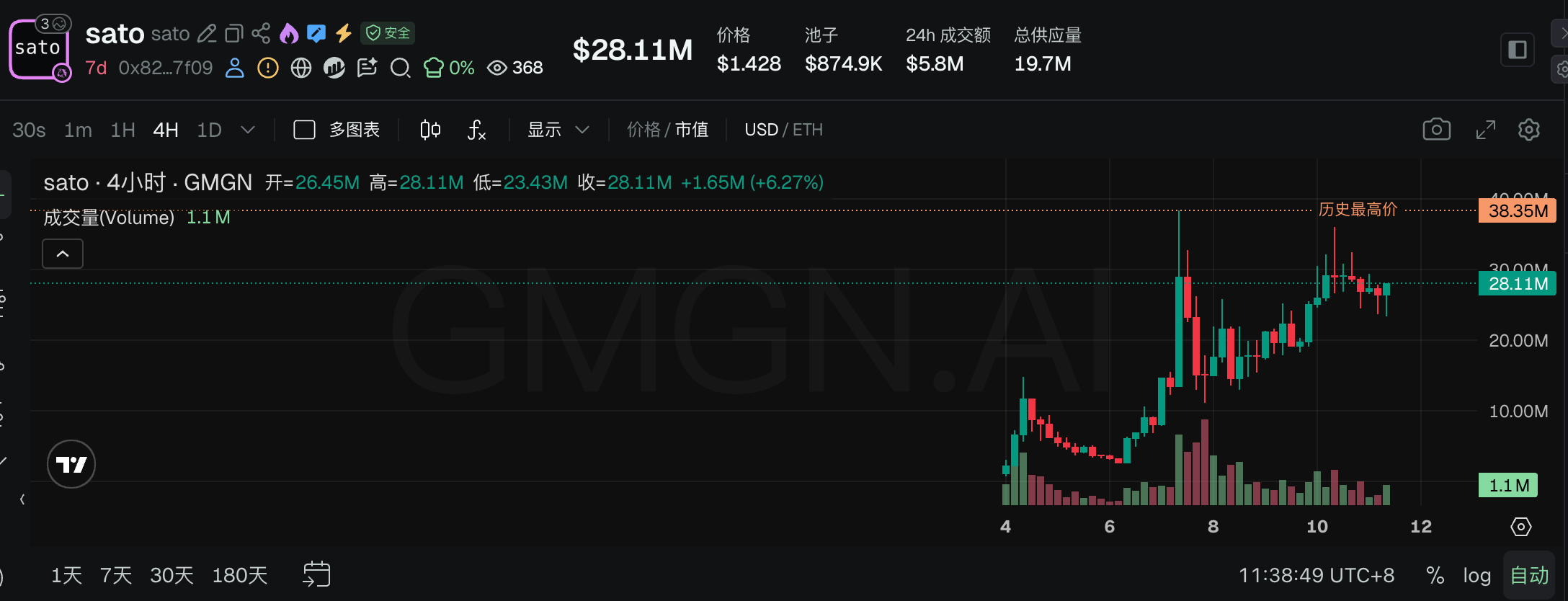
sato: Peak Pasar Cap Exceeded $38 Million
CA: 0x829f4b62eebe12af653b4dd4ffc480966f7d7f09
Current Market Cap: ~$28 million
On May 4th, right after sato emerged, Odaily provided a brief introduction when its market cap was merely $9 million. The token utilizes the Uniswap v4 curve mechanism for minting and burning: buying generates new tokens and locks ETH as reserves, while selling redeems ETH from the reserves and burns tokens. At that time, its cumulative purchase volume had neared 1000 ETH. Subsequently, sato’s market cap briefly exceeded $30 million.
Although community users later discovered a bid-ask spread in its curve mechanism, causing its market cap to drop below $13 million at one point, its innovative mechanism and first-mover advantage have kept its current market cap around $28 million, with a 24-hour trading volume close to $6 million.
sat1: Peak Market Cap Surpassed $10 Million
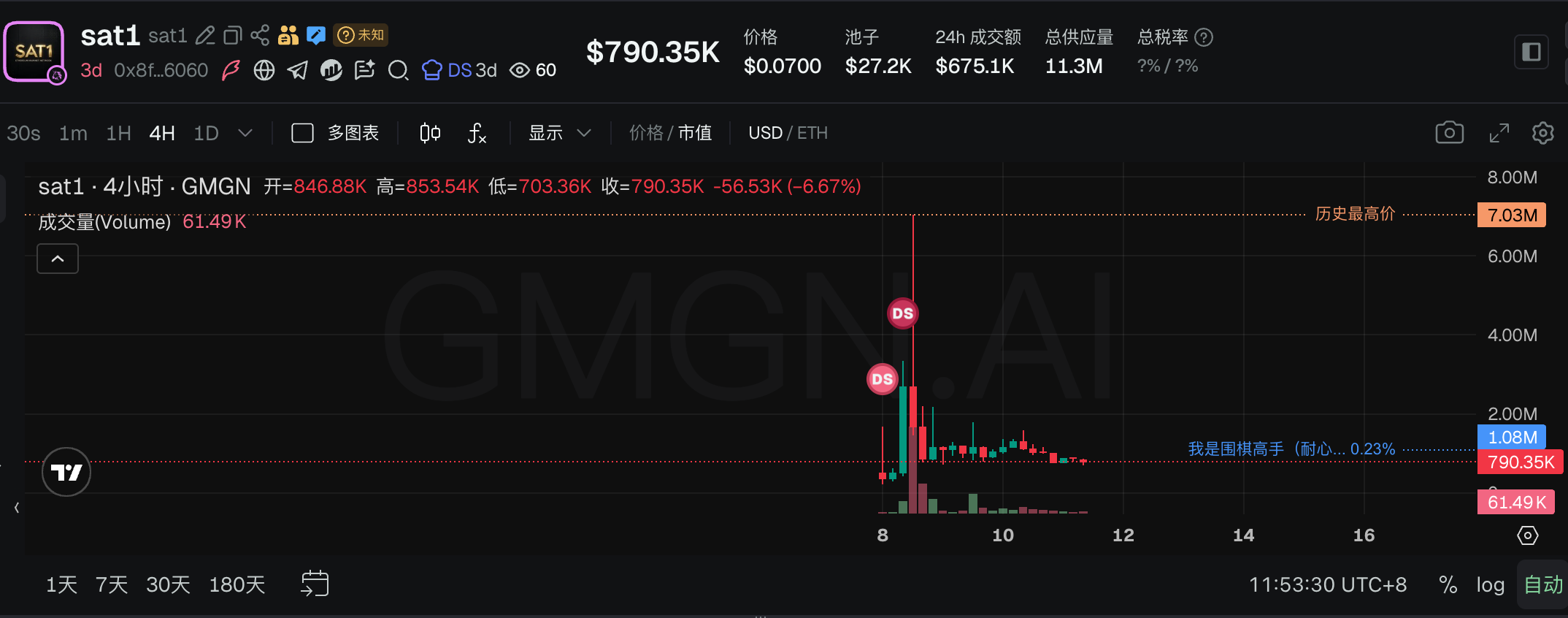
CA: 0x8f66337a0c2a02202fd91dd596c411cf977c6060
Current Market Cap: ~$800,000
On May 8th, sat1, marketed as an “optimized version of sato,” reached its peak of speculation. Thanks to aggressive promotion by kripto KOL Hanba Longwang in WeChat groups, the token’s market cap briefly exceeded $10 million. However, as public opinion turned against it, the project eventually entered a death spiral, losing over 90% of its value.
Lo0p: Peak Market Cap Approached $6.6 Million
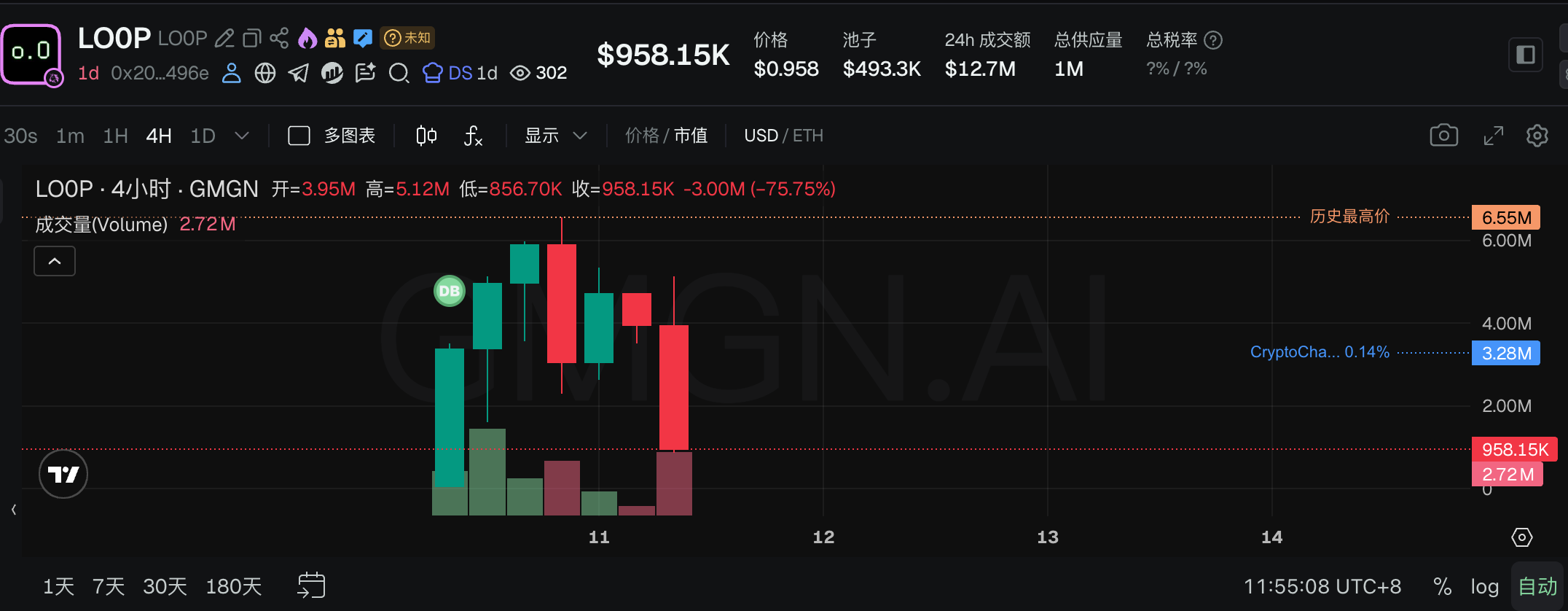
CA: 0x20ea861b3acec90d3a15b4755d9a1cf1f161496e
Current Market Cap: ~$960,000
Official Account: https://x.com/lo0pio
On May 10th, Lo0p’s market cap briefly surpassed $6 million, with a daily gain of over 110x. Lo0p’s core concept is a “lending AMM protocol based on Uniswap v4 Hooks,” aimed at solving the capital efficiency problem of idle ETH in LP pools. Users buy LO0P tokens via a bonding curve, locking them as collateral (without the need to sell). They can then borrow ETH directly from the pool reserves at a 40% LTV ratio; borrowing doesn’t directly impact the spot price, and the liquidation mechanism attempts to refill the LP band. Hooks inject custom logic into the Swap/liquidity lifecycle, enabling a composite yield of “collateralized lending + LP returns + lending interest” while maintaining pool price stability. Its core mechanism is “built-in lending.”
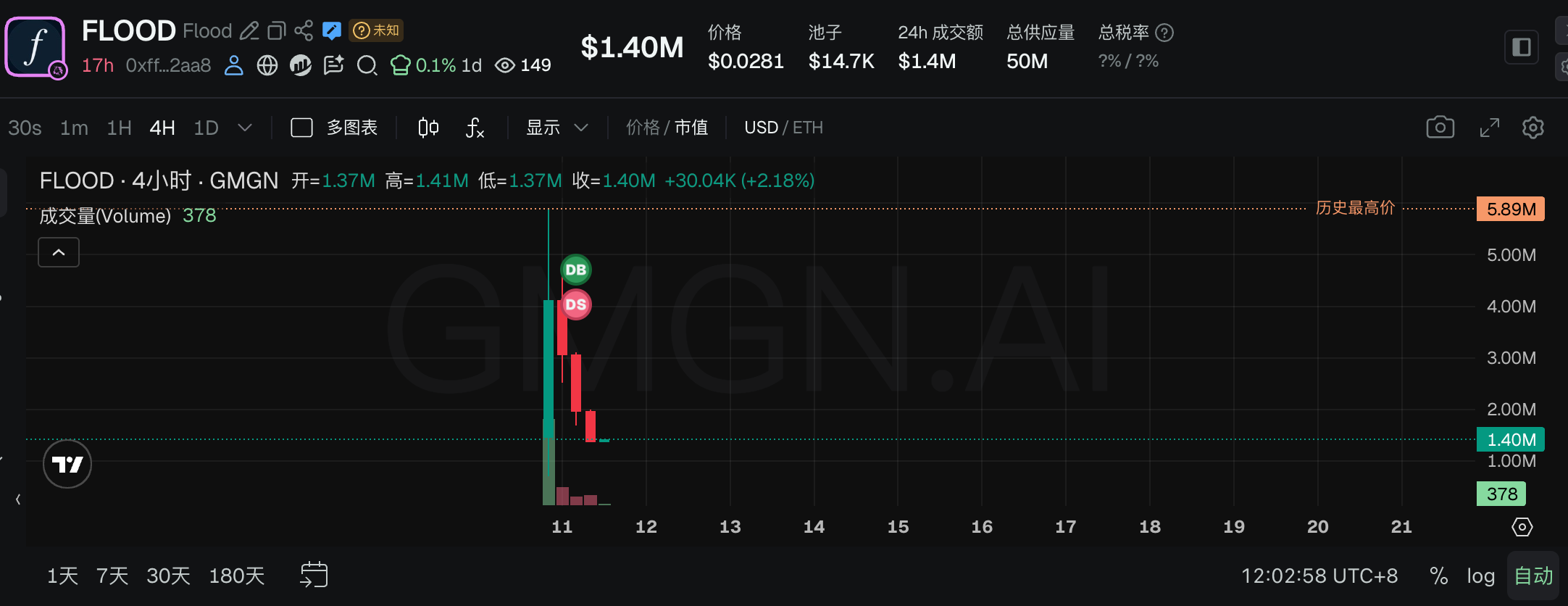
FLOOD: Peak Market Cap Near $6 Million
CA: 0xff003fbe8b8d5e7f271a9cb9f2780003daed2aa8
Current Market Cap: ~$1.4 million
Official Account: https://x.com/flood_markets
On May 10th, FLOOD’s market cap briefly exceeded $5 million. However, as the speculative frenzy subsided, its current market cap stands around $1.4 million. It is reported that FLOOD has a total supply of 50 million tokens. Its unique mechanism involves: asset reserves generated from user purchases are deposited into corresponding Aave v3 markets to generate yield, and transaction fees are retained within the pool to increase reserves and influence the token price. The core lies in Aave integration for automated yield; the Hook mechanism acts as an “auto-rebalancing and yield reflux” function. It’s no wonder a community user remarked: “Buy funds enter the pool -> Pool assets go to Aave to earn interest -> Interest stays in the pool -> Long-term price increase. So effectively, you’re using my money to save and earn interest?”
Hook Mechanism Tokens Drive Uniswap Ecosystem Development: UNI Bullish Long-Term, but Short-Term Gains Limited
Thanks to the rapid development of the Uniswap v4 Hook mechanism, ecosystem tokens in this sector have become a new class of meme/project tokens. In the long run, they can further attract users and capital liquidity to participate in Uniswap v4 liquidity pool trading and construction.
Combined with the earlier news that “Uniswap has activated the fee switch, with a portion of protocol fees used to burn UNI tokens,” the long-term fundamentals for UNI appear stable and positive.
However, in the short term, the emergence of Hook mechanism tokens cannot directly drive UNI’s price upward. There are intervening factors, including the lifecycle and sustainability of these tokens, the ratio of token price volatility to trading fees, and the impact of crypto regulatory policies and broader market trends on UNI.
Therefore, to summarize in one sentence: The Hook ecosystem is “long-term nourishment” for UNI, but in the short term, it acts more as a “catalyst” rather than a “propellant.”
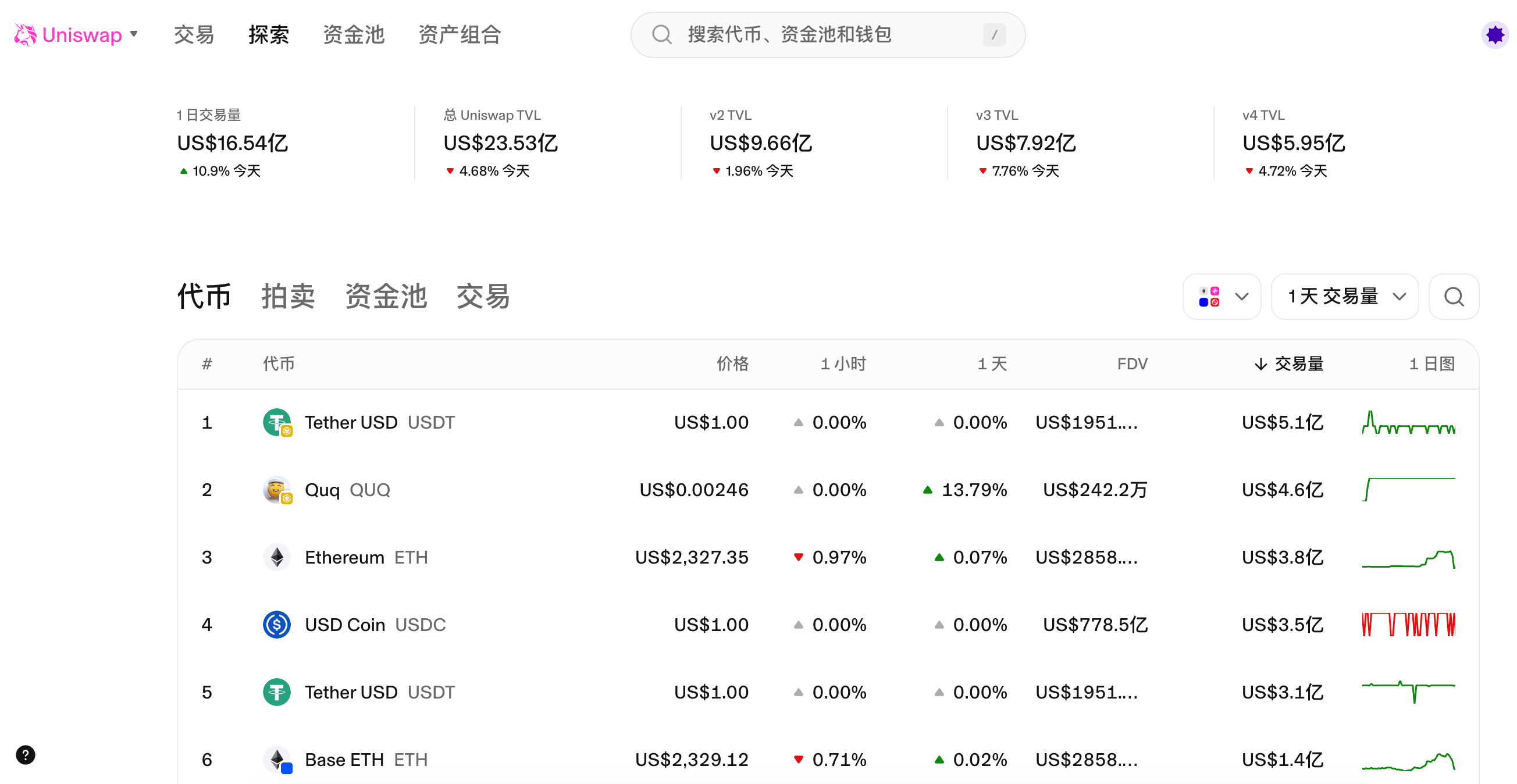
Furthermore, according to the Uniswap official website page, the current v4 TVL is reported at $595 million, slightly lower than v3 ($792 million) and v2 ($966 million) liquidity pools. Therefore, the adoption of v4 and the Hook ecosystem still requires time to build momentum and gradually evolve into mainstream liquidity management protocols.
Finally, Odaily reminds readers that the tokens mentioned above are products of early-stage technological innovation experiments and may contain unknown bugs or other risks. Please be aware of relevant risks when participating in trading. The above information does not constitute investment advice.
Artikel ini bersumber dari internet: Hook Summer is here? sato, Lo0p, and FLOOD ignite a new narrative around Uniswap v4
Original Compilation: TechFlow Introduction: The context in which this analysis was written speaks for itself—the author wrote this four-phase market framework while evacuating his family in Oman and dealing with missile attacks. He is not trying to predict the outcome but rather deducing the most likely viable middle path: 6 weeks is the critical point for inflation transmission, July-August is the buying window, and the Fed will be forced to cut rates in September. This is one of the most information-dense and credible market analyses on the Iran war to date. Full text below: Over the past week, I’ve pieced together this analysis in between evacuating my wife and dealing with attacks in Oman. These are my current thoughts on how this war will affect markets over the next 6…
相关文章































 Bahasa Indonesia
  English
  繁體中文
繁體中文  简体中文
简体中文  日本語
日本語  Tiếng Việt
  العربية
  한국어
한국어  हिन्दी
  اردو
اردو  Русский