







Crypto Market Macro Research Report: US-Iran Ceasefire, A Moment of Reassessment for Risk Assets
1. Ceasefire Gambit: A Dramatic Turn Before the Deadline
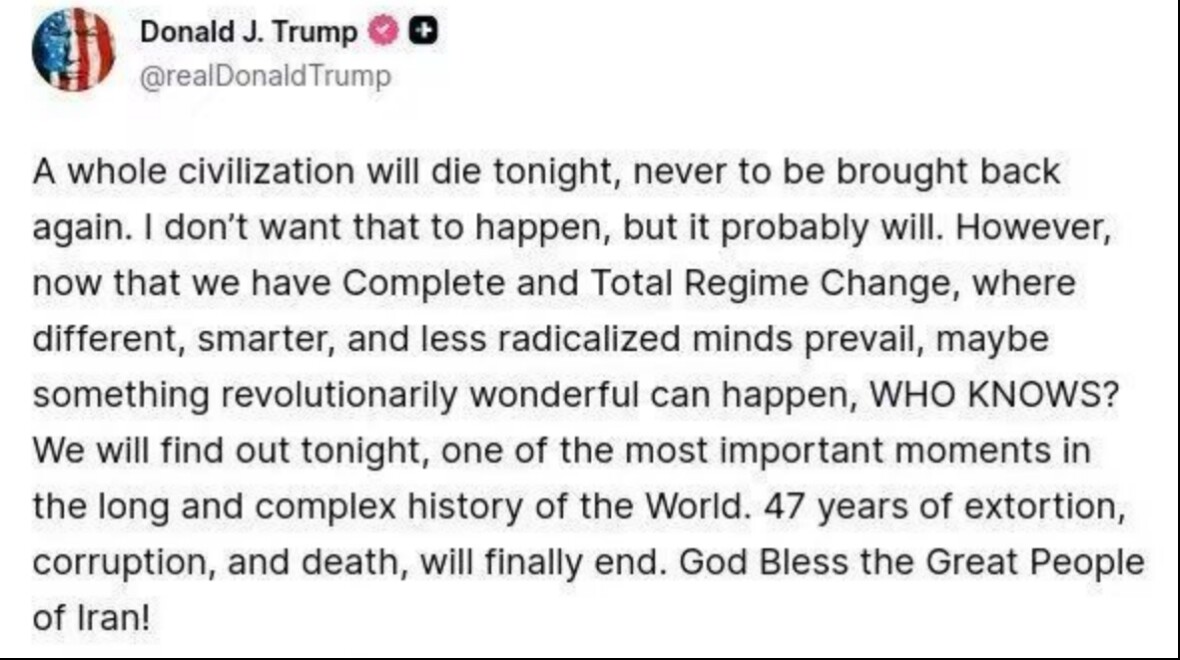
The achievement of this ceasefire followed intensive diplomatic mediation. The day before, Pakistani Prime Minister Shehbaz Sharif had called Trump and Iran’s Supreme Leader Khamenei separately, requesting a two-week extension of the “deadline” and asking Iran to open the Strait of Hormuz for two weeks as a goodwill gesture. Trump’s condition was for Iran to open the Strait of Hormuz “completely, immediately, and safely” in exchange for the ceasefire. The Iranian side accepted the ceasefire proposal but explicitly stated it held “complete distrust” of the United States. According to the agreement, the ceasefire officially took effect at 3:30 AM Iran time (8:00 AM Beijing time) on April 8, and Israel also agreed to suspend bombing operations during the negotiations. The ceasefire lasts for two weeks, with talks set to begin in Islamabad, Pakistan on April 10 and extendable by mutual agreement. Currently, the US military has suspended airstrikes within Iran, and the Iranian armed forces have halted defensive operations. However, it is important to note that the essence of the ceasefire is a “mutual suspension,” not a permanent peace agreement.
Iran simultaneously announced a ten-point plan submitted to the US through Pakistan. Its core demands include: the withdrawal of US combat forces from all bases in the region, the lifting of all sanctions against Iran, acceptance of Iran’s uranium enrichment activities, payment of war reparations to Iran, and ultimately the approval of all terms through a binding UN Security Council resolution. Iran’s statement claimed that “Pakistan has informed Iran that the US side accepts the above principles as the basis for negotiations,” but the US has never publicly confirmed this. The vast gap in core demands between the two sides creates high uncertainty about the prospects two weeks later. Negotiations are a continuation of the battlefield, not its end.
2. Pasar Panorama: Extreme Divergence Across Four Major Asset Classes
Following the announcement of the ceasefire, global major asset classes exhibited rare and intense divergence, reflecting the complexity of the market’s pricing logic for “peace expectations.”
**Crypto Market: Risk Appetite Fully Rebounds, Bitcoin Leads the Rally.** Bitcoin briefly broke through $72,000, touching $72,760 at one point, with a 24-hour gain exceeding 5%. Ethereum broke through $2,200, touching $2,273 at one point, with a 24-hour gain exceeding 7%. Other major coins like SOL also saw varying degrees of gains. Over the past 24 hours, total liquidations across the network reached $595 million, with short positions accounting for $429 million (72%), primarily liquidating shorts. Bitcoin short liquidations alone amounted to $244 million. The core drivers of Bitcoin’s strong rebound are twofold: first, the ceasefire news directly triggered a concentrated liquidation of previously accumulated short positions; second, US-listed spot Bitcoin ETFs recorded a net inflow of $471.3 million on Monday, continuing the inflow trend from the previous week, with returning institutional funds providing fundamental support for the rebound.
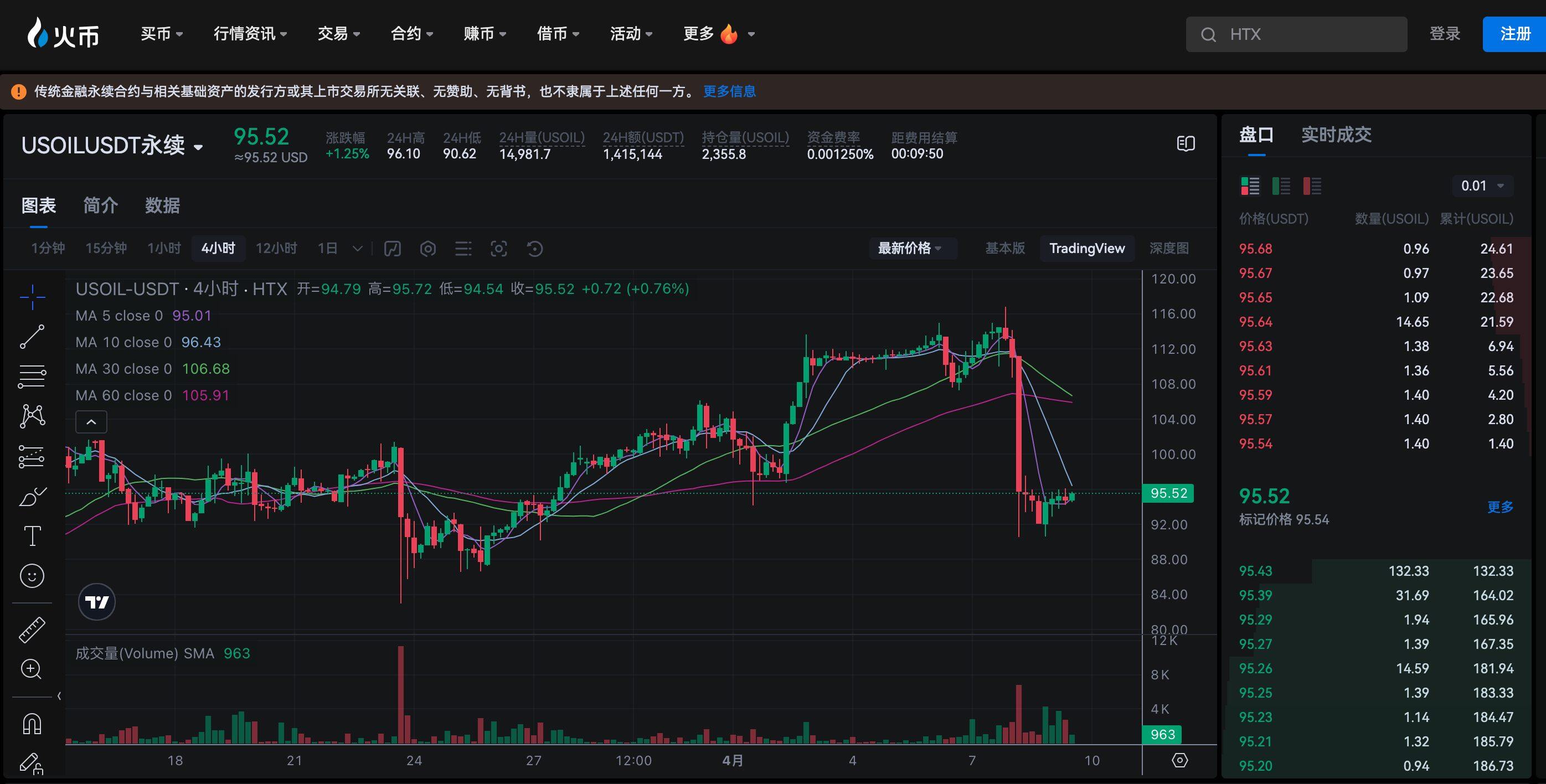
**Crude Oil: A Complete Unwinding of War Premium.** As the absolute epicenter of this conflict, the crude oil market experienced the most violent volatility. During the conflict, the risk of a blockade in the Strait of Hormuz pushed WTI crude prices from around $65 to nearly $118 per barrel, a gain of nearly 70%. Upon the ceasefire news, WTI crude oil futures plunged over 15% in a single day, dropping to $91.3 per barrel at one point, extending the decline to 19%. Approximately one-fifth of global crude oil supply transportation relies on the Strait of Hormuz. If the ceasefire agreement can be maintained, oil prices face further downward pressure.
**Gold: The Unexpected Rekindling of Safe-Haven Attributes.** Gold’s performance is the most noteworthy signal in this event. According to the traditional rule of “sell the news,” easing geopolitical tensions should weaken gold’s safe-haven demand, leading to a price decline. However, spot gold surged against the trend to $4,811 per ounce after the ceasefire announcement, gaining over 3%, with the main New York gold futures contract returning above $4,840. This abnormal phenomenon—a safe-haven asset rallying after geopolitical easing—reveals a deeper logic: long-term capital is betting not on a short-term ceasefire, but on long-term distrust in the US dollar credit system and American global leadership. Gold’s rise is essentially a deep-seated skepticism of fiat currency credibility and long-term geopolitical stability. During the US-Iran conflict, the US Dollar Index appreciated over 2%. After the ceasefire news, the index fell nearly 0.7% intraday, retreating to 98.9, further reinforcing this judgment.
**US Stocks: A Rebound with Underlying Concerns.** Nasdaq futures extended gains to 2.5%, S&P 500 futures rose over 2%, and Dow Jones futures gained 1.8%. Asian-Pacific markets responded in sync, with the Nikkei 225 index expanding gains to 4.7% and the MSCI Asia Pacific Index rising 2.1%. However, the actual performance of the three major US stock indices during Tuesday’s regular trading session was muted: the S&P 500 rose 0.08%, the Nasdaq gained 0.1%, and the Dow fell 0.18%, indicating cautious investor sentiment towards economic fundamentals.
The differentiated pricing across major asset classes shows that the ceasefire news triggered different logics in different asset categories: crude oil directly unwound the war premium, US stocks repaired risk appetite, gold priced in long-term uncertainty in advance, while the kripto market simultaneously absorbed the sentiment repair of risk assets and the safe-haven narrative of digital assets.
3. The New Geopolitical Logic of Crypto Assets: The Dual Role of Risk and Safe Haven
In this round of US-Iran conflict, Bitcoin’s performance pattern provides an important analytical framework: it is no longer simply equated with either “risk assets” or “safe-haven assets,” but exhibits a unique “dual attribute.”
During the conflict escalation phase (late February to early April), Bitcoin’s performance clearly diverged from traditional risk assets. Although geopolitical tensions caused oil prices to soar and inflation expectations to heat up, dampening market expectations for Fed rate cuts and putting pressure on traditional tech stocks, Bitcoin did not experience a synchronous sharp decline. The reason is that Bitcoin had already undergone a significant correction early in the conflict, leaving relatively limited potential passive selling pressure in the market. Simultaneously, the continuous net inflows into US-listed spot Bitcoin ETFs provided liquidity support.
In the rebound phase following the ceasefire announcement, Bitcoin’s performance incorporated logic from two levels: on one hand, it rebounded in sync with US and Asia-Pacific stock markets, reflecting its risk attribute as a global liquidity-sensitive asset; on the other hand, the magnitude and persistence of its rebound exceeded those of traditional risk assets, reflecting the market’s pricing of its “digital gold” narrative. Some market analysis points out that Bitcoin’s performance following major global crises often outperforms traditional safe-haven assets. Research from Mercado Bitcoin shows that in the 60-day market performance following events like the early stages of the pandemic and the escalation of US trade tariffs, Bitcoin’s returns significantly exceeded those of gold and the S&P 500 index in most observation windows.
Bitcoin’s “dual attribute” is its core characteristic that distinguishes it from other assets. It is a risk asset, highly sensitive to global liquidity and macro policies; it is also a scarce asset, gaining a safe-haven premium in the context of questioned sovereign credit. These two attributes are not mutually exclusive but alternately dominate under different macro conditions. During periods of intensified geopolitical conflict, its safe-haven narrative prevails; during periods of liquidity contraction, its risk attribute becomes more prominent.
However, the validity of this framework relies on one premise: the continuous increase in institutional participation. The $471.3 million net inflow into US spot Bitcoin ETFs on April 7 shows institutional capital is strategically positioning itself using market volatility. Institutional capital’s pricing power over Bitcoin has significantly increased, shifting Bitcoin’s reaction pattern to geopolitical events from “retail-driven sentiment” towards “institution-driven macro pricing.” This shift means that Bitcoin’s correlation with macro variables (interest rates, dollar index, global liquidity) may further strengthen in the future, while the impact of purely geopolitical news on price may gradually weaken.
4. Future Outlook: The Two-Week Window and Three Key Macro Variables
The ceasefire agreement lasts only two weeks, meaning current market pricing is based on an extremely fragile premise—that the Islamabad talks starting April 10 can make progress and the ceasefire can be extended after two weeks. If negotiations reach a stalemate, geopolitical risk premiums will quickly return to the market. Here are the three core variables to closely monitor in the future:
**Variable 1: The Direction of Islamabad Talks (Key Timeline: April 10 – April 24).** The Iranian negotiation team is expected to insist on the core demands of its ten-point plan, including US troop withdrawal and sanctions relief, while the Trump administration’s bottom line is “Iran’s complete abandonment of nuclear weapons and dismantling of nuclear facilities.” The vast gap in core demands creates high uncertainty about whether a substantive agreement can be reached in two weeks. Goldman Sachs maintained its forecast for the 2026 Brent crude average at $85 in its latest report, far exceeding the $61 forecast at the beginning of the year, reflecting that the market’s pricing for long-term geopolitical risk remains elevated. Multiple analysts point out that a two-week window is insufficient to reach a structural agreement resolving deep-seated Middle Eastern conflicts. The sharp drop in energy assets like crude oil is more about long profit-taking and technical squeezes rather than the complete elimination of fundamental supply risks.
**Variable 2: Inflation Expectations and the Fed’s Policy Path.** Over the past month, crude oil prices surged over 40% due to the US-Iran conflict, significantly heating global inflation expectations. The market once began pricing in a Fed pause on rate cuts or even hikes. With the oil price crash, inflation pressure expectations have eased, and the market is recalibrating its expectations for the Fed’s rate cut path. If oil prices remain below $100 during the ceasefire, it will provide the Fed with greater policy flexibility, constituting a macro tailwind for global risk assets including Bitcoin. However, if negotiations break down after two weeks and oil prices surge again, inflation expectations will quickly return, and the Fed’s rate cut path will face uncertainty once more.
**Variable 3: Legislative Progress of the CLARITY Act.** BTC Markets analyst Rachel Lucas pointed out: “The bull case depends on two catalysts: first, a confirmed and sustained US-Iran ceasefire bringing oil prices below $100; second, the anticipated passage of the US Clarity Act in late April. Institutional market participants are closely watching this bill, viewing it as a regulatory ‘unlocking’.” If the CLARITY Act passes in late April, it will provide clearer legal guidance for the regulatory framework of stablecoins and digital assets, further lowering the entry barrier for institutions and becoming a significant mid-term catalyst for the crypto market.
Additionally, attention should be paid to on-chain derivatives market movements. On the US-Iran ceasefire prediction market, the probability for the April 15 contract jumped from 67% to 90% within minutes of the news announcement, later rising to 99.6% “YES,” showing the market’s extremely high confidence in a short-term ceasefire. However, research from institutions like Chainalysis indicates that when prediction market probabilities are overly concentrated on a single outcome, it often means the market is underpricing tail risks—when everyone believes the ceasefire will hold, it is precisely the moment when expectations are most prone to reversal.
5. Risk Warnings and Strategic Recommendations
The current market rebound is built on an extremely fragile premise—a two-week ceasefire. Once this foundation is shaken, all currently priced assets will face violent revaluation.
The return of geopolitical risk is the most direct threat. If the Islamabad talks on April 10 fail to achieve substantive progress, or if the ceasefire agreement is not extended after two weeks, the market will quickly reprice geopolitical risk premiums. At that point, crude oil prices could surge again, global inflation expectations would heat up, the Fed’s rate cut path would face renewed uncertainty, and risk assets (including Bitcoin) would face a new round of pressure.
Uncertainty in regulatory policy is also worth watching. If the CLARITY Act passes smoothly in late April, it will be a mid-term positive for the crypto market; but if it encounters resistance during the review process, the market may reprice regulatory risks.
Macro liquidity tightening risk is the third variable. If oil prices continue to decline due to the ceasefire, easing inflation pressure and giving the Fed more room to cut rates, this would benefit risk assets like Bitcoin. Conversely, if oil prices surge again due to a ceasefire breakdown, Fed rate cut expectations would be suppressed, creating a macro headwind for Bitcoin.
From a strategic perspective, the current rebound in the crypto market provides a rare window for reducing or adjusting positions. Key data around the 14th-15th (such as US CPI, PPI, retail sales) and the start of talks on April 10 will provide more basis for macro judgment. Investors are advised to maintain flexible positioning, closely monitor the progress of Islamabad talks, oil price changes, and statements from Fed officials. It is crucial to remain rational when the market overprices “peace” and stay clear-headed when it over-panics about “war.” In the dual game of macroeconomics and geopolitics, maintaining strategic flexibility and sensitivity to key variables is more important than betting on a single direction.
Artikel ini bersumber dari internet: Crypto Market Macro Research Report: US-Iran Ceasefire, A Moment of Reassessment for Risk Assets
The report points out that as the global number of cryptocurrency ATM devices continues to grow and criminal organizations increasingly leverage social engineering and AI technology to upgrade their fraudulent methods, this criminal pattern has evolved from isolated cases into a highly organized, transnational fraud industry. Total Losses from Cryptocurrency ATM Fraud Cryptocurrency ATMs Become a “Fast Lane” for Fraudulent Fund Transfers Cryptocurrency ATM fraud refers to scammers using phone calls, text messages, or online social engineering to induce victims to withdraw cash, deposit the funds into a cryptocurrency ATM, which are then converted into digital assets and transferred to wallet addresses controlled by the scammers. There are currently about 45,000 cryptocurrency ATMs globally, with 78% located in the United States. Users can typically complete the cash-to-crypto conversion and transfer…
相关文章
































 Bahasa Indonesia
  English
  繁體中文
繁體中文  简体中文
简体中文  日本語
日本語  Tiếng Việt
  العربية
  한국어
한국어  हिन्दी
  اردو
اردو  Русский