







Strategy’s “Money Printer”: Is STRC Bitcoin’s Savior or Destroyer?
Leading the charge for Bitcoin is once again the familiar figure, Michael Saylor, who has now deployed a new weapon: STRC.
Looking through Saylor’s recent tweets, you’ll find he’s almost daily creating content for STRC. AI-generated, low-quality promotional videos featuring tropical resort pools and women holding cocktails send a clear signal: the man who propelled MSTR to Nasdaq stardom is now applying the same marketing firepower to STRC.

Why is he doing this? Because STRC is currently almost the only tool MicroStrategy has to convert market funds into BTC buying pressure. For the past three months, every large-scale BTC acquisition announced by MicroStrategy has been funded by STRC.
What is STRC
STRC stands for Variable Rate Series A Perpetual Stretch Preferred Stock, a type of perpetual preferred stock issued by MicroStrategy, which debuted on Nasdaq last November.
Its operating mechanism is roughly as follows:
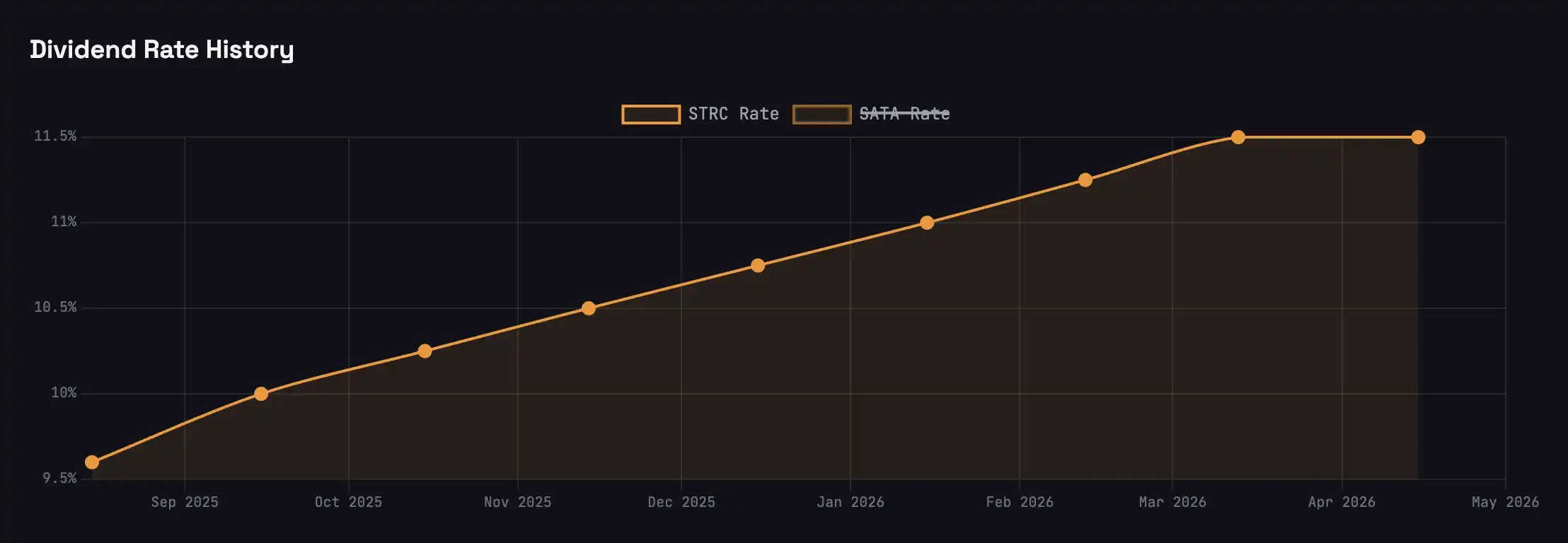
You spend about $100 to buy one share of STRC. MicroStrategy pays monthly cash dividends, with an annualized rate of 11.5%, which translates to about 96 cents per share per month. It never matures, and MicroStrategy is not required to repay the principal.
The share price is anchored near its $100 par value through monthly adjustments to the dividend rate: if it falls below $100, the dividend rate is increased to attract buying interest back; if it rises above $100, the dividend rate is decreased, pulling the price back towards par. The maximum monthly adjustment to the dividend rate is 25 basis points.
MicroStrategy can only issue new shares at par value to raise funds when the STRC share price is above $100—this is the prerequisite for the entire flywheel. After deducting the dividend reserve, the vast majority of the proceeds from new issuances are used to purchase BTC.
Saylor has named this product “short-duration high-yield credit” or a “Bitcoin-backed money market fund.” With current U.S. Treasury yields around 3.5%, STRC offers a yield roughly three times that of Treasuries.
The Flywheel
A common misconception about Saylor is that he is printing unlimited money to buy BTC.
He cannot do that. Saylor cannot create money out of thin air; he must wait for the market to hand him the funds. For every additional share of STRC issued, the prerequisite is that there is a real marginal buyer willing to purchase it at $100.
STRC buyers are essentially making a credit “trade.” The roughly 8% higher yield STRC offers compared to Treasuries is compensation for “MicroStrategy’s credit risk.”
However, what many STRC buyers may not realize is that the funds they use to purchase STRC are indirectly amplified threefold before flowing into BTC.
MicroStrategy has a public financial target: a 33% leverage ratio.
Among the company’s funding sources, perpetual preferred stocks like STRC, STRF, and STRK are maintained at about one-third, with the remaining two-thirds coming from MSTR common stock. Saylor calls this principle “intelligent leverage.” This means that for every $1 MicroStrategy raises through STRC, to maintain the 33% leverage line, they must issue approximately $2 worth of MSTR to be invested alongside it into BTC. $1 STRC + $2 MSTR = $3 BTC buying pressure.
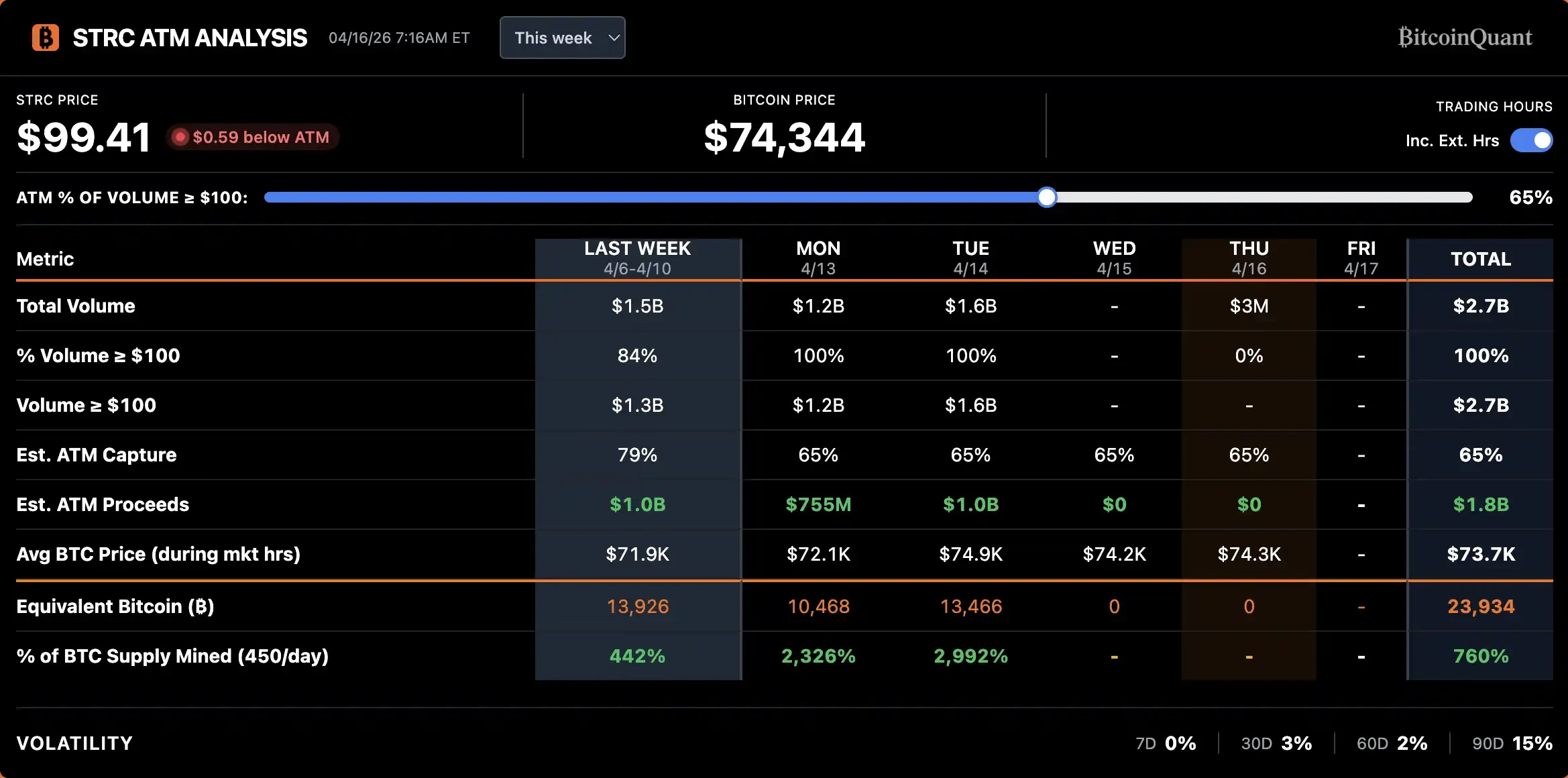
On April 14th, MicroStrategy raised approximately $1 billion through STRC in a single day. With a 3x amplification, this corresponds to about $3 billion in BTC buying pressure, precisely matching the scale of BTC acquisitions in the first two weeks of April before the ex-dividend date.
When BTC falls, the collateral shrinks, STRC’s credit risk increases, and MicroStrategy must raise the dividend rate to compensate for the new risk level. However, the higher the dividend rate, the greater the cash flow pressure and the higher the probability of default. This is an unstable feedback loop. During the period last October when BTC halved from $120,000 to $60,000, STRC’s dividend rate was raised all the way from 7% to 11.5% to barely pull buying interest back.
Conversely, when BTC stabilizes and rises, the collateral thickens, credit quality improves, and STRC becomes more attractive at the same dividend rate, further amplifying demand. BlackRock’s Preferred and Income Securities ETF listed MicroStrategy’s preferred stock as its second-largest holding in April, with its market value increasing from about $200 million in March to $344 million, a direct endorsement from fixed-income institutions of MicroStrategy’s current credit standing.
MicroStrategy’s flywheel has turned positive: More funds buy STRC → MicroStrategy buys BTC with a 3x amplification → BTC price receives support → STRC’s collateral base becomes more solid, credit spreads compress → STRC becomes more attractive at the same dividend rate → More funds buy STRC.
Ex-Dividend Day Arbitrage
The dividend mechanism for preferred stock differs from bonds. Bonds accrue interest daily; you earn interest for each day you hold. Preferred stock pays dividends in lump sums on fixed dates. For STRC, as long as you hold it at the close on the day before the ex-dividend date, you receive the full 96-cent monthly dividend.
This creates an obvious arbitrage window: buy in a few days before the ex-dividend date, collect the dividend, and sell the next day. Data from the past few months shows that STRC’s average decline after the ex-dividend date is about 20 cents, far less than the 96-cent dividend itself. The net profit per share from a single ex-dividend arbitrage can reach roughly 40 to 50 cents.
Arbitrageurs won’t miss such opportunities.
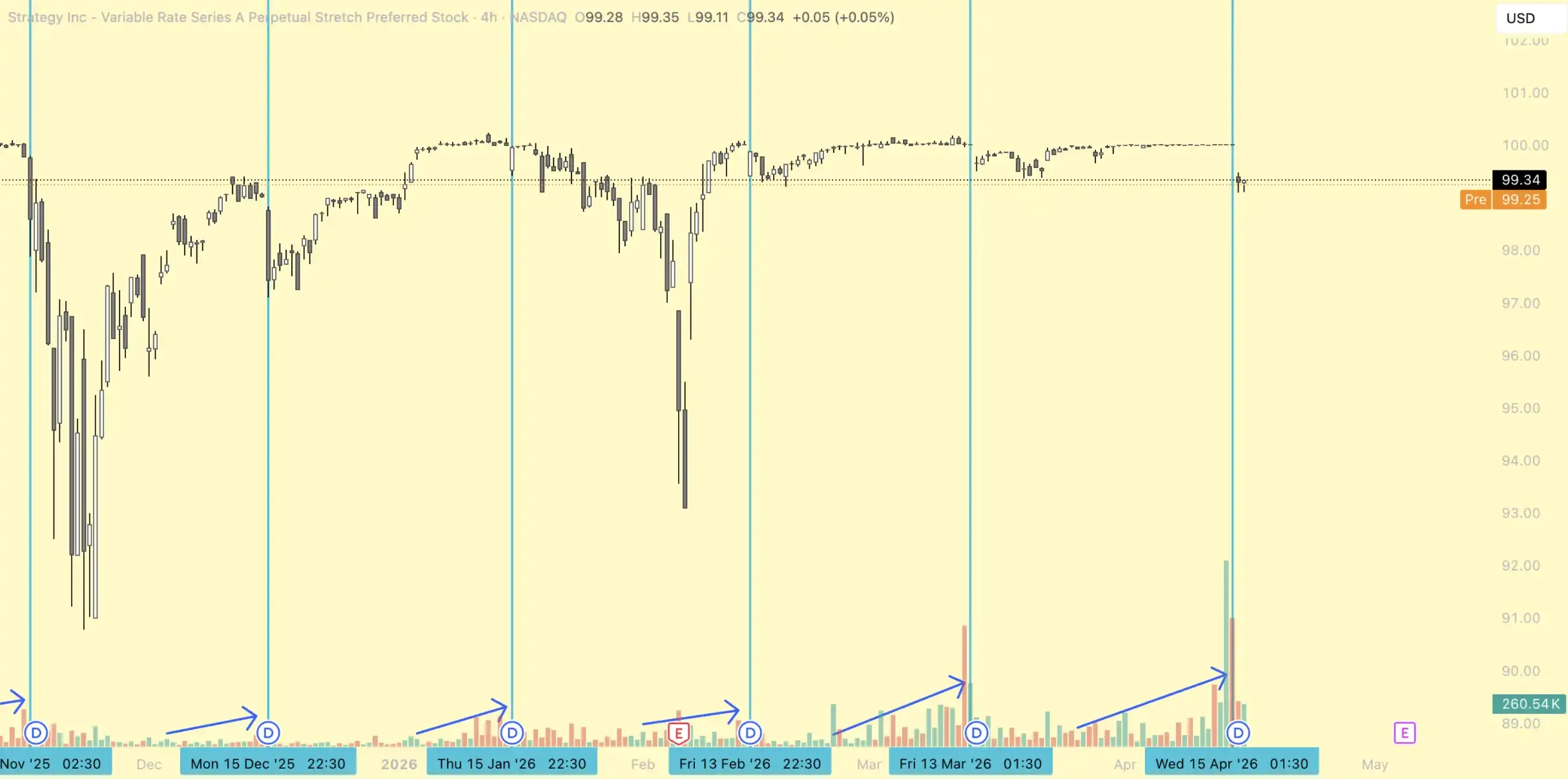
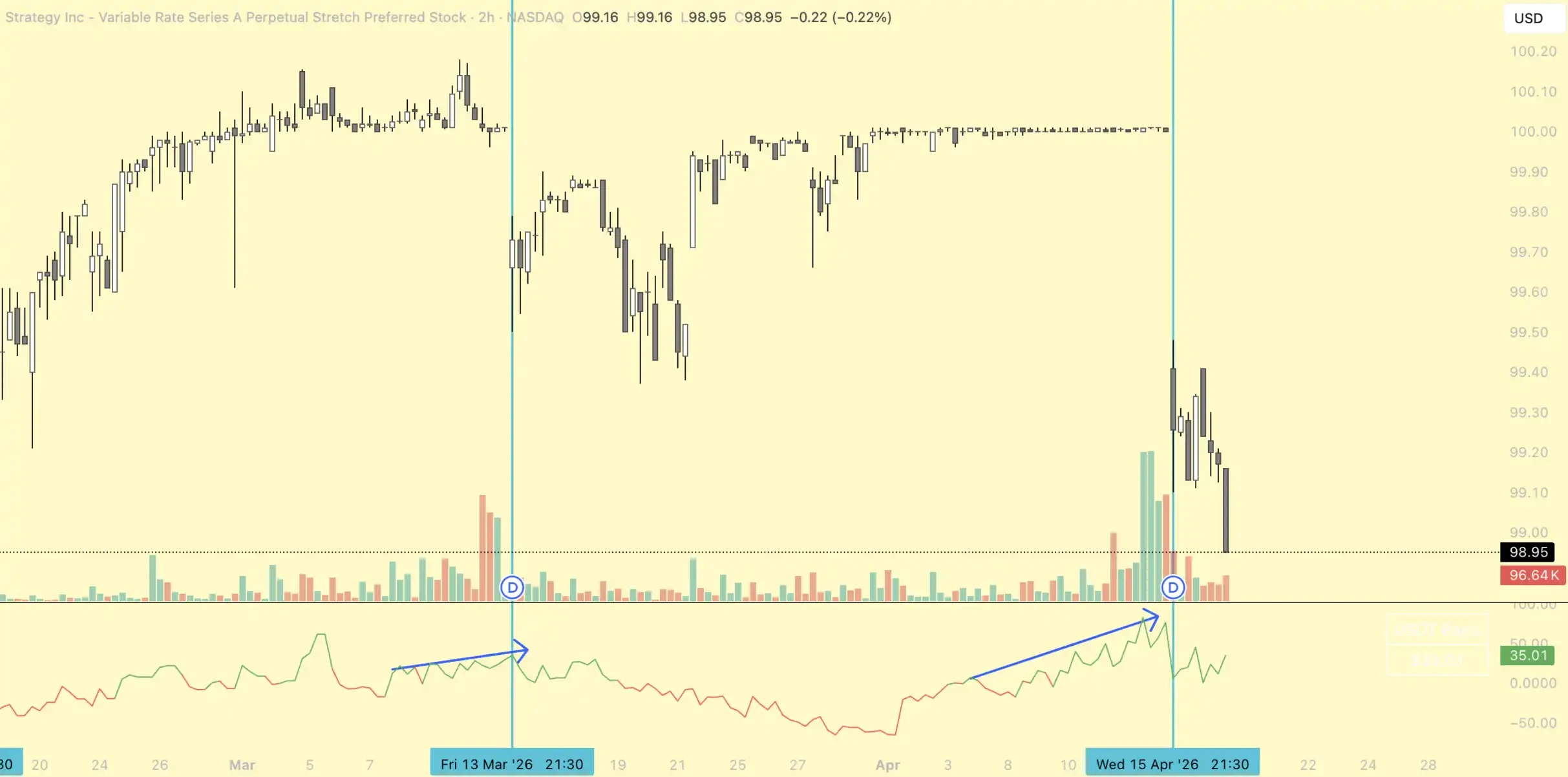
As shown in the chart, trading volume begins to climb about a week before the ex-dividend date, peaks on or the day before the ex-dividend date, and quickly subsides afterward. The volume surge in April was significantly steeper than in March, indicating that more and more capital is participating in STRC’s ex-dividend arbitrage.
However, such arbitrage activity might not be entirely positive.
For the STRC product itself, the two to three weeks following the ex-dividend date enter a “dead zone”—liquidity shrinks, bid-ask spreads widen, and the share price lingers below the $100 par value for extended periods. This repeated de-pegging erodes STRC’s positioning as a “money market product,” pushing it towards a form more akin to a monthly volatility bond.
For Saylor, his BTC purchases can easily be front-run by arbitrage capital. STRC issuances are concentrated in the two weeks before the ex-dividend date, meaning his BTC buying activity is also concentrated in those two weeks.
Now, arbitrage traders flock to buy STRC at the same time each month. Knowing that Saylor will soon use these funds to sweep the spot market for BTC, they can buy BTC in advance and sell after Saylor pushes the price higher, thereby increasing Saylor’s purchase cost.
Coinbase spot premium significantly increased around STRC’s recent ex-dividend dates over the past two weeks
There are two potential solutions: change the dividend frequency, for example, from monthly to weekly, to spread out the arbitrage profits; or introduce a more junior, more frequently paying derivative product to disperse the concentrated arbitrage trading.
Sure enough, Saylor acted swiftly, announcing on Saturday that MicroStrategy had filed a proxy statement proposing to change STRC’s dividend payment frequency from monthly to semi-monthly. The annual dividend obligation and dividend rate would remain unchanged.
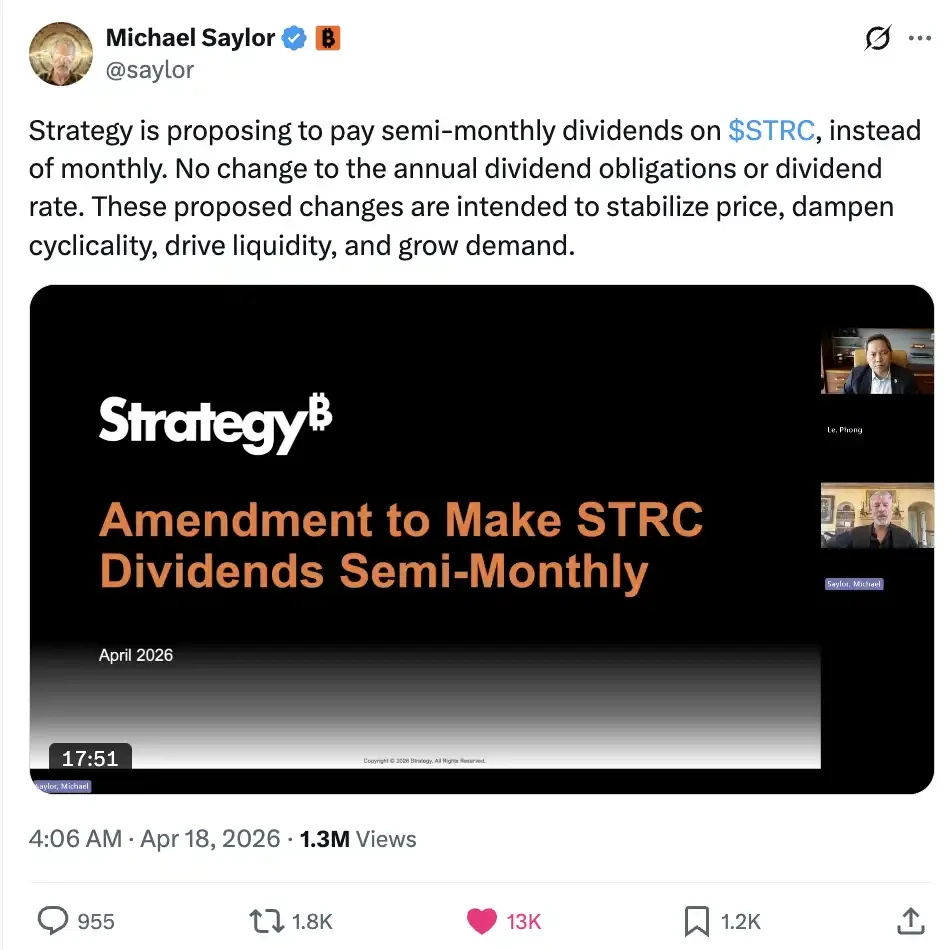
If the proposal is approved, the first semi-monthly dividend will be paid on July 15th.
Bitwise advisor Jeff Park pointed out that no corporate bonds currently use a semi-monthly dividend payment mechanism in the market, while retail investor preference for higher-frequency payments has been validated by the success of products like weekly dividend ETFs.
On a deeper level, Jeff Park sees this as a landmark step in the क्रिप्टोcurrency industry’s vision of “streaming payments” permeating traditional capital markets: the frequency of interest payments essentially reflects the efficiency of converting monetary potential into kinetic energy. The digital currency era should break free from artificially set time cycle constraints.
He believes STRC sets a new benchmark for traditional enterprises and is optimistic about the future evolution towards daily, or even instant, payments.
A New Narrative for DeFi
The emergence of STRC has brought a breath of fresh air to the sluggish DeFi market.
Stablecoin yields in DeFi have been on a downward trend over the past year. Deposit APY for stablecoins on Aave is around 2%, Ethena’s USDe and Sky’s USDS are both below 4%, and even the PT for mainstream stablecoins on Pendle struggles to exceed 6%. This yield level, coupled with the risk exposure to smart contracts in the AI era, has deterred many DeFi veterans due to the unfavorable risk-reward ratio.
DeFi needs a credible, sufficiently large source of yield to pull TradFi money back on-chain, and STRC happens to provide that opportunity.
Two projects are attempting to package STRC’s yield on-chain:
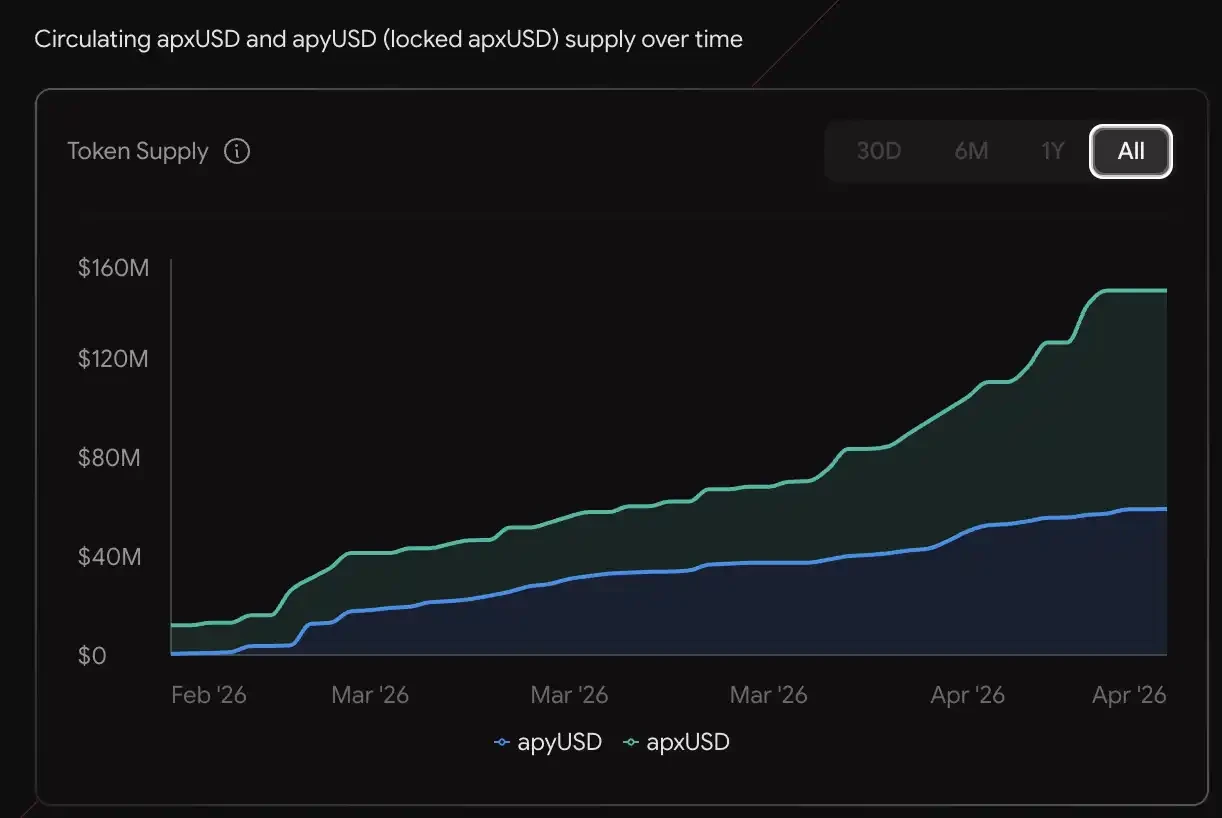
Apyx Protocol uses a dual-token model. apxUSD is the base stablecoin, overcollateralized by preferred stocks like STRC and SATA, and U.S. Treasuries; apyUSD is the staked version, capturing the underlying dividend and interest income, with a current APY of about 12.78%. The supply has reached $130 million, and corresponding yield and leverage products are already available on Pendle and Morpho.
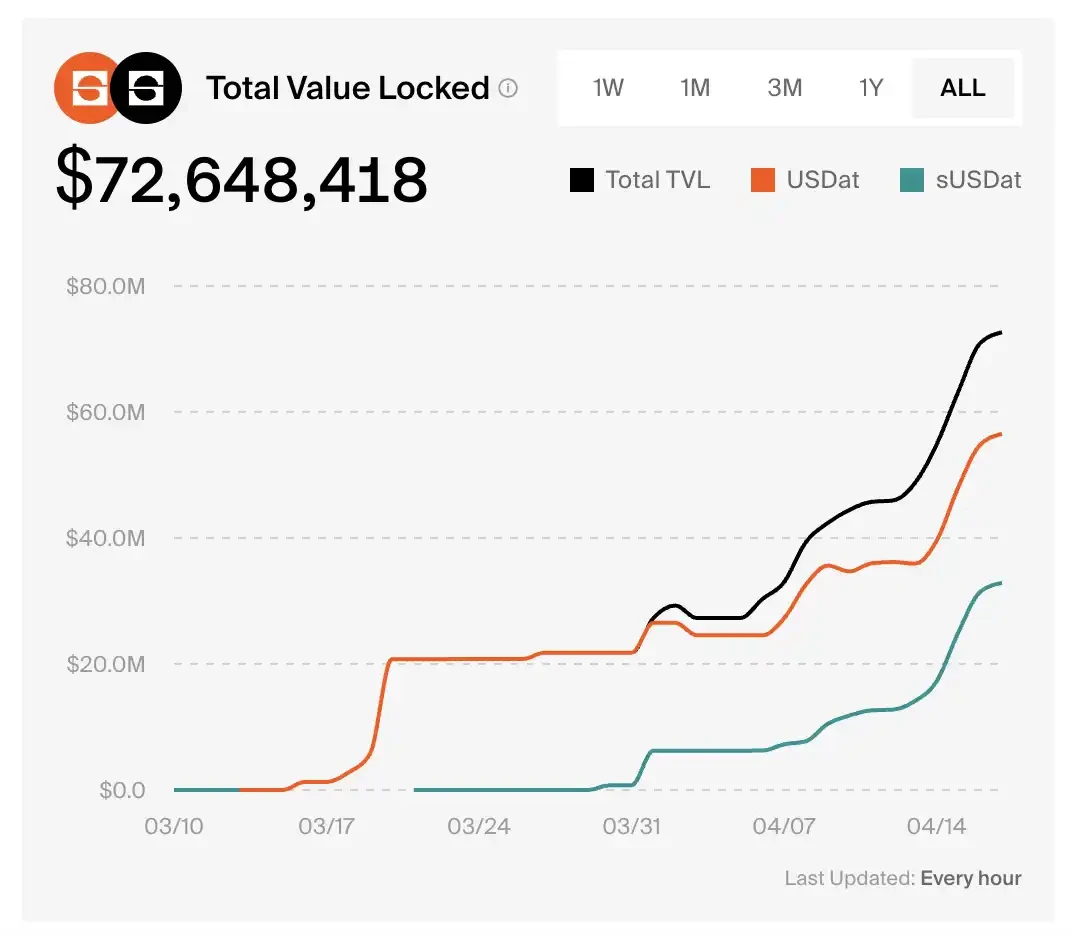
Saturn Credit’s sUSDat is an interest-bearing stablecoin that captures STRC’s yield. The protocol’s TVL surged from zero to $72.6 million in just over a month.
According to Pendle market data, the current APY for PT-sUSDat is 9.2%.
A Double-Edged Sword
The more successfully Saylor’s meticulously designed financial machine operates, the harder it becomes to avoid one question.
MicroStrategy currently holds nearly 3.5% of the total BTC supply and continues to acquire at a rate of tens of billions of dollars per month.
What was Bitcoin’s original value proposition? A decentralized, censorship-resistant monetary asset that does not rely on any single entity and cannot be unilaterally manipulated by anyone.
When the perpetual preferred stock of a publicly traded company becomes the primary marginal buyer of BTC—a decentralized, censorship-resistant monetary asset that does not rely on any single entity and cannot be unilaterally manipulated by anyone—is Bitcoin drifting away from its original form?
यह लेख इंटरनेट से लिया गया है: Strategy’s “Money Printer”: Is STRC Bitcoin’s Savior or Destroyer?
Related: Crypto CEXs Are Becoming Historical Species
Bitcoin is underperforming gold, silver, crude oil, and tech stocks, the altcoin season is almost non-existent, and voices proclaiming “crypto has entered garbage time” are growing louder. Yet, it is precisely within this so-called garbage time that crypto natives are being forced to understand the wider world, and a profound restructuring of future trading paradigms is underway. 1. Crypto Natives Are Forced to Understand the World Looking at two sets of data together might offer a different perspective on the “crypto garbage time” narrative. One set of data shows the rising popularity of TradFi trading within Crypto. Over the past year, assets like gold, US stocks, and crude oil have been siphoning global liquidity. Concurrently, within crypto trading platforms, the trading volume of TradFi assets has also been expanding. Recently,…
相关文章
































 हिन्दी
  English
  繁體中文
繁體中文  简体中文
简体中文  日本語
日本語  Tiếng Việt
  العربية
  한국어
한국어  Bahasa Indonesia
  اردو
اردو  Русский