







Strait Blockage, Gas-Powered Car Prices Rise, Who’s Quietly Making a Fortune?
Today, Brent crude oil broke through $110, and WTI surpassed $100.
You should know that the last time oil prices stood above $100 was in March 2022, during the Russia-Ukraine war.
This time, it’s Iran. US-Israeli airstrikes, the killing of Khamenei, and the effective closure of the Strait of Hormuz. One-fifth of the world’s seaborne oil passes through this waterway, and now the daily traffic has dropped from over 100 vessels to single digits.
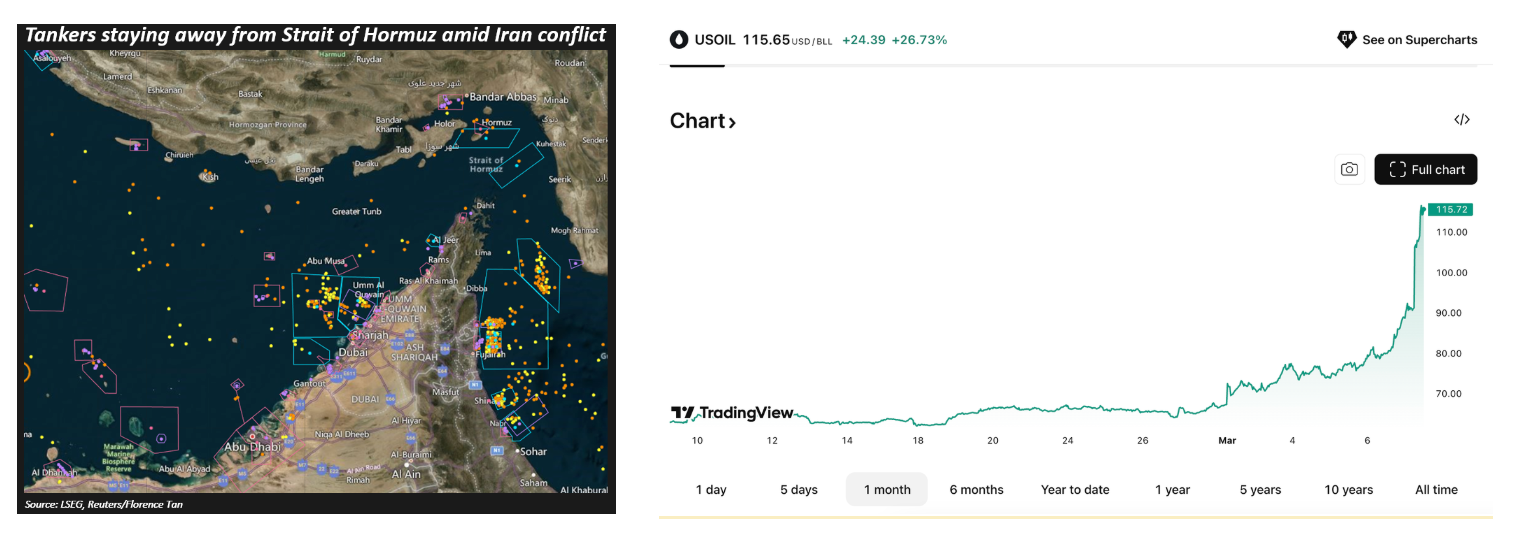
स्रोत: ट्रेडिंगव्यू
Oil can’t be shipped out, storage tanks are full, and Iraq, Kuwait, and the UAE have successively begun shutting wells and reducing production. Qatar’s world’s largest liquefied natural gas export facility has halted operations.
US crude oil rose 35% in a week, marking the largest single-week gain since futures trading records began in 1983; Qatar’s energy minister stated that if this continues, oil prices could reach $150.
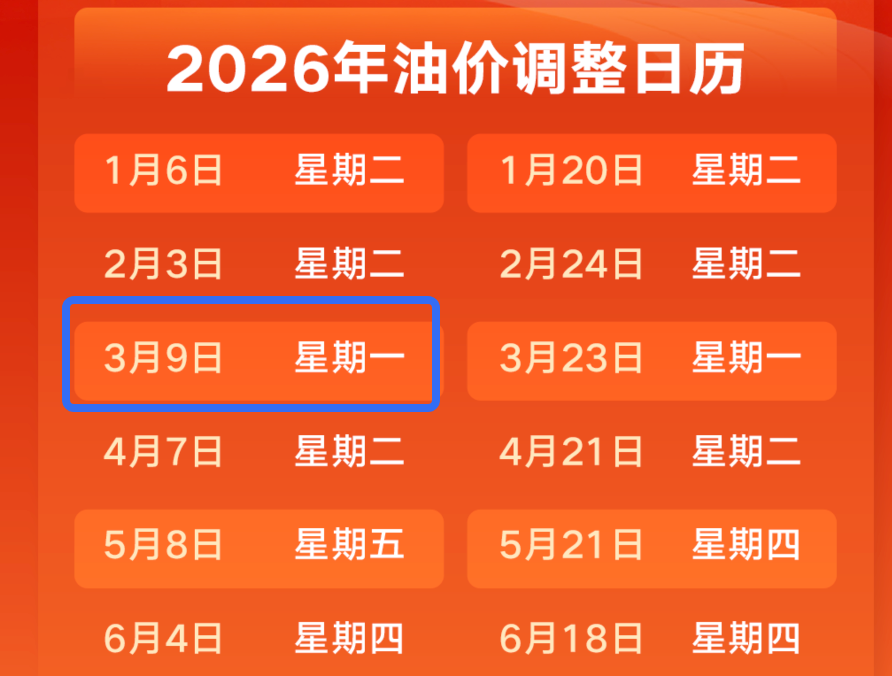
For ordinary people, these numbers might still seem distant. But tonight at 24:00, China’s refined oil product price adjustment window opens. The price of 92-octane gasoline is expected to rise by 0.39 yuan/liter, meaning filling a tank costs 20 yuan more. This is already the fourth consecutive price increase this year.
And the gas station is just the first link you feel.
Blocked Ships in the Middle East Strait, Traffic Jams in Dongguan Zhangmutou
The Strait of Hormuz is blocked with 300 oil tankers, while 8,000 kilometers away in Dongguan Zhangmutou, a line of large trucks is stuck in traffic.
Oil isn’t just gasoline. It’s the lifeblood of the entire industrial system. Plastics, chemical fibers, rubber, fertilizers—all are downstream products of oil.
When the strait is blocked and oil prices rise, the transmission from the Middle East to South China takes only a few days.
According to Southern Finance reports, over the past week, a wave of panic buying has swept through Dongguan Zhangmutou, the largest plastic raw material distribution hub in South China. Images of “massive traffic jams at the Dongguan Zhangmutou Plastic Trading बाज़ार” are circulating widely online.
In this market with an annual trading scale nearing a hundred billion yuan, buyers, fearing price hikes, have rushed in to stockpile goods. Large trucks queue up to haul raw materials, clogging surrounding roads. The largest plastic e-commerce platform experienced downtime, the 90,000-square-meter public warehouse is nearly full, and workers have been working overtime for days to free up space.
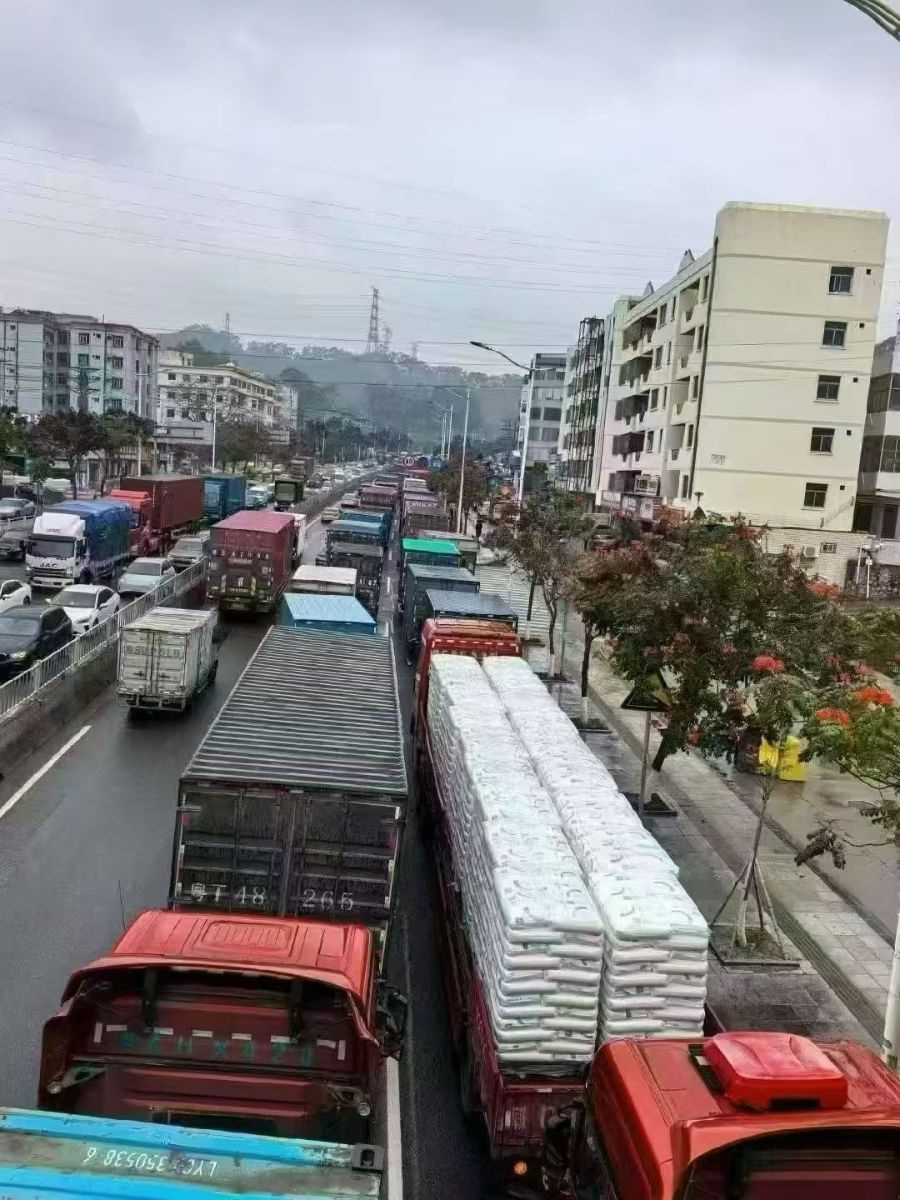
Source: Southern Finance Network
Simultaneously, the on-site rules at the plastic market have changed: quotes are valid only for the day, goods are shipped upon payment, and verbal reservations are not accepted. Prices change hourly.
How sharp is the increase?
PC plastic, used for phone cases and car lamp covers, has risen from a low of 10,000 yuan/ton last year to 14,000 yuan/ton, a 40% increase in a week; BASF, one of the world’s largest chemical companies, announced price increases for plastic additives, up to 20%.
Upstream petrochemical companies have halted sales to control volume, releasing limited quantities. Downstream factories are reluctant to accept these prices but are even more afraid they will be higher tomorrow.
The logic is actually quite straightforward:
Oil rises, chemical raw materials follow, plastic pellets follow, and finally, the price increase reaches the phone case in your hand, the running shoes on your feet, and the plastic water bottle on your desk. The chain from the oil well to the shelf is much shorter than most people think. The gas station is just the first link you feel, but it’s certainly not the last.
The last time we experienced this kind of surge was during the 2022 Russia-Ukraine war.
That year, oil prices also broke $100, prices rose for a whole year, and global stock markets fell from beginning to end. Many people still remember 92-octane gasoline reaching over 9 yuan.
Some Fill Up Their Tanks, Others Add to Their Positions
Tonight at 24:00, China’s refined oil product price adjustment window opens. 92-octane gasoline is expected to rise by 0.39 yuan/liter, and 95-octane by 0.41 yuan/liter. Filling a 50-liter tank with 92-octane will cost 20 yuan more. This is the fourth consecutive increase this year.
Tomorrow morning, you’ll pay more at the gas station. But at today’s market open, some are already counting their money.
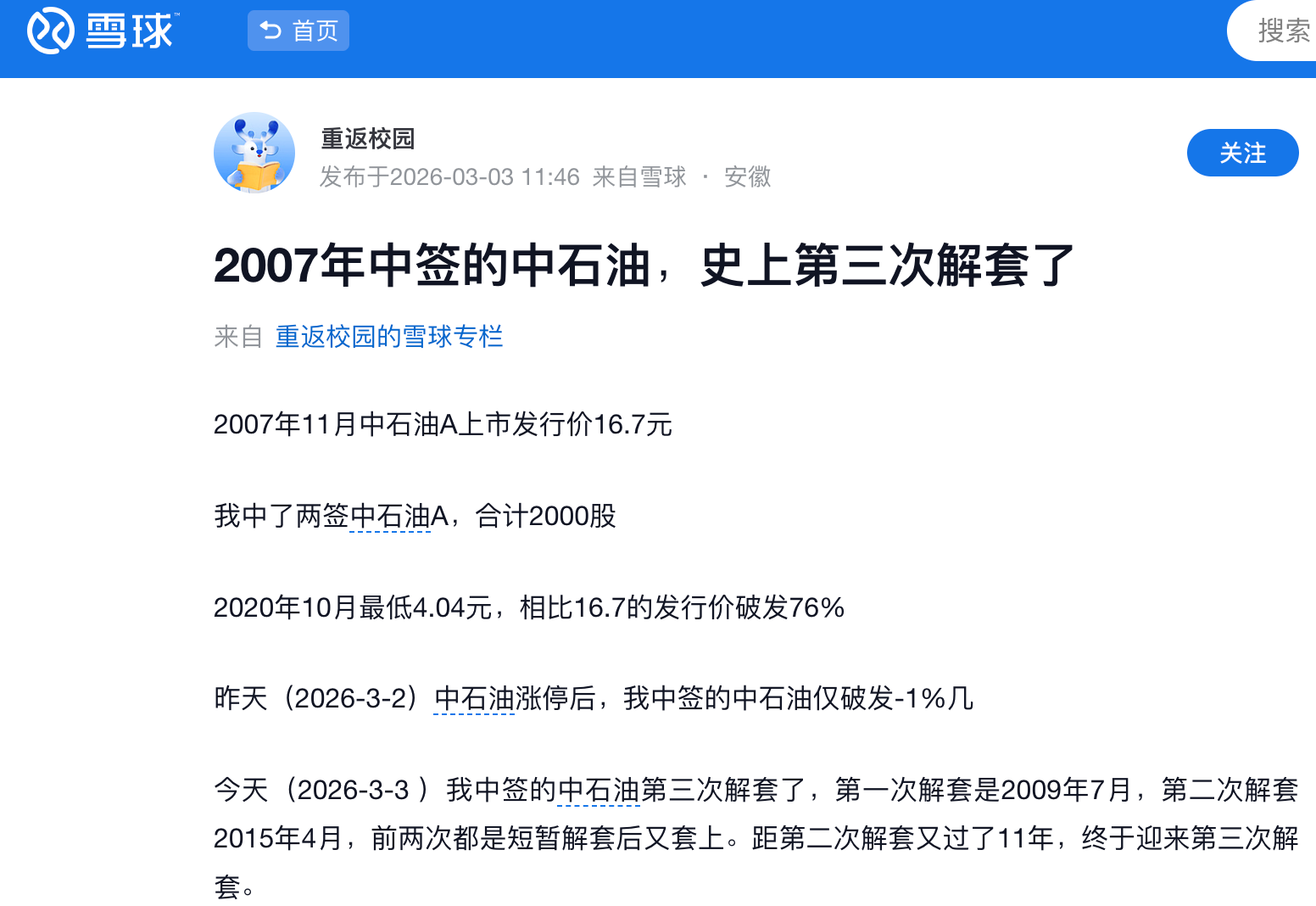
On March 2nd and 3rd, PetroChina, Sinopec, and CNOOC historically experienced two consecutive limit-up days for the first time ever. Among 48 oil and gas concept stocks, 28 hit the daily limit-up, painting the entire sector red.
PetroChina’s market cap broke through 2.4 trillion yuan, reclaiming the top spot in A-share market value.
In fact, the “Big Three” oil giants have been quietly rising for three years. PetroChina has risen 210% from early 2023 to now, and CNOOC has risen 232%.
But these three years saw slow, quiet growth that most people barely noticed. The generation of retail investors trapped by PetroChina’s 48-yuan IPO in 2007, holding on for nearly two decades, have been slowly climbing back during these three years of gradual gains.
What war does is kick a slow-burning fuse that has been smoldering for three years straight into a powder keg.
The chemical sector is following the same script.
Capital started flowing in last year. The scale of chemical-related ETFs expanded tenfold in a year, from 2.5 billion yuan to 25.7 billion yuan. After the war broke out, the pace accelerated sharply. In 5 trading days, net inflows from main funds reached 31.3 billion yuan, and a single chemical ETF saw net subscriptions exceeding 300 million units in one day.
On the oil and gas ETF side, over 8 billion yuan has poured in since the beginning of this year, with multiple fund companies collectively applying for new oil and gas-themed products.
A slow burn for a year turned into a sprint when war arrived.
Taking one step further downstream, the financial markets are essentially thinking the same thing as the Zhangmutou plastic market. On March 3rd, the main plastic futures contract surged 6%, and PP (polypropylene) futures hit the daily limit-up during the session.
Futures are rising, spot prices are rising, traders are hoarding, and some investors are quietly positioning themselves in plastic-related stocks.
Thus, some hoard plastic raw materials to profit from price differences, some buy plastic futures to profit from volatility, and some focus on chemical stocks by buying ETFs… On the entire chain, bets are being placed at every link.
Those who have held the “Big Three” oil stocks for three years likely focus on the long-term changes in China’s energy structure, earning slowly and betting on certainty. Those who rushed in after the war started are gambling on something entirely different—for example, that the conflict won’t end too quickly, betting that oil prices can go even higher.
Panic and speculation often involve the same actions. The same barrel of oil is a cost for you but profit for others. The difference lies in which end of the chain you stand on.
Those filling up their tanks hope it ends quickly; those adding to their positions hope it lasts a bit longer.
New Opportunities Aren’t in the Old Strait
Looking back at history, every round of oil price crisis reshapes the distribution of benefits along the industrial chain.
2022 is a classic case study. After oil prices broke $100, the most direct beneficiaries were upstream oil companies, similar to today. But the real structural winners of that round emerged in an area few paid attention to at the time:
New Energy Vehicles.
92-octane gasoline standing above 9 yuan directly increased the operating cost of fuel vehicles, prompting a large number of consumers to recalculate the economic equation between gasoline and electric cars.
The penetration rate of new energy vehicles was already on an upward trajectory, driven by policy subsidies, technological advancements, and charging infrastructure. However, the high oil prices of 2022 acted as a more direct catalyst, pushing fence-sitters to become buyers.
Today’s situation has similarities.
Oil prices breaking $100 again, with capital flooding into oil and chemicals, is the most instinctive reaction. But if we extend the timeline to two or three years, what’s truly worth watching may not be who made money in this oil price surge, but which substitute demands this shock will accelerate.
For the past thirty years, the operation of the global manufacturing and trade system has been built on several implicit premises: for instance, that energy supply is abundant, that shipping lanes are secure, that supply chains can be highly globalized…
The Strait of Hormuz incident may have been triggered by war, but the geographical factor of single-point dependence hasn’t changed. All energy-related participants are being forced to reassess their risk exposure.
Behind every recalculated account lies a new business opportunity. Alternative energy, alternative materials, alternative shipping routes, localized supply chains… The very act of “not relying on oil” is becoming an increasingly large industry.
Will oil prices fall back? I think it’s highly likely. Iran itself ships 90% of its oil exports through the strait; keeping it closed for too long would cut off its own lifeline first.
But what each price surge leaves behind won’t fall back with the oil price. Accounts once recalculated aren’t forgotten, and supply chains rebuilt aren’t dismantled.
Oil prices breaking $100 changes more than just your fuel expenses. It changes the way everyone does their calculations.
यह लेख इंटरनेट से लिया गया है: Strait Blockage, Gas-Powered Car Prices Rise, Who’s Quietly Making a Fortune?
Key Events for the Upcoming Week Throughout the Week Escalating Iran Situation Draws Global Market Focus to the Middle East; March 2 Bitway (BTW) Token to Begin Circulation at 16:00 on March 2; March 5 Avantis Confirms Second Season एयरड्रॉप to Take Place on March 5; March 6 US February Non-Farm Payroll Data to Be Released on March 6; From March 2 to March 8, more noteworthy industry event previews are as follows. March 2 Escalating Iran Situation Draws Global Market Focus to the Middle East Odaily News: On February 28, 2026, the United States and Israel jointly launched a large-scale military strike against Iran. The operation covered multiple cities including Tehran and Isfahan, and Iran’s Supreme Leader Khamenei has been confirmed dead. Iran immediately launched large-scale retaliatory strikes, firing…
相关文章































 हिन्दी
  English
  繁體中文
繁體中文  简体中文
简体中文  日本語
日本語  Tiếng Việt
  العربية
  한국어
한국어  Bahasa Indonesia
  اردو
اردو  Русский